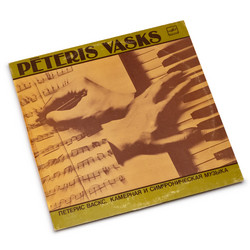
Pēteris Vasks
Cantabile per Archi / Botschaft / Musica Dolorosa / Symphonie "Stimmen"
Four works for string orchestra by Pēteris Vasks, written between 1979 and 1991, which Schott counts among the most important parts of his catalogue. Heard in order, they trace his development from the late 1970s to the symphony Balsis (Voices), begun in 1990 and finished after the violence of January 1991 in Latvia and Lithuania.
Pēteris Vasks was born on 16 April 1946 in Aizpute, Latvia, the son of a Baptist minister. He studied double bass at the Emīls Dārziņš Music School in Riga from 1959 to 1964 and continued in Vilnius until 1970. He completed his composition studies at the Latvian State Conservatory in 1978, and played in several symphony and chamber orchestras before working as a freelance composer in Riga. The Latvian National Symphony Orchestra under Pauls Mägi plays the first two works, the Latvian Philharmonic Chamber Orchestra under Tovijs Lifšics the other two. The recordings were made on 27-29 May 1992 at the Riga Recording Studio.
Cantabile per archi (1979) opens the disc. Vēstījums (Message, 1982) adds two pianos and percussion to a large string orchestra and lasts sixteen minutes. Musica dolorosa (1983) is for strings alone. The symphony for strings Balsis (1991), at twenty-seven minutes the largest piece, has three movements: Klusuma balsis (Voices of Silence), Dzīvības balsis (Voices of Life) and Sirdsapziņas balsis (Voice of Conscience).
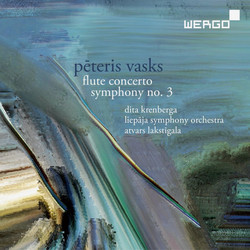
Vasks wrote in his introduction to the symphony that he had begun it at the end of 1990: "Then came January 1991. Blood was flowing in the streets of Latvia and Lithuania." After the sleepless nights at the barricades, he wrote, a new beginning was hard. The symphony speaks of what he calls his essential themes, life, eternity and conscience, and he says he wrote it with love and faith. The cover reproduces Die Frau und der Stern (1981) by Ilmārs Blumbergs, and the recording was supported by the Lufthansa Kulturförderung.
CD, Wergo WER 6220 2, released in 1993, with a 20-page booklet including notes by Andreas Krause and the composer.