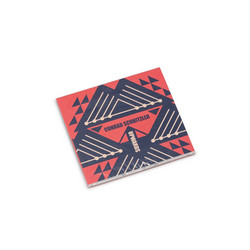
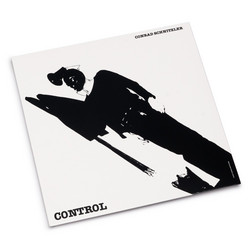
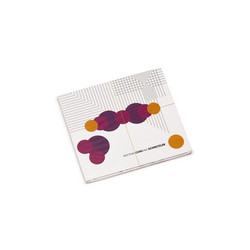
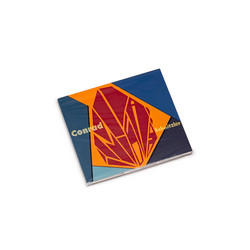
Conal arrived in 1981 on the Norwegian independent Uniton Records, in a run of 4,000 copies, at a point when Conrad Schnitzler was long past being a German secret. The founding member of Kluster and a brief early presence in Tangerine Dream had spent the 1970s building a body of work largely outside the record industry, issuing a torrent of self-released cassettes and LPs whose titles almost all open with the syllable Con, completed by a second that points somewhere. By the start of the 1980s the wider world had caught up: in the same year as Conal came Control on the American label DYS, with Concert and Consequenz 2 following on labels in the USA and Spain. He worked without pause, and his sense of music as one facet of a larger total artwork kept widening.
The record holds two long-form compositions, simply titled, that unfold with the patience of pieces built to fill an entire side. Schnitzler never wanted electronics to imitate existing instruments; he treated them as new ones, and Conal is full of that conviction, sequenced figures and abstract, non-musical sounds layered into structures that drift, accumulate and dissolve. The complexity of the individual sections and the precision of the crossfades point to Peter Baumann's well-equipped Paragon Studio, where Baumann repeatedly made space available to Schnitzler even though the two never formally collaborated. It is among the records that, on release, surprised his listeners in the best way: another step taken without warning.
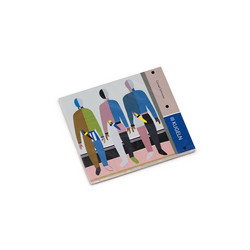
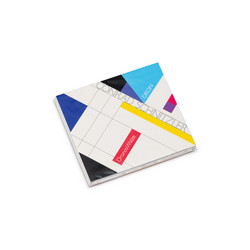
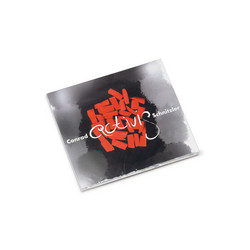
Long admired but rarely given its due, Conal is one of the genuine treasures of an enormous and still partly uncharted catalogue. Reissued by Bureau B on 10 July 2026, on CD digipak with an 8-page booklet and on LP with a printed inner sleeve. A document of one of electronic music's most uncompromising and independent minds, working exactly as he pleased.