Alfred Schnittke
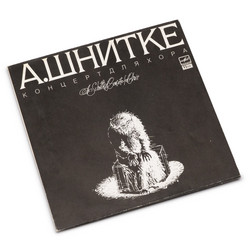
Concerto Grosso No. 2 (LP)
condition (record/cover): VG+ (occasional surface noise) / VG (creasing, light color stains on front and minimal ring wear)
In 1982, Alfred Schnittke wrote a second concerto grosso - a work for violin, cello, and orchestra that pushes the polystylistic method further from pastiche and closer to what one analyst called "a dialogue with the past conducted in a state of genuine crisis." Where the First Concerto Grosso (1977) had balanced ironic distance with emotional intensity, the Second begins with the two soloists presenting a motto - slides between major and minor triads - that serves less as a historic quotation than as a signature: Schnittke's characteristic gesture of marking music as haunted, as something that remembers another time without being able to inhabit it.
The work unfolds across several movements through which the baroque concerto grosso form - ripieno versus concertino, weight versus lightness - is subjected to continuous pressure from the harmonic language of the present. The soloists are placed in the position of protagonists who speak in an older voice against an orchestra that cannot or will not share that language. Dense clusters and aleatoric passages in the orchestra open suddenly onto passages of near-tonal clarity that, in context, sound not reassuring but strange. Schnittke himself described the goal of his polystylistic work as the Utopia of a unified style - music that could contain both serious and light registers without irony. This work is that Utopia in its most pressured form.
Violin Oleg Kagan, cello Natalia Gutman, USSR Ministry of Culture Symphony Orchestra under Gennady Rozhdestvensky. Both Kagan and Gutman were among Schnittke's most dedicated advocates; their performance here is as close to definitive as any. Original Melodiya pressing.