Erik Klinga
Hundred Tongues (LP)
*200 copies limited edition* Erik Klinga’s second entry in his Thanatosis trilogy is darker, more dystopian in its bloom. Where his debut glowed with incandescent warmth, Hundred Tongues absorbs the unease of the present and yet throws a flash of light, albeit blinding. Composed at Malmö Art Museum on the 16th-century Genarpsorgan, threaded with his Buchla synthesizer, field recordings from Skåne and Öland, and a deliberate, focused touch, it reads as one long form: episodes that coil, return, and reconfigure rather than resolve.
Klinga’s music slows the listener’s internal tempo and recalibrates attention to minute shifts. Pairing one of Sweden’s oldest organs with a modular synthesizer, he bridges centuries. By weaving in birds and environmental recordings, he underscores the fragility of our shared sonic habitats and the kinship between human and non-human voices. Birdsong has inspired music for millennia, yet Klinga’s approach is distinct: he does not simply echo these calls, he stages a dialogue in which pipe, circuit, and birdsong stand as equals. Hundred Tongues honours this lineage and invites us to remember that listening to our surroundings itself may be the origin of music.
released January 23, 2026
Erik Klinga: Genarpsorgeln, Buchla 200, Operator in Ableton and field recordings.
All music composed, produced and performed by Erik Klinga.
Recorded and composed in 2023-2024 at Malmö Art Museum, Malmö, the Royal College of Music in Stockholm, and Rhythmic Music Conservatory in Copenhagen.
Live recordings by Felix Noble Andreasson and Sigtryggur Jonsson at Olibanum / Inkonst, in Skovgaardsalen at Malmö Art Museum (2023); Clara-Fia Tapper Karlsson in Norberg Kyrka during Norbergfestival (2024); and Mads Kiilerich in Koncertkirken during the Organ Sound Art Festival in Copenhagen (2024).
Mastering by Joakim Lindberg at Studio Sickan.
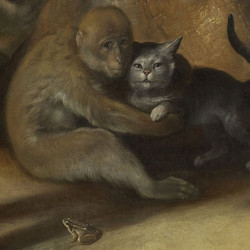
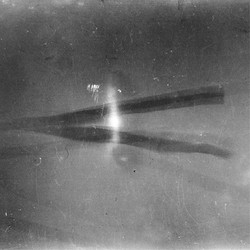
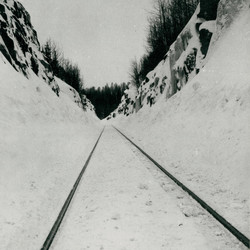
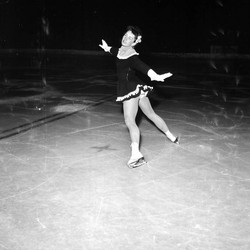
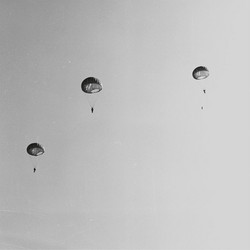
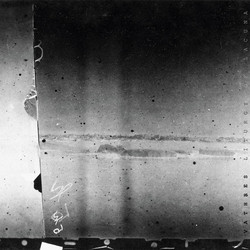
Cover photo by John Hertzberg [Tekniska Museet].
Design by Michell Zethson, finalised by Sara Lundén.
Executive production by Alex Zethson.
Made with support from Gunvor Göranssons Kulturstiftelse.
Special thanks to Alex Zethson, Björn Jumme & Moa Gustafsson Söndergaard.