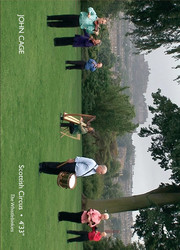
John Cage
John Cage: Chess Piece / John Cage: Four Dances / Tom Johnson: Rational Melodies
Trio Omphalos, a clarinet, percussion and piano trio, sets two early works by John Cage against the systematic music of Tom Johnson. Cage's Chess Pieces (1944) and Four Dances (1942-43) frame a selection of Johnson's Rational Melodies, all in the trio's own arrangements, and Johnson's Counting Duets No. II closes the disc. The rare instrumentation turns a piano score and music for any instruments into colourful chamber music.
The trio was founded in 2006 by Stefan Hülsermann (clarinet), Olaf Pyras (percussion) and Ji-Youn Song (piano), and has built original programmes of new music, often mixing number-based compositions with dance-like music. It came upon Chess Pieces in 2012. The recording was engineered by Sebastian Schottke.
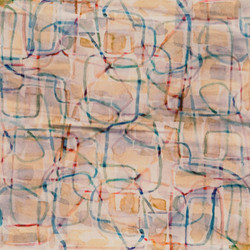
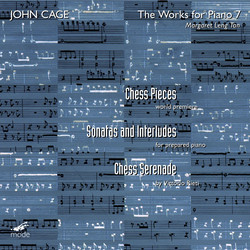
Chess Pieces began as a painting. Cage made it for The Imagery of Chess, a 1944 exhibition at the Julien Levy Gallery in New York, and the work was sold at the show and considered lost for decades. It resurfaced during research for an exhibition at the Noguchi Museum in 2005-06. The pianist Margaret Leng Tan transcribed the music in the image into a playable score: 22 systems of twelve bars each, with no instrumentation, tempo or dynamics given. That openness let Trio Omphalos make an expressive trio version of about fourteen minutes. The Four Dances, over twenty minutes in four movements, are also heard in the trio's arrangement.
Johnson's Rational Melodies are 21 short pieces for any instruments, and thirteen of them are played here. In each one he applies a single process to a simple musical idea, adding or subtracting notes, counting them, expanding or contracting phrases or adding rhythmic complexity. He then stands back and lets the process fill out the melody over time. Schott hears in Johnson's music a lucid, joyous questioning of music itself, a quality that links it to Cage, and both scores can be divided among instruments in many ways. Counting Duets (1982) No. II lasts two minutes.
CD, Wergo WER 7370 2, released in 2017.