Musically, Litfiba 3 is often described as the most “americano” of the trilogy, not in terms of imitation but in its broader, continental sweep: rock that glances from Latin America to the US and back, filtering those references through a very Italian sensibility. The sound still carries the 80s new wave imprint of the band’s earlier work - icy synth lines, chorus‑soaked guitars, elastic bass - yet moments of outright hardness, denser riffing, and more muscular drumming foreshadow the heavier direction of El Diablo. Critics have called it a bridge album: less starkly experimental than 17 Re, more refined and ambitious than a straightforward rock turn, and perhaps the most balanced synthesis of Litfiba’s early identities.
Lyrically, the record is steeped in political imagery and allegory. “Santiago” dresses its apparently festive atmosphere with a critique of the relationship between Pinochet’s Chile and Pope John Paul II, immortalised in the line “e dittatura e religione / fanno orgia sul balcone.” “Bambino” offers another jab at papal authority, proving durable enough to remain in later live sets, while “Tex” reframes the genocide of Native Americans within Litfiba’s recurring fascination with colonisation and resistance. Elsewhere, songs like “Corri” become anthems for rebellious souls, praised as rapid, fresh, and emblematic of the album’s spirit, while “Louisiana” and “Paname” juxtapose apparent calm or danceable rhythm with lyrics that demand more than one listen to fully unpack. Pelù’s writing is deliberately indirect, full of images and fragments that reward attentive listening rather than offering easy slogans.
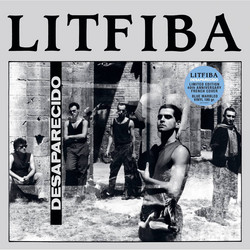
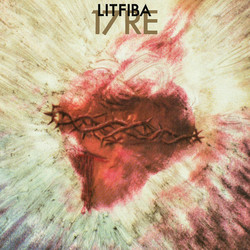
Over time, Litfiba 3 has grown in stature. Contemporary Italian critics and fan communities frequently describe it as “another great chapter” in the band’s history and, for some, “perhaps the most beautiful” of their early records: less famous than El Diablo or Spirito, less mythologised than Desaparecido and 17 Re, but towering in overall coherence and depth. Retrospective reviews highlight its innovative yet raw character and treat original pressings as near‑sacred artefacts for collectors. Many listeners also point to Pelù’s performance as a peak, a frontman fully aware of his means, capable of stirring emotion “from the first to the last note,” while Ghigo’s guitar, Maroccolo’s bass, Aiazzi’s keyboards and Ringo’s drumming lock into a sound that is unmistakably Italian yet open to the wider rock world. More than three decades on, Litfiba 3 still feels like a snapshot of a band on the cusp of transformation - one last, incandescent flash of their dark, politically charged new wave before the doors to mainstream rock blew open.