Muriel Grossmann
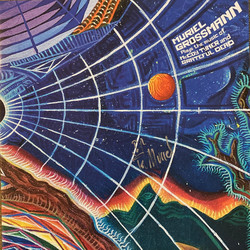
Muriel Grossmann Plays The Music Of McCoy Tyner And Grateful Dead (2CD)
At first glance, the idea that McCoy Tyner and the Grateful Dead might share musical DNA seems like a stretch. One built frameworks to support Coltrane’s spiritual flights—rewriting the jazz harmony playbook while turning chords into flexible architecture. The others were a San Francisco circus of psychedelic chaos and Americana grooves, an improvising rock band whose mythology often overshadowed their musicianship. On the surface, Tyner and the Dead appear to come from different galaxies. But listen deeply, and it becomes clear: they were orbiting the same planet.
Tyner’s playing was all about shape. He built modal infrastructure—riffs and voicings sturdy enough to ground the music, malleable enough to become anything. Weir’s unconventional approach to rhythm guitar often baffled those expecting straight rock-oriented timekeeping. Rather than driving a fixed rhythm, Weir chose choppy, off-kilter voicings that sidestepped predictability, creating cross-currents that Jerry Garcia’s solos could ride, resist, or crash into. By Weir’s own account, he lifted that sensibility directly from Tyner. Listen to his chord choices and phrasing, and the throughline is unmistakable.
Seen this way, Muriel Grossmann’s project is a continuation: tracing Tyner’s influence as it threads through Weir and onward, then using it as an invitation to explore these compositions anew. Joined by Radomir Milojkovic on guitar, Abel Boquera on Hammond B3 organ, and Uros Stamenkovic on drums, she treats these four works not as artifacts to preserve, but as invitations to explore. “We played this music using a sort of filter,” she says, “so it sounds like when I compose, record, and perform our own music. It’s somebody else’s music, but it sounds like our music.”
It’s worth stating plainly: Bob Weir has cited McCoy Tyner as one of his foundational influences. In a 2024 memorial tribute to his bandmate, Grateful Dead bassist Phil Lesh, he wrote:
“At the age of seventeen, I listened to the John Coltrane Quartet, focusing on McCoy Tyner’s work, feeding Coltrane harmonic and rhythmic ideas to springboard off of - and I developed an approach to guitar playing based off of it. This happened because Phil turned me on to the Coltrane Quartet.” Strange but true. Weir metabolized Tyner’s harmonic density, left-hand power, and asymmetrical swing into a singular rhythm guitar language. Listen to “Walk Spirit, Talk Spirit” from Tyner’s Enlightenment (1973), then compare it to a long jam on “The Other One”—say, 5/10/72 from the Europe ’72 box. That centerless gravity, that rolling churn? Different instruments, same engine.
The Dead were never a rock band in the strict sense. They functioned as a moving equilibrium—a push-pull between chaos and trance. Tyner understood that duality. As Coltrane’s right hand, he held space for ecstatic expansion without abandoning form. That’s what Weir heard. And it’s what Grossmann has traced back to its source. “Grateful Dead music is inviting,” Grossmann notes. “It’s open for interpretation, yet very definitive—an incredible mix.” It’s also spiritual music that didn’t begin in jazz, but welcomed it. And among today’s improvisers, few have carried Coltrane’s lineage of modal transcendence more consistently than Muriel Grossmann.