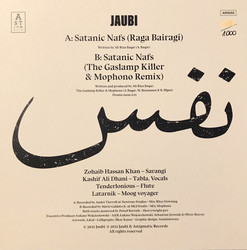
2026 Repress Nafs At Peace continues Jaubi’s unfolding meditation on the self, picking up the thread first teased on their 2021 single “Satanic Nafs” and stretching it into a full‑length spiritual arc. The Lahore‑based ensemble’s debut LP draws on North Indian classical music, hip‑hop and modal/spiritual jazz, but treats those idioms less as genres than as complementary disciplines of trance and groove. Here, raga‑derived improvisation, drum‑heavy head‑nod and Coltrane‑shadowed harmony all become tools to think through the Arabic concept of nafs - the “self” or “soul” as it wrestles its way from ego and agitation toward calm.
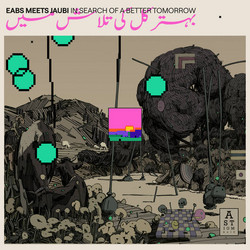
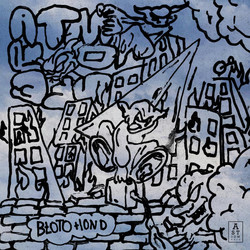
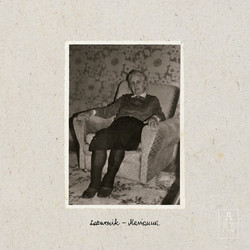
In the Qur’anic schema there are three broad states of nafs: the soul inclined to evil, the self‑reproaching soul and, finally, the tranquil soul. Jaubi take that trip seriously. The project’s official journey begins in April 2019, when London multi‑instrumentalist and 22a label boss Ed “Tenderlonious” Cawthorne and Polish pianist/composer Marek “Latarnik” Pędziwiatr (EABS/Błoto) travel to Lahore for two intense recording sessions with the band. Everyone arrives carrying their own private struggles; the studio becomes a pressure‑valve where those burdens are processed collectively rather than talked through. Nothing is written down, there are no charts or pre‑agreed song structures, not even titles. Six musicians walk into the room with shared references and open ears, and see what comes out.
What comes out is a music of unforced convergence. Tabla, drum kit, the bowed rasp of sarangi, electric guitar, flute, soprano sax and keys coil around one another with the looseness of a jam and the inevitability of a composed suite. You can hear North Indian classical principles in the way pieces often begin almost bare - tampura‑like drones, sparse rhythmic figures, exploratory phrases - and then gradually accumulate complexity. Jazz is there in the modal frameworks and the conversational soloing, hip‑hop in the pocket: swung but heavy, tuned to the body as much as the head. At times the grooves are earthy and immediate; at others the pieces hover in more ambiguous, devotional moods, closer to supplication than to “tune”.
The opening track, set alight by the Vox Humana Oslo chamber choir, immediately signals the record’s spiritual reach. Choral harmonies float over the ensemble like a raised ceiling, framing the improvisations beneath as both personal and communal. Throughout the album, you feel a similar double focus: each soloist working something out on their own instrument, yet the group always pulling toward moments of shared lift‑off. That’s the paradox at the heart of the nafs concept as Jaubi use it - a journey through inner conflict made collectively, where each individual’s struggle toward tranquility helps create a larger pocket of peace.
Because nothing was notated, the performances carry a specific kind of looseness: phrases tumble in ways no lead‑sheet would prescribe, transitions occur by intuition, and recurring motifs feel discovered rather than imposed. The musicians deliberately let go of “worldly issues” at the door, treating the sessions as a kind of sonic purge and prayer. In that sense, Nafs At Peace is as much an act of gratitude as an exercise in style: an acknowledgement that inspiration arrives from somewhere beyond the self, and that the best a band can do is prepare a space for it to move through them.
The record’s visual language underlines this. The cover shows the mother of Jaubi’s bandleader in tears, hands raised in prayer, asking God to carry her son through a particularly dark stretch of his life. It’s a startlingly intimate image to place on the front of an album, but it makes sense once you’ve heard the music: the LP is not an abstract concept piece, but a document of real vulnerability and reliance. The title Nafs At Peace names the final stage of that inward process - the moment when the self no longer thrashes or bargains, but settles into tranquillity by aligning with the divine will.
Across its running time, the album feels like a series of waystations on the road to that state: passages of tension and questioning, stretches of hard‑won groove, glimpses of genuine release. By the end, the sense of resolution is less triumphant than quietly accepting. Jaubi don’t present peace as a permanent condition so much as a fragile, hard‑earned interval; their music honours the work it takes to reach it. In doing so, Nafs At Peace stands as one of the most compelling recent attempts to braid raga, rap’s rhythmic DNA and spiritual jazz into a single, lived-through narrative - a record where formal innovation and ethical intent are inseparable, and where every cycle of the drums feels like another step toward stillness.