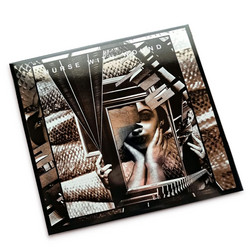
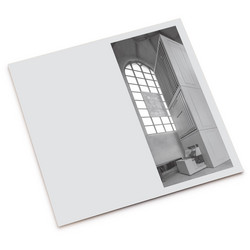
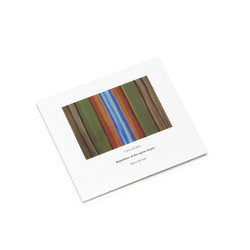
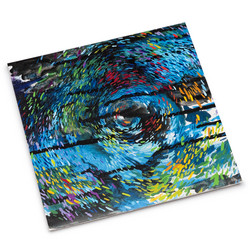
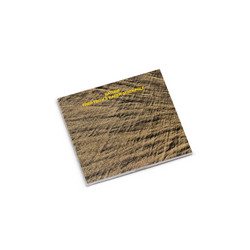
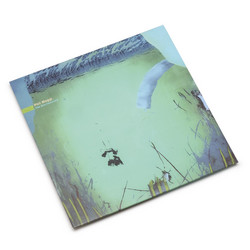
At the centre of Pieces for Broken Piano lies a single, stubborn object: a 1916 Gebrüder Stingl grand that has been left to the weather until it could no longer be tuned, its action compromised, many of its keys only partially functioning, some not responding at all. By 2021 the instrument had effectively drifted out of standard pianistic usefulness, living outdoors in a garden, exposed to sun and rain. Rather than writing it off as scrap, the Opening Performance Orchestra adopted it as a kind of Fluxus readymade, acquiring the “Broken Piano” to use in live and studio situations. The first pieces written for it were recorded that same year and folded into the Fluxus editions Stolen Symphony (2023) and Keep Together (2024), where the piano’s damaged mechanics and unstable tuning became an integral part of the music rather than a problem to be corrected.
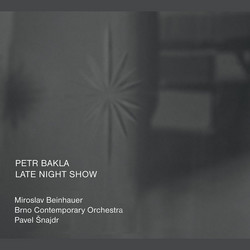
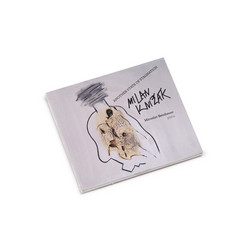
The present album gathers a new body of work created expressly for this instrument between 2021 and 2023. Composers Terry Riley and Milan Knížák contributed the initial pieces for the edition, setting the tone for what a “broken piano” repertoire might be: scores that exploit gaps and dead notes, that make room for clunks, thuds and unexpected resonances, that treat the instrument as both keyboard and percussive sculpture. As word of the project spread, other Fluxus and non‑Fluxus composers joined in, including Philip Glass, Gordon Monahan, Elliott Sharp, Milan Gustar and Yoon‑Ji Lee, each bringing their own strategies for writing for an instrument that refuses to behave predictably. The entire programme is realised by Czech pianist Miroslav Beinhauer, whose task is not to force the Stingl back into classical correctness but to listen into its fractures and let them dictate touch, pacing and dynamics.
In spring 2022, the Broken Piano became part of a wider Fluxus lineage when the Opening Performance Orchestra joined an event hosted by Mieko Shiomi – a new version of her early work Spatial Poem. The piece, which invited participants to move any object, provided the pretext for physically transporting the piano from the village of Vyzlovka to Unhošť, home of the SONO music studio. Documentation of this act of relocation, simple yet emotionally loaded, was later shown at the Aichi Triennale 2022 in Tokyo, folding the piano’s geographic displacement into the work’s conceptual circuitry. Once installed at SONO, the instrument served as the site for recording the cycle of new compositions presented on Pieces for Broken Piano. Studio conditions made it possible to capture the full, altered spectrum of the Stingl’s sound: the way some strings bloom while others choke; the noise of mechanisms, wood and metal; the odd, percussive brightness of notes that no longer sustain.
The album sequence reflects the diversity of approaches. Riley’s contribution extends his mantric minimalism into a setting where repetition has to accommodate failure, while Glass’s writing, usually associated with gleaming precision, is re‑cast through the cracks and detunings of an instrument that cannot offer a clean grid. Knížák, long associated with destructive/constructive approaches to media, leans into the piano’s wounded state, and artists like Monahan, Sharp, Gustar and Yoon‑Ji Lee explore different ways of mapping their compositional logics onto an unstable keyboard, treating missing notes and mechanical noise as structural elements. As a digital bonus, the release also includes two outdoor recordings made back in the Vyzlovka garden, pieces by Terry Riley and P.ST, where birdsong, air and environmental sounds fold into the already porous boundary between instrument and surroundings.
Throughout, Beinhauer acts as both interpreter and investigator, navigating scores that presume the instrument’s brokenness and decisions that have to be made in the moment when a key misfires or a resonance leaps out unexpectedly. The Broken Piano itself has since returned to the open air, now lying exposed in Prague and continuing its slow decay – a precarious, increasingly famous object whose lifespan is part of the work’s meaning. Pieces for Broken Piano captures a particular phase in that process: the moment when an aging, weather‑beaten grand stopped being a failed classical instrument and became the unique, irreplaceable core of a new repertoire.