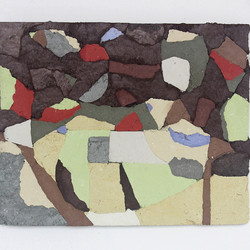
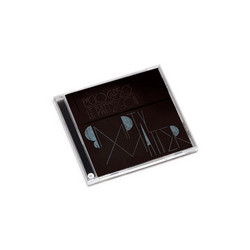
There is something disarming about the world conjured in Stain Ballads. Martin Arnold creates music for Apartment House that settles into the ear with an air of deceptive simplicity: four extended works - “Lutra,” “Stain Ballad,” “Trousers,” and “Slip” - move in slow, off-center arcs, each clothed in a soft-edged lyricism that never quite settles into resolution. Arnold’s notion of a “stain” isn’t merely suggestive of the accidental, but proposes a form where contour and color are indivisible. His writing seems to flow like ink spreading across the surface, shape-shifting yet wholly itself, with every phrase resisting expectation. Where much chamber music foregrounds structural clarity or dense motive development, Arnold’s approach cultivates ambiguity without sacrificing warmth. “Stain Ballad,” for sextet, and the closing “Slip” both adopt the language of dance - not as rhythm or pulse, but as a sort of half-remembered motion, gentle and slightly unmoored. The soundworld floats somewhere between dreamstate and waltz, rendered through a combination of reed organ, percussion, strings, piano, and the occasional humming, notably in “Lutra.” Here, melody stretches and contracts, and the ensemble’s languorous blend highlights timbral detail over overt statement.
Drawn from the suggestion that every stain has its own unique outline, the collection resists genre classification even as it gravitates toward the sentimental and the indeterminate. In “Trousers,” phrases are elongated almost to the point of dissolution, yet maintain a whispered intimacy. Arnold revisits the etymological connection of “ballad” to dance, reinforcing his idiosyncratic point of entry. But what truly defines Stain Ballads is not just its slipperiness of form, but the feeling that each piece invites: a slow and subtle transformation of familiar moods, suspended across unconventional duration. Apartment House’s interpretation is crucial to the album’s spell. Their patient musicianship and subtle sense of ensemble make palpable the difference between formlessness and intimacy. The resulting album stands out in the Another Timbre repertoire, not by grand reinvention, but by gently shifting attention toward the overlooked details that define Arnold's voice: a uniquely charming sense of play and disorientation, quietly bold and quietly unforgettable.