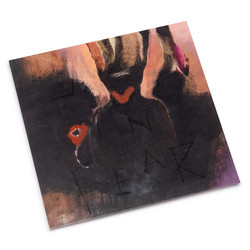
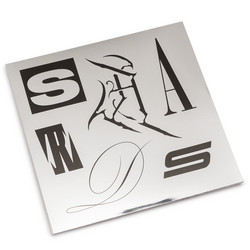
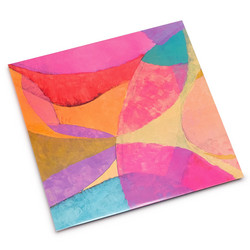
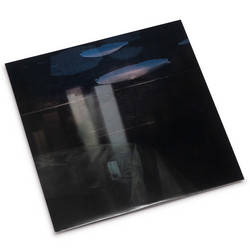
*2025 stock* By the time Things We Lost in the Fire appeared in January 2001, Low had already spent most of a decade being typecast as slowcore minimalists, the Duluth trio who turned rock’s volume and tempo knobs almost to zero. Recorded with Steve Albini at Electrical Audio and released on Kranky, this fifth studio album doesn’t break that foundational spell so much as refract it through a fuller, more intuitive vocabulary: tempos still drift at a walking pace, but the songs get shorter, the hooks cut cleaner, and Mimi Parker and Alan Sparhawk’s harmonies feel at once more ethereal and more brutally exposed. In later years it would be hailed as their definitive statement, ranked among the 100 best albums of the 21st century and cited by the band itself as a crystallisation of their “slow, quiet, sometimes melancholy, and, we hope, sometimes pretty” ethos.
Track by track, Things We Lost in the Fire charts a widening emotional and sonic arc. Opener “Sunflower” is almost disarmingly direct, a mid-tempo hymn that slips anxieties about belief and failure into something close to a pop song, its chorus rising on Mimi’s high, clear harmony. “Whitetail” and “Dinosaur Act” return to more oblique territory, Sparhawk’s lyrics sketching flickers of family history, labour and extinction against arrangements that swing from tiny guitar figures to thick, distorted churn. Elsewhere, the band exploit contrast as a narrative tool: “Laser Beam” is almost nothing but Parker’s near-whisper over a bare guitar line, while “Embrace” swells into one of their most overwhelming crescendos, with strings pushing her from resignation into something close to apocalyptic resolve. The album closes with “In Metal,” Parker’s lullaby for the couple’s newborn daughter, where the desire to keep a child “in metal” - forever young, forever safe - becomes a quietly devastating acknowledgment that time will take everything.
Sonically, the record marks a subtle but crucial expansion of the Low template. Albini and engineer Tom Herbers capture the band live in the room, preserving the negative space around Zak Sally’s bass and Parker’s minimalist drum kit while allowing new colours to seep in. Keyboards, strings and occasional winds enrich the arrangements without tipping them into baroque excess, echoing the trio’s then-recent collaboration with Dirty Three and nudging the music closer to crooked pop than austere sound sculpture. Critics have noted that the “exasperated slowness” of early Low becomes, here, just one element among many; several songs slide under the three-minute mark, and there are flashes of almost conventional rock dynamics buried inside the restraint. What remains constant is the band’s sense of scale: even at their loudest, they sound like three people in a shared, precarious room, not a studio construction.
Beneath the surface, Things We Lost in the Fire is anchored by a complex web of loves: the creative and domestic partnership of Parker and Sparhawk, their love for a child, and a more abstract, sometimes embattled spiritual longing. Released at the turn of a century and on the cusp of profound personal and cultural shifts, it catches Low balancing on a threshold, still rooted in the anti-rock minimalism that defined I Could Live in Hope but already reaching toward the heavier, noisier and later more electronic terrains of The Great Destroyer, Double Negative and HEY WHAT. That tension - between fragility and force, faith and doubt, holding on and letting go - is what continues to pull listeners back. Two decades and many reinventions later, Things We Lost in the Fire still feels less like a period piece than a long, flickering candle: a record about how to keep making beauty with full knowledge that everything around it, and everyone playing it, will one day burn out.