“It is this spirit that coasts its way across the length of أحمد [Ahmed]’s ‘Plays Monk’.”
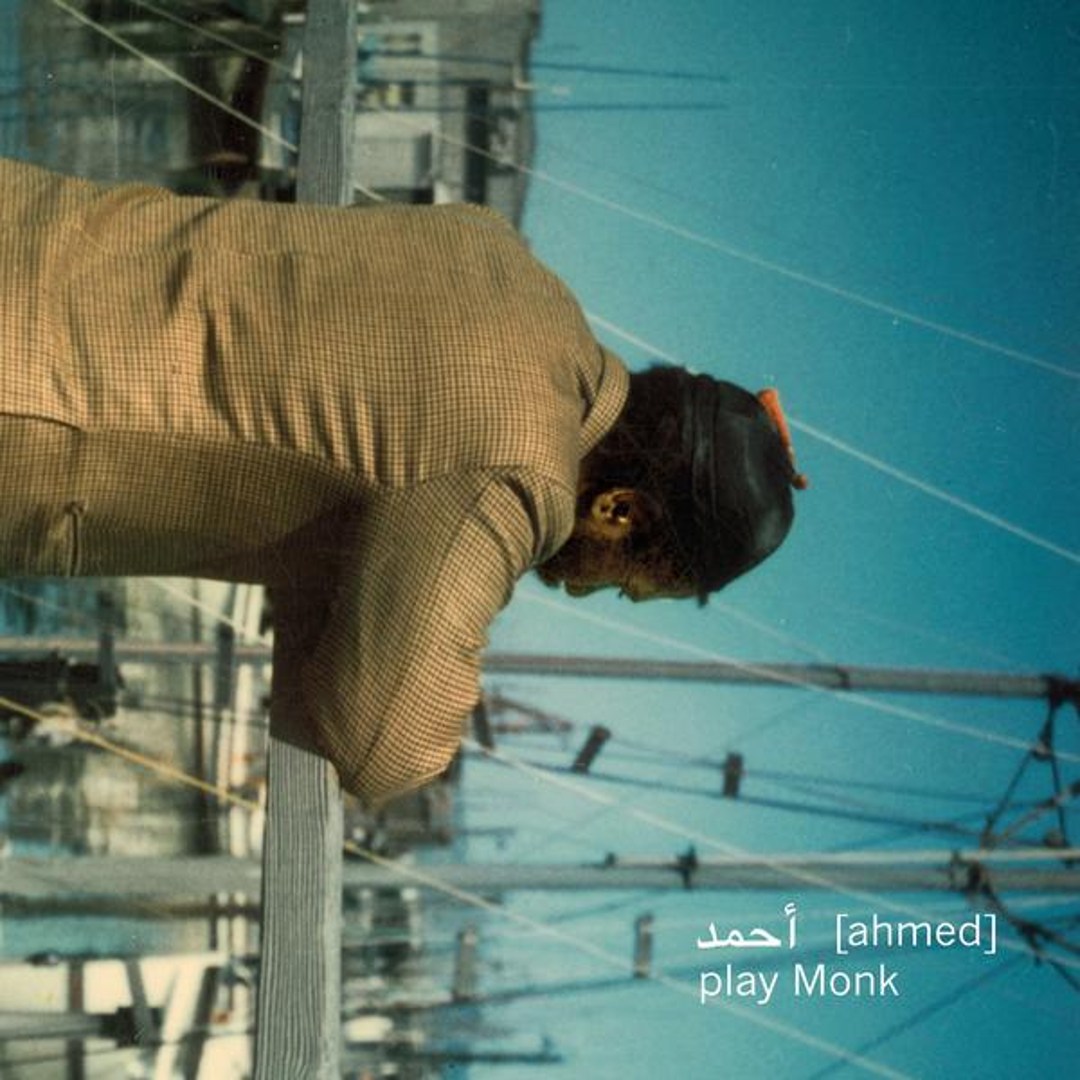
In the midst of their twelfth year of activities, أحمد [Ahmed] - the paneuropean quartet of Antonin Gerbal, Joel Grip, Pat Thomas, Seymour Wright - returns to OTOROKU with ‘Play Monk’, their third outing with the label. Diving into the work of Thelonious Monk as the points of departure and inspiration for their singular sound - a rare departure from their longstanding dedication to that of Ahmed Abdul-Malik, which has thus far only been encountered in live contexts - culminating as six engrossing immersions into freely improvised rhythmical tone, it’s yet another proof that أحمد [Ahmed] remains one of the most captivating projects working today.
OTOROKU - the in-house label for the London venue, Cafe Oto - had an amazing 2025, delivering stunning full-lengths of vital music by Incapacitants, Sven-Åke Johansson, Sophie Agnel, and Paul Abbott, The Peter Brötzmann Quartet, Evan Parker & Bill Nace, and أحمد [Ahmed]. Now, with their first release of 2026 - the dust only having just settled from the impact of ‘Sama'a (Audition)’, they’re back with another killer outing by أحمد [Ahmed]. A rare departure from the group’s longstanding dedication to the work of Ahmed Abdul-Malik - serving as a departure point for their efforts over the years - as its title, ‘Play Monk’, implies, we encounter them embracing compositions penned by Malik’s bandmate, Thelonious Monk, as a vehicle for their singular approach and sound. Comprising six astounding tracks - the majority falling between 20 minutes and the half-hour mark - rooted in Monk’s transcendent sensibility for rhythmical tone, that has long graced أحمد [Ahmed]’s live sets, but never been revealed to broader audiences in recorded form, complex, atomising deconstructions and free improvisations unfurl within heavy grooves. It’s a joyous blast of unified sonority - أحمد [Ahmed]’s distinct brand of future music - and further proof that OTOROKU - much like the venue from which it sprang - remains one of the most important platforms for contemporary music working today.
Founded in 2014, أحمد [Ahmed] is the quartet of Pat Thomas (piano), Joel Grip (double bass), Antonin Gerbal (drums) and Seymour Wright (alto saxophone). While entirely singular and distinct within their collective pursuits as a band, each of أحمد [Ahmed]’s members stands among the most important players within their respective geographies of jazz and freely improvised music: Thomas and Wright belonging to London’s vibrant contemporary scene, Gerbal to Paris’, and the Swedish bassist, Joel Grip, to Berlin’s. In addition to their activities on their respective home-fronts, all four regularly transcend the notions of borders within a countless stream of tours, gigs, and ensemble configurations across the global network of radical sound.
Since delivering their debut, ‘New Jazz Imagination’, in 2017, أحمد [Ahmed] has produced a further five full-lengths on imprints like Umlaut, OTOROKU, Astral Spirits, and Fönstret, each stemming from Pat Thomas’ longstanding deconstructive practice, drawing upon the work of various jazz giants, that has gained both himself and the group an ever-increasing, dedicated following of fervent fans. Unlike the diversity and range that marks Thomas’ personal practice as pianist and improviser, أحمد [Ahmed] was conceived as a focused extension of his passion for the work of the American double bassist and oud player Ahmed Abdul-Malik (1927-1993), noted as among the first artists within the canon of jazz to directly draw upon the musical modes of the Middle East and North Africa. Pointedly, the members of the group do not regard their own efforts as being homages or covers, but rather points of departure. As Seymour Wright explains it: “it might be with some rhythmic, or melodic, or some sense of what sort of space that piece inhabits, that’s what informs how you do it. But obviously, they’re not covers as such.. they are spontaneous arrangements.. it may also just be one aspect or part.. maybe that I choose one aspect and Pat chooses a different aspect”.
To date, أحمد [Ahmed]’s recorded outings have utilized Abdul-Malik’s work as their points of inspiration and departure. In live contexts, however, the group has been known to address the work of other artists, the most notable of whom being the legendary pianist, composer, and improviser Thelonious Monk, within whose band Abdul-Malik worked during the late 1950s - appearing on seminal recordings like ‘Thelonious In Action’ (1958) and ‘Misterioso’ (1958). Despite plenty of distinctions between the work and sensibilities of the two artists, an understanding of their close connection is revealed across the length of ‘Plays Monk’ through أحمد [Ahmed]’s approach to Monk’s “standards” - a fluid and logical extension, rather than a departure - unified by their tendency to challenge the linearity of time through event, synthesis and rupture.
Recorded during the same three-day London studio sessions that yielded ‘Sama’a (Audition)’ - thus their second studio outing after the stream of live documents that defined their earlier output - ‘Plays Monk’ encounters Thomas, Grip, Gerbal, and Wright putting six of Thelonious Monk’s most famed compositions - ‘Bye-Ya’, ‘Friday Thirteenth’, 'Round [About] Midnight’, ‘Epistrophy’, ‘Evidence’, and ‘Oska T’ - through the paces in ways that would have surely made the jazz legend proud. While the album is far from a departure from the distinct sound that أحمد [Ahmed] has cultivated and refined over the years, their approach to Monk’s compositions reveals as much about themselves as a group as it does the composer himself. While each track is compositionally recognizable at various points and to varying degrees over the course of a respective evolution, what veers to centre stage is something more elemental: the embodied sensibility of Monk himself rather than the particular notes that he strung together with such remarkable artistry and grace.
Despite how his music towers in the history of jazz - laying so much of the groundwork for the emergence of be-bop and so much of what followed - it should never be forgotten how irreverent, playful, and utterly revolutionary Thelonious Monk was: a man who loved to dance on stage and who infused his music with something truly human and raw, balanced against virtuosic grace, and a remarkable ability to craft an unforgettable tune. It is this spirit that coasts its way across the length of أحمد [Ahmed]’s ‘Plays Monk’. While undeniably grounded in the same approach that has defined their previous outings - the compositions of an artist laying the departure points for exploratory improvisations - encountering the band deploying their respective instruments at a distinct conjunction between the rhythmical and tonal - forging an almost even split between the two poles - each of the album’s tracks sows tangible threads to its origins in early be-bop and imposes the joyous propulsion of a jittering dance. As the band ebbs and flows, moving between explosive states of pure, free-improvisational fire, heavy grooves, and intimate moments of delicate tonal, rhythmic, and timbral exploration - each revealing previously untapped potential infused within Monk’s original compositions - the band’s four members remain locked in and responsive. There is no leader, but rather an exploratory path laid somewhere along the long continuum of the history of jazz, to which they listen and dance, allowing themselves to be guided by the flow.
As ever, أحمد [Ahmed] proves themselves to be one of the most distinct and vital bands working today, forging endlessly fascinating connections across the history of jazz, while allowing their predecessors to propel them toward uncharted futures. It’s fantastic, if even for just a moment, to follow them down different paths in their explorations of the work of Thelonious Monk, further illuminating new dimensions of the great composer’s towering body of work. Issued by OTOROKU in a very special X2 CD edition, housed in reverse board sleeve, we can think of no better or more joyous sounds to soundtrack the dawning of the lengthening days of Spring.
Originally published by Soundohm.