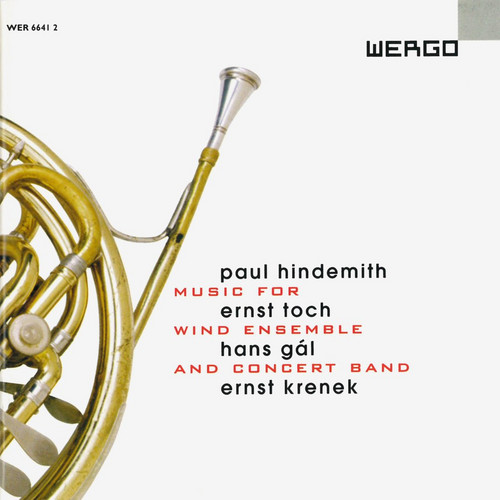
Music for Wind Ensemble and Concert Band
Works for wind ensemble and concert band by Paul Hindemith, Ernst Toch, Hans Gál and Ernst Krenek, three of them written in 1926 for Donaueschingen, played by the Deutsches Symphonie-Orchester Berlin under Roger Epple.
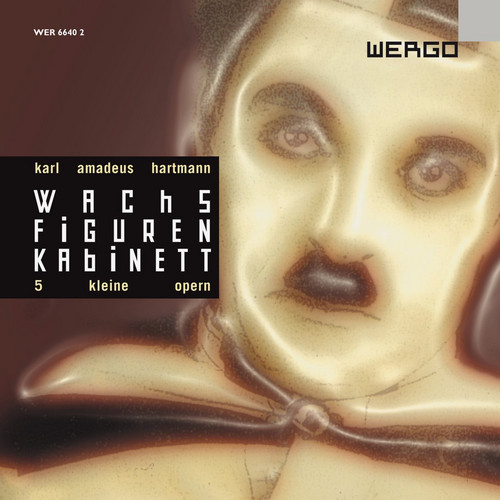
Wachsfigurenkabinett
First recording of Karl Amadeus Hartmann's Wachsfigurenkabinett, five little operas of 1929-30, with Claudia Barainsky, Michelle Breedt, Tom Harper, Michael Kraus and members of the Deutsches Symphonie-Orchester Berlin under Roger Epple, recorded 1999.
Drei sinfonische Etüden / Quattro Poemi / Nachtstücke und Arien / La selva incantata
Hans Werner Henze's Drei sinfonische Etüden, Quattro Poemi, Nachtstücke und Arien (Ingeborg Bachmann) and La selva incantata, played by the NDR Sinfonieorchester under Peter Ruzicka with Michaela Kaune, recorded 1999.
Werke für zwei Pianisten
Hindemith's works for piano four hands and two pianos, including his four-hand Mathis der Maler symphony, Rag Time (wohltemperiert), the Walzer op. 6 and the sonatas of 1938 and 1942, played by Andreas Grau and Götz Schumacher.
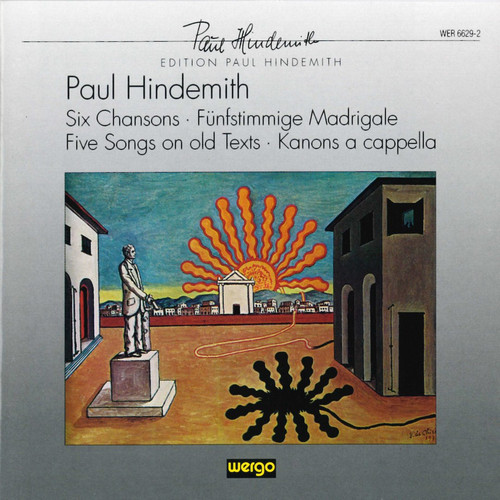
Six Chansons / Fünfstimmige Madrigale / Five Songs on old Texts / Kanons a cappella
A cappella choral works by Paul Hindemith: Six Chansons after Rilke (1939), the Zwölf Madrigale on Weinheber texts (1958), Five Songs on Old Texts (1937) and nine canons, sung by the Rundfunkchor Berlin under Stefan Parkman, recorded 1996.
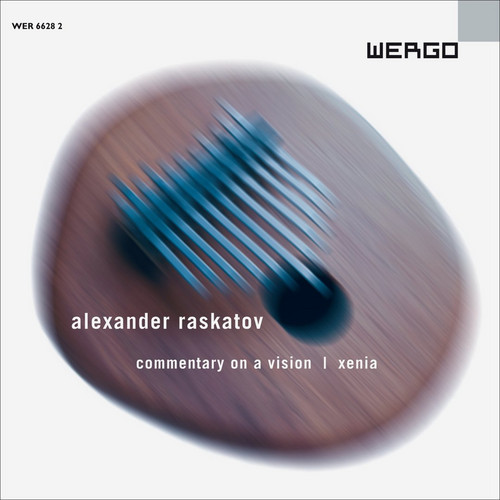
Commentary on a Vision / Xenia
Alexander Raskatov's Commentary on a Vision for solo percussion and orchestra and Xenia for chamber orchestra (both 1991), with Mark Pekarski and the Symphony Orchestra "S. Rachmaninov" Moscow under Valentin Ponkin, recorded in Moscow in December 2000.
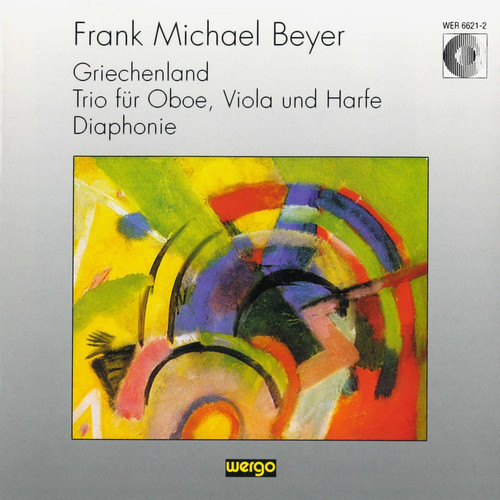
Griechenland / Trio für Oboe, Viola und Harfe / Diaphonie
Orchestral and chamber works by Frank Michael Beyer: Griechenland (1981), the Trio for oboe, viola and harp (1980) with Heinz and Ursula Holliger and Hirofumi Fukai, and Diaphonie (1975), from radio recordings of 1978-1983.
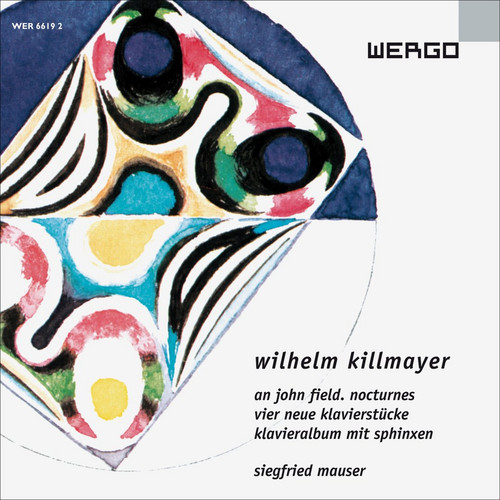
An John Field / Vier neue Klavierstücke / Klavieralbum mit Sphinxen
Piano works by Wilhelm Killmayer written 1975-1999: An John Field (five nocturnes), Vier neue Klavierstücke and Klavieralbum mit Sphinxen, played by his former pupil Siegfried Mauser.
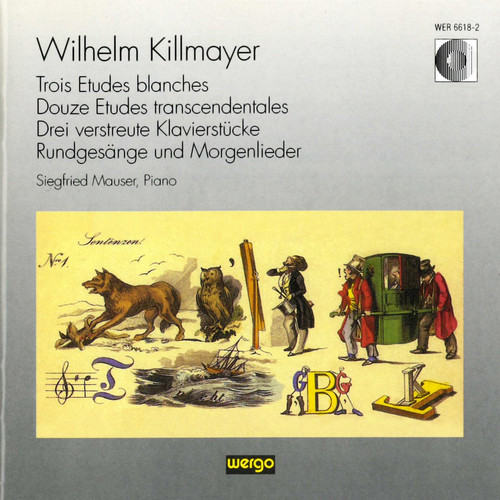
Trois Etudes blanches / Douze Etudes transcendentales / Drei verstreute Klavierstücke: Canto melismatico / Albumblatt / Frühlingslied / Rundgesänge und Morgenlieder
Piano works by Wilhelm Killmayer, from the Trois Etudes blanches and Douze Etudes transcendentales to Rundgesänge und Morgenlieder and three pieces from 1957-1968, played by Siegfried Mauser.
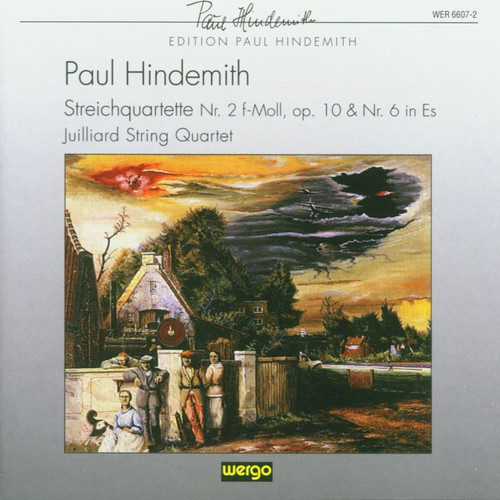
Streichquartett Nr. 2 F-Moll, op. 10 / Streichquartett Nr. 6 in Es
Hindemith's String Quartets No. 2 in F minor, op. 10, and No. 6 in E flat (1943), played by the Juilliard String Quartet (Mann, Smirnoff, Rhodes, Krosnick), recorded in New York in June 1996 for the Edition Paul Hindemith.
Music for Orchestra / Music for Six Voices / Music for 12 Cellos / Music for Five Stringed Instruments
Four works by Jay Schwartz for string orchestra, six voices, twelve cellos and string quintet, recorded live 2005-2008 by the hr-Sinfonieorchester under Diego Masson, Neue Vocalsolisten Stuttgart, SWR Stuttgart cellists under Erik Nielsen and the Kairos Quartett.
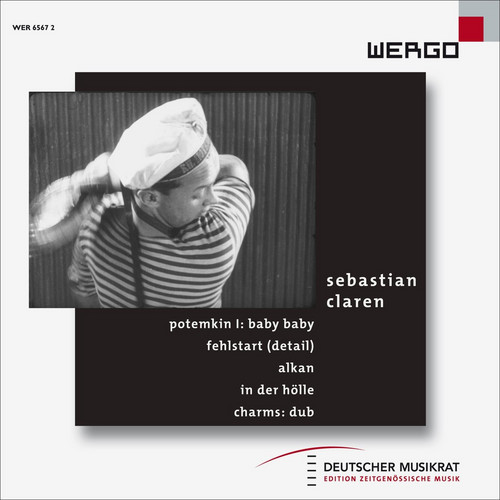
Potemkin I: Baby Baby / Fehlstart (Detail) / Alkan / In der Hölle / Charms: Dub
Five works (1996-2004) by Sebastian Claren, with Teodoro Anzellotti and trio recherche, ensemble mosaik under Enno Poppe, pianist Ernst Surberg and the Radio-Sinfonieorchester Stuttgart des SWR under Matthias Hermann.
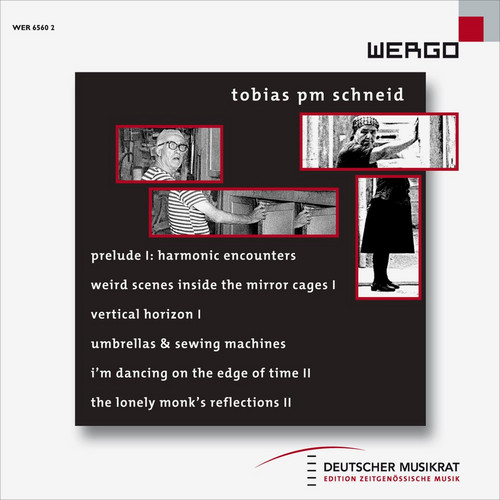
Prelude I: Harmonic Encounters / Weird Scenes Inside the Mirror Cages I / Vertical Horizon I / Umbrellas & Sewing Machines / I'm Dancing on the Edge of Time II / The Lonely Monk's Reflections
Six works by Tobias PM Schneid for seven instruments, solo clarinet and piano with ensemble, played by Ensemble Musikfabrik under Peter Rundel with Carl Rosman (clarinet) and Ulrich Löffler (piano).
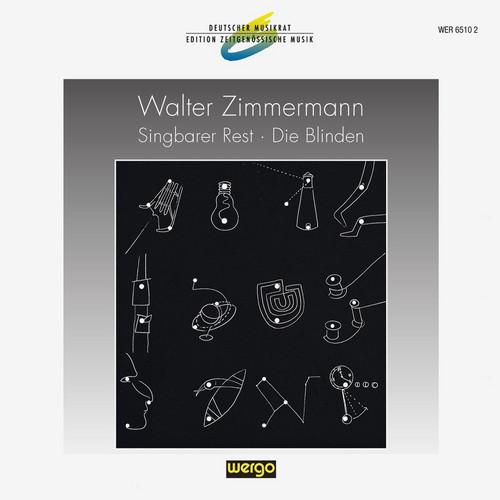
Singbarer Rest / Die Blinden
Walter Zimmermann's Singbarer Rest (1993) for nine high female voices and sampler, on Edmond Jabès, and Die Blinden (1984), static drama after Maeterlinck, with Neue Vocalsolisten Stuttgart and Junges Philharmonisches Orchester Stuttgart under Manfred Schreier.
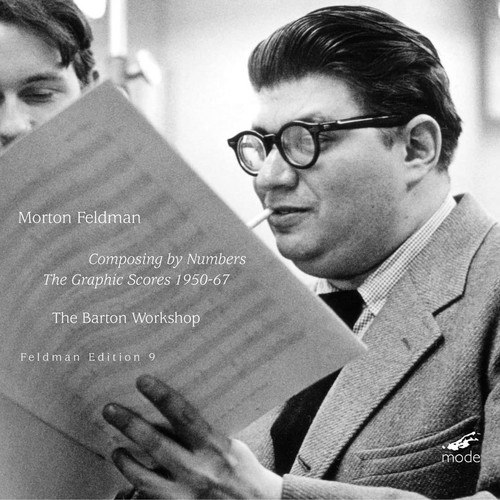
Composing By Numbers: The Graphic Scores 1950-67
Thirteen of Morton Feldman's graphic scores, 1950-67, played by the Barton Workshop and soloists including Frank Denyer and Taco Kooistra, with first recordings of several ensemble works. Volume 9 of Mode's Feldman Edition.
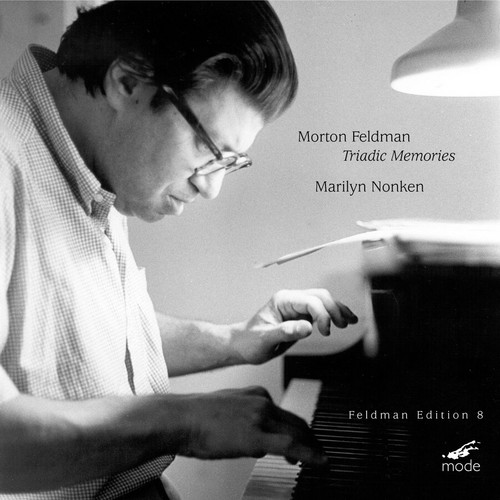
Triadic Memories
Marilyn Nonken plays Morton Feldman's Triadic Memories, a single-movement solo piano work of almost 90 minutes, recorded in 2003 and available on two CDs and on DVD-Audio.
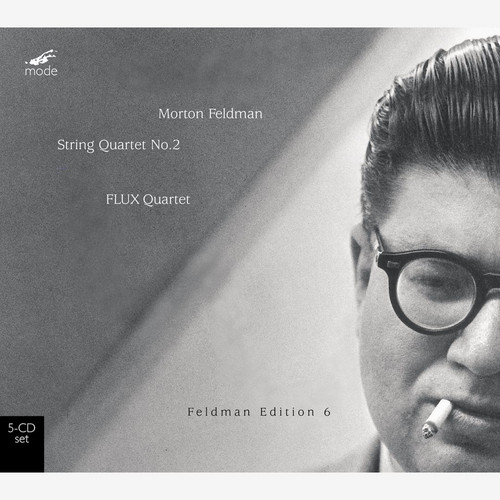
String quartet N°2
Morton Feldman's String Quartet No. 2, a continuous work of more than six hours, played by the Flux Quartet, in a deluxe DVD-audio edition with liner notes by Christian Wolff and Flux founder Tom Chiu.
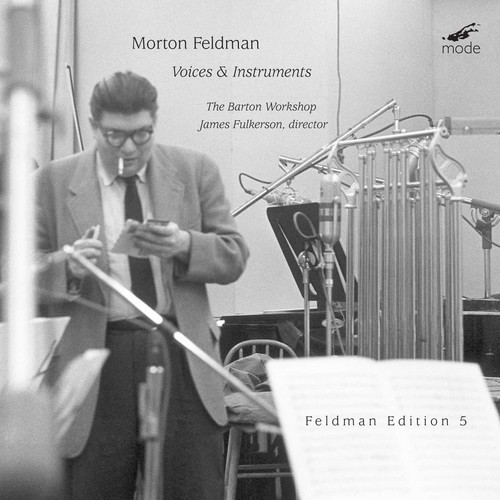
Voices and instruments
Feldman works for voices and instruments from 1949 to 1971, three of them first recordings, including Journey to the End of Night, The O’Hara Songs and Four Instruments, played by The Barton Workshop.
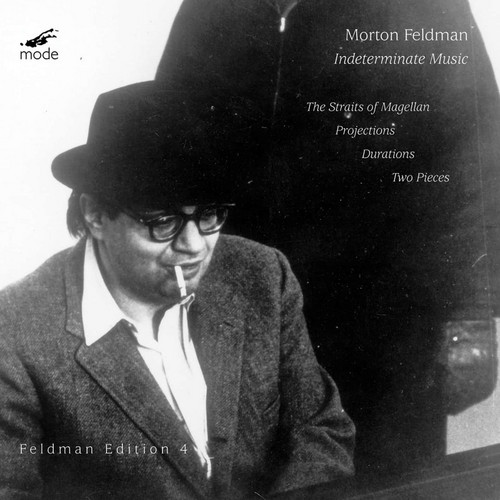
Indeterminate music
Feldman's indeterminate works: the complete Projections and Durations series on one disc, the first recording of Two Pieces for Six Instruments, and The Straits of Magellan, played by pianist Philipp Vandré and the Turfan Ensemble.
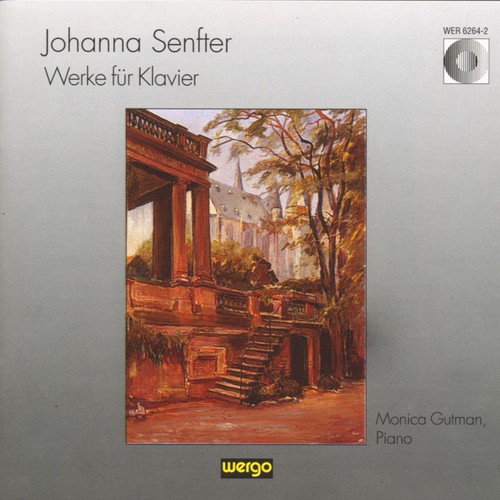
Werke für Klavier
First recording of piano works by Johanna Senfter (1879-1961), Max Reger's pupil, from early character pieces to the late op. 129, played by Monica Gutman; recorded in Mainz in March and April 1994.