
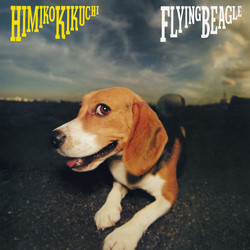
Flying Beagle
Keyboardist Himiko Kikuchi's 1987 fusion album with guitarist Masatsugu Matsumoto, a full horn section and members of Spectrum, AB's and Yuji Ohno's band. Limited 180g reissue on Great Tracks, pressed in Japan.
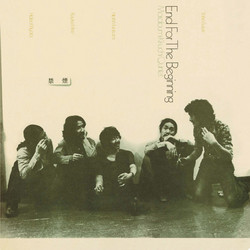
End For The Beginning
Masabumi Kikuchi's quintet recorded live in the studio in March 1973, just before his move to New York: two saxophones over a piano trio, five original compositions. Japanese reissue by Universal Music on vinyl.
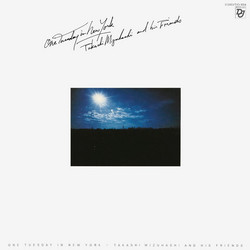
One Tuesday in New York
Bassist Takashi Mizuhashi in New York on February 22, 1977, with Herbie Hancock on piano and electric piano, Teruo Nakamura on second bass and Bruno Carr on drums. Nippon Columbia reissue on black vinyl, repressed for February 2027.
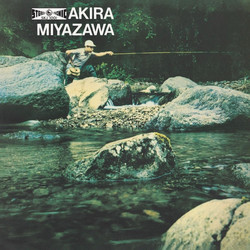
Yamame
Tenor saxophonist Akira Miyazawa's first album, recorded in May 1962 with Masahiko Sato on piano and Sadao Watanabe on alto: a founding record of Japanese modern jazz. King Records reissue on black vinyl, repressed for February 2027.
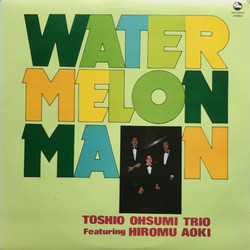
Watermelon Man
The debut of drummer Toshio Osumi's regular trio, recorded for Three Blind Mice in March 1983 with Hiromu Aoki's funky piano: Watermelon Man, Willow Weep for Me, Beatles and Stevie Wonder songs. Official reissue on 180g vinyl.
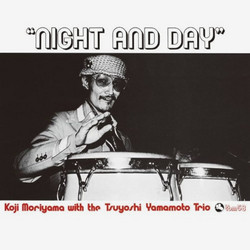
Night and Day
Singer Koji Moriyama's debut as a leader, recorded for Three Blind Mice in December 1975 with the Tsuyoshi Yamamoto Trio: standards from Night and Day to Bye Bye Blackbird, sung and scatted with a light swing. Official reissue on 180g vinyl.
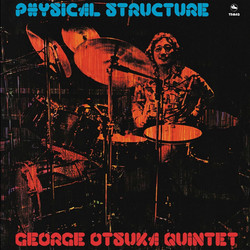
Physical Structure
Drummer George Otsuka's third album for Three Blind Mice, recorded in February 1976 with Fumio Karashima on electric piano and synthesizer and Shozo Sasaki on saxophones, closing on Coltrane's Naima. Official reissue on 180g vinyl.
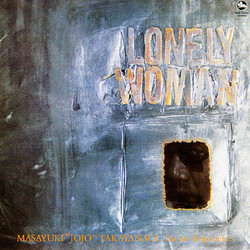
Lonely Woman
Masayuki Takayanagi alone with his electric guitar in August 1982: his first solo improvisation album, made after his recovery from near death, from Ornette Coleman's Lonely Woman to Lennie's Pennies. Official Three Blind Mice reissue on 180g vinyl.
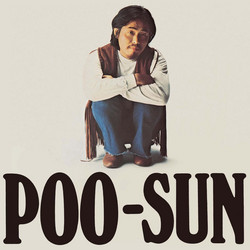
Poo-Sun
Pianist Masabumi Kikuchi's 1970 album named after his nickname: twin keyboards and twin drums, Kohsuke Mine on saxophones, and the long groove of Dancing Mist. Japanese reissue by Universal Music on vinyl.
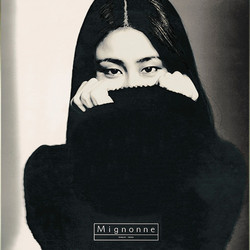
Mignonne
Taeko Onuki's third album, from 1978, arranged by Ryuichi Sakamoto and Ichizo Seo with Haruomi Hosono, Yukihiro Takahashi and Shigeru Suzuki: Yokogao, Umi to Shonen and 4:00 A.M. 180g reissue cut by Bernie Grundman.
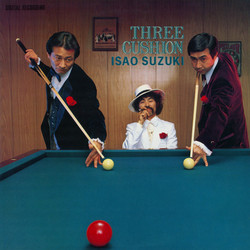
Three Cushion
Bassist Isao Suzuki and tenor saxophonist Akira Miyazawa together in 1981, with Motohiko Hino on drums: Suzuki's first digitally recorded album, long a hidden gem of Japanese jazz. First vinyl reissue, newly cut from the original master tapes.
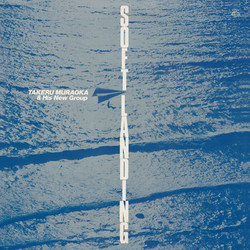
Soft Landing
Saxophonist Takeru Muraoka's 1978 session for Seven Seas: crossover and fusion with sharp ensemble playing, with Shin Kazuhara on trumpet and Masanori Sasaji on keyboards. First colour vinyl edition, newly cut from the original master tapes.
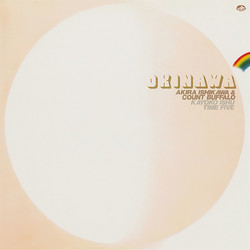
Okinawa
Drummer Akira Ishikawa and Count Buffalo's 1976 concept album on Okinawa: funk, Afro and disco over standards, Western pop covers and Okinawan folk songs, some arranged by Koichi Sugiyama. First colour vinyl, newly cut from the master tapes.
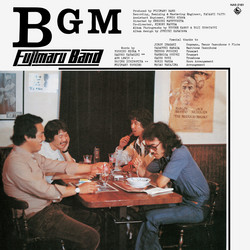
BGM
The only album by guitarist Fujimaru Yoshino's Fujimaru Band, from 1977: a Japanese rare groove record known to few for decades, rediscovered abroad, here on uncoloured virgin vinyl, newly cut from the original master tapes.
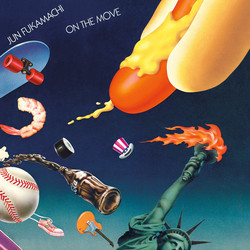
On The Move
Recorded in New York in 1978 with Steve Gadd, Anthony Jackson, Richard Tee, Michael Brecker and David Sanborn, the session that helped start Japan's crossover boom. Great Tracks reissue with obi and insert.
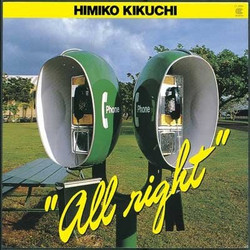
All Right
Himiko Kikuchi's 1982 album, cut with John Robinson on drums and Masatsugu Matsumoto on guitar: keyboard-led fusion with a West Coast polish. Continental reissue for City Pop on Vinyl 2026, with obi.
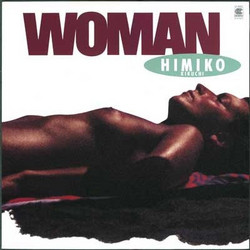
Woman
Himiko Kikuchi's 1983 album follows a woman's day in fusion, from Make Up In The Morning to Fat Ma Cooking, built on a spoken hamburger recipe. Self-produced. Reissued by Continental for City Pop on Vinyl 2026, with obi.

Don't Be Stupid
Himiko Kikuchi's 1980 debut, a bright fusion record built on her Rhodes, Minimoog and clavinet, with Ernie Watts on saxophone. Reissued by Continental for City Pop on Vinyl 2026, Japanese pressing with obi.
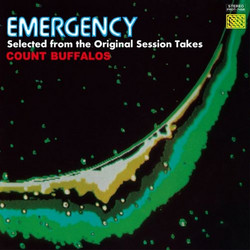
Emergency (Selected From The Original Session Takes)
Akira Ishikawa & Count Buffalos' 1976 direct-to-disc jazz-funk session for Toshiba, rebuilt from the best moments of the original takes.
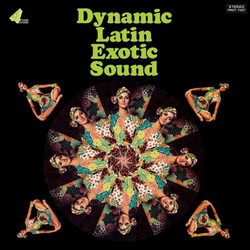
Dynamic Latin Exotic Sound
Akira Ishikawa's 1972 Latin set with Count Buffalo Latin Beats, arranged by Naoya Matsuoka: Cuban, Mexican, Brazilian and Puerto Rican standards pushed through fuzz guitar, Hammond organ and heavy drums.
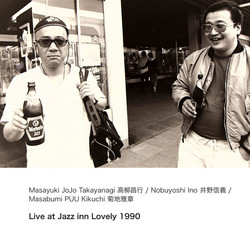
Live at Jazz Inn Lovely 1990
* 300 copies only * NoBusiness presents Live at Jazz inn Lovely 1990, a new set of recordings by Masayuki JoJo Takayanagi, Nobuyoshi Ino and Masabumi PUU Kikuchi Recorded live by Sony TC-DM at jazz inn Lovely, Nagoya, Japan, October 9th, 1990.
Track 1,4 & 5 improvised and composed by Masayuki JoJo Takayanagi, Nobuyoshi Ino and Masabumi PUU Kikuchi. Track 2 & 3 improvised and composed by Masayuki JoJo Takayanagi and Nobuyoshi Ino. Gigs produced by Katsuhiko Kawai 河合勝彦. Tapes provided by Koujiro T…
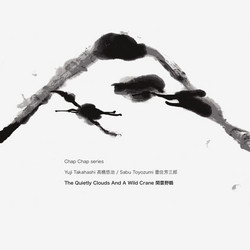
The Quietly Clouds And A Wild Crane
* Edition of 300 copies * This latest instalment from NoBusiness Records collaboration with the Japanese Chap Chap label under the name of Yuji Takahashi with Sabu Toyozumi constitutes a real find. A wonderfully mystic vernal episode of free improv music recorded in Tokyo, 1998. Piano and percussion album of the highest beauty, interactive on a telepathic level and execution. Yuji Takahashi is a Japanese avant-garde composer and pianist. In Japan he was by then already well established as leadin…
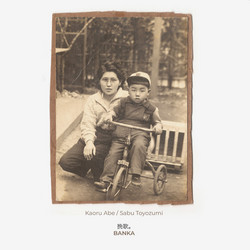
Banka
Japanese free/jazz sax legend, Kaoru Abe, dies at the age of only 29 in 1978, living a fast and crazy life and dieing of a drug overdose. His entire music career was only 10 years, from 1968 to 1978. In that short period, he was well recorded with around 30 releases, ten of which are solo sax efforts, duos with guitarist Masayuki Takayanagi, bassist Motoharu Yoshizawa and drummer Sabu Toyozumi. Mr. Abe also toured and recorded with Milford Graves, Derek Bailey and Toshinori Konda in 1977 & 1978.…
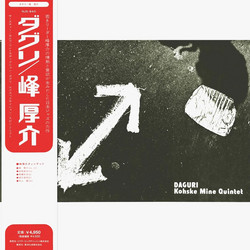
Daguri
On Daguri, Kosuke Mine Quintet channel early‑70s Coltrane fire into a distinctly Japanese voice, fusing spiritual intensity, modal lyricism and subtle exotic color into a taut, forward‑rushing statement that stands among Mine’s finest recordings.
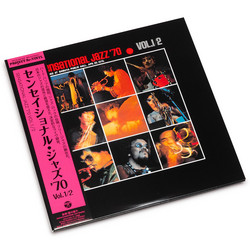
Sensational Jazz '70: Vol. 1/2
The agony of hard bop, the rise of jazz-rock, and the emergence of free jazz. The definitive live recording that captures the chaos and climax of jazz in Japan. Japan's jazz scene around 1970 is very interesting. The agony of hard bop, the rise of jazz-rock, and the emergence of free jazz. New music and values were born one after another, and chaos was reached, and up-and-coming musicians ran at a speed that shook off the meter.
This album "Sensational Jazz '70 Vol. 1/2" is famous as a live soun…
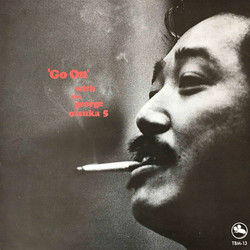
Go On
Go On with the George Otsuka 5 was recorded in 1972 in Japan for the Three Blind Mice label. The album features a quintet led by drummer George Otsuka, a major figure in Japanese jazz in the 1960s and 1970s. The repertoire includes original compositions as well as contemporary hard bop standards.
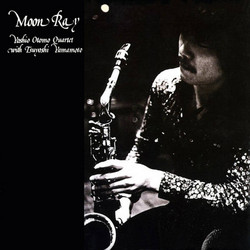
Moon Ray
Moon Ray was recorded on 21 and 22 April 1977 in Japan for the Three Blind Mice label. The album features the quartet led by alto saxophonist Yoshio Otomo, accompanied by Tsuyoshi Yamamoto (piano), Tamiko Kawabata (double bass) and Arihide Kurata (drums). The programme consists of standards from the American jazz repertoire as well as an original composition by Otomo. The production is part of the TBM label's series of acoustic recordings.
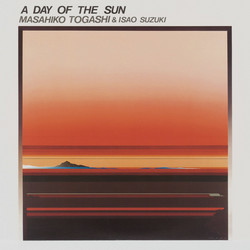
A Day Of The Sun
** Coloured Vinyl edition ** A spiritual jazz masterpiece full of poetry by two geniuses of the Japanese musical scene. Masahiko Togashi and Isao Suzuki, pivotal figures in jazz with a unique talent and sensitivity that transcends conventional jazz forms and styles. In addition to being skilled performers they demonstrate extraordinary compositional talent that transcends their sensibilities and wisdom of more conventional jazz.
They are together a wonderful combination of techniques, but witho…
Sold Out
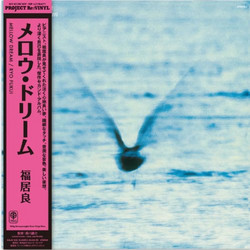
Mellow Dream
On Mellow Dream, Ryo Fukui deepens the lyrical sparkle of Scenery into something more sculpted and powerful: bittersweet themes, surging originals and a clearer, three‑dimensional swing that many hear as the true apex of his studio work.
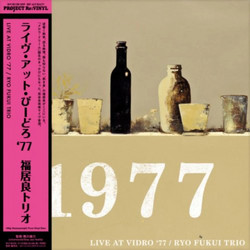
Live At Vidro '77
On Live At Vidro ’77, Ryo Fukui Trio explode the cool perfection of Scenery and Mellow Dream into raw stage heat: a newly unearthed club tape where “Mellow Dream” stretches past 16 minutes and standards ignite into hard‑swinging, edge‑of‑the‑seat catharsis.
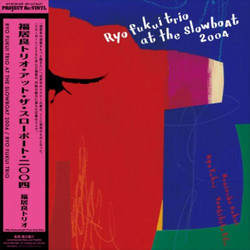
Ryo Fukui Trio at the Slowboat 2004
On Ryo Fukui Trio At The Slowboat 2004, Ryo Fukui turns the ninth anniversary of his Sapporo club into a late‑career summit: Phineas‑ and Flanagan‑inspired fire, Shorter‑charged intensity and Slowboat’s living‑room warmth fused into powerful, precise, deeply fulfilled playing.

Inner Space
*2023 stock* "Japanese pianist Yosuke Yamashita built his name as one of the country's avant-garde jazz leader with his bass-less trio founded still in 1969 (with drummer Takeo Moriyama and tenorist Seiichi Nakamura, in 1973 Nakamura has been changed by alto sax player Akira Sakata). Early-mid 70s were all years of trio's fame documented by representative collection of studio and live albums, all containing high energy fast and tight strongly improvisation music.Year 1977 was a transitional for …
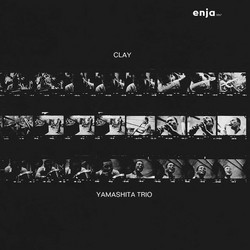
Clay
*Limited Edition* Delve into the mesmerizing trio work of Japanese pianist Yosuke Yamashita, accompanied by the exceptional reed performances of Akira Sakata. This collaboration, a highlight in 70s Japanese jazz, epitomizes a robust avant-garde impulse. Drummer Takeo Moriyama adds a thoughtful and spacious dimension to the ensemble, navigating the dynamics adeptly. Sakata's clarinet produces searing sounds, and his alto saxophone exhibits formidable force. The album includes an extended renditio…
Sold Out
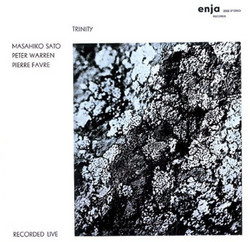
Trinity
*Limited Edition* Japanese pianist Masahiko Sato joins forces with Peter Warren on bass and Pierre Favre on drums in an enthralling collaboration. Recorded live at Studio 70 in Munich, the two expansive tracks showcase the trio's boundless creativity. Sato's piano work, reminiscent of the era's best free improvisation, occasionally channels a Cecil Taylor-like intensity, interspersed with moments of reflective pause. Favre adeptly balances restraint and bursts of energy, complementing Warren's b…
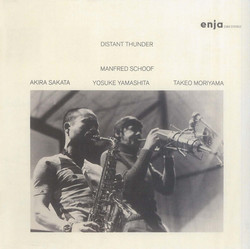
Distant Thunder
*2024 stock* The Yamashita Trio on tour in Germany in 1975 had a miraculous encounter with free improv genius Manfred Shcoof! This is a too hot live recording of the live performance with Yosuke Yamashita, Akira Sakata, Takeo Moriyama, and Manfred Schoof, who responded aggressively with their whole heart and soul!
Fujin Raijin
Satoko Fujii's Min-Yoh Ensemble with Natsuki Tamura, Curtis Hasselbring and Andrea Parkins: trumpet, trombone, accordion and piano on Japanese folk songs and new pieces in the same spirit, recorded in New York in 2006.
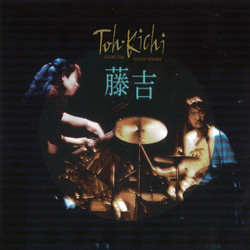
Toh-Kichi
Satoko Fujii on piano and Tatsuya Yoshida of Ruins on drums, live at Victoriaville on 18 May 2002: a fast, loud and funny duo with voices, jumping from free improvisation to metal, boogie-woogie and tango.
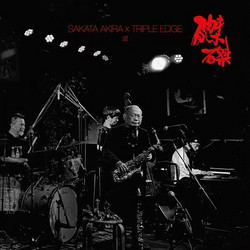
At Takutaku
Akira Sakata x Triple Edge live at Takutaku, Kyoto, February 2024: 65 minutes with Tsuboguchi, Hayakawa and Fujikake, plus Takayuki Kato on guitar and Hiroshi Funato on contrabass, built around the two-part Takutaku Suite.

Ginshu (Silver Pathos)
Akira Sakata with Shinpei Ruike on trumpet and Jun Inui on drums, recorded at the Shibata Etsuko Gallery in Ginza on March 30, 2026. Sister Records.
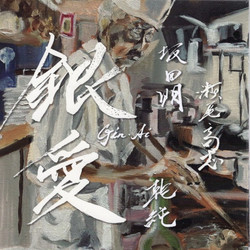
Gin Ai (Silver Love)
Akira Sakata with Takashi Seo on contrabass and Jun Inui on drums, recorded at the Shibata Etsuko Gallery in Ginza on April 10, 2025. Sister Records.