György Kurtág
György Kurtág was born on 19 February 1926 in Lugoj, Romania. He studied piano with Pál Kadosa, composition with Sándor Veress and Ferenc Farkas and chamber music with Leó Weiner, then in Paris with Olivier Messiaen and Darius Milhaud. His music is marked by compression of scale and forces and an immediacy of expression. Works include the ten-volume collection Játékok (Games, from 1973), the song cycle Kafka Fragments, Messages of the Late Miss R.V. Troussova (1981) and the opera Fin de partie (La Scala, 2018). Mode released Signs, Games and Messages.
Aliases: György Kurtág

Kurtág, Lutoslawski, Gubaidulina
1994 release ** "The Arditti Quartet here performs all three of Kurtag's string quartets, along with Lutoslawski's one quartet, and Gubaidulina's second as well -- the recordings are from 1990. Kurtag's quartets are some of the finest of the 20th century, clearly fusing Webern and Bartok. What distinguishes Arditti's Kurtag from the Keller Quartet on ECM? (see my review). The AQ takes the tempos slightly faster. Not too fast, in fact I'd say if anything the KQ has slowed them down for dramatic e…

Duetti / Widmung / Huit Duos
1992 release **
Luciano Berio: DuettiBruno Maderna: WidmungGyörgy Kurtag: Eight Duos
Maryvonne Le Dizès (Violin)Christophe Poiget (Violin)Michel Cerutti (Cymbalum)Alain Damiens (Conductor)
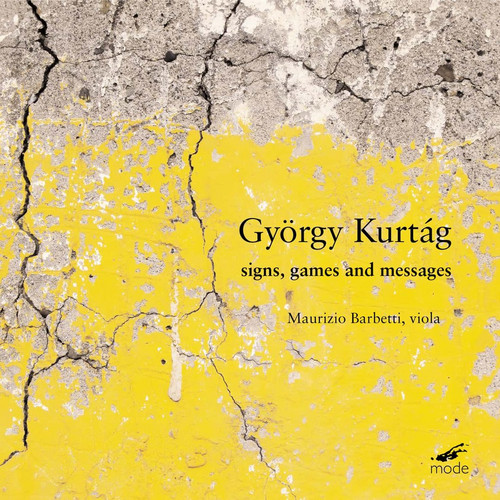
Signs, Games and Messages
The first complete recording of György Kurtág's 24 Signs, Games and Messages for solo viola, with first recordings of four further viola pieces, played by Maurizio Barbetti with baritone Gianpiero Ruggeri.

Landscape with Tears
At his third release for our Zeit Composer Series, the talented Italian flute player Manuel Zurria has given birth to some of the most heartbreaking music ever published by Die Schachtel. A moving and incredibly clever transcription for flutes, glass and electronics of John Dowland's 1604 masterwork Lachrimae functions as the thread between a stunning and totally rewarding series of pieces by György Kurtag, Peter Eötvos, Gavin Bryars, Mary Jane Leach, Howard Skempton, closing on a composit…
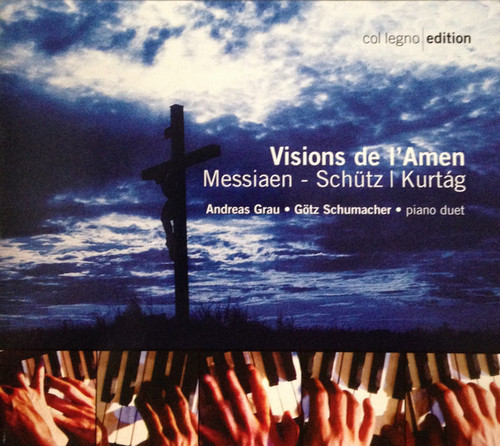
Visions de l\'Amen
Last things and Christian visions: György Kurtág's reflections on Heinrich Schütz, and Olivier Messiaen in search of the "Amen."
Piano Duet
Before the epigones take over the stage we are given a chance to hear out Bach himself: the unfinished four-voice Contrapunctus XIV from the Art of the Fugue marks the starting point of Andreas Grau's and Götz Schumacher's remarkable exploration of the Bach cosmos. In the Berlin autograph of the Contrapunctus XIV the place where the score breaks off is marked by an inscription: "At the point where the name BACH is introduced in the countersubject to this fugue, the composer died." Even though fr…

Ghosts
This is the extraordinary sequence of composers selected by Marino Formenti for his solo piano cycle Kurtág’s Ghosts, which examines how major composers from the fourteenth to the twentieth century have influenced the Hungarian composer György Kurtág. Formenti has performed the seamless cycle of seventy compositions live to considerable acclaim, and it is now available as a 2 CD set from the Vienna-based label Kairos.A typical Kurtág’s Ghosts sequence is 46 seconds of Kurtág's Hommage à Stockhau…
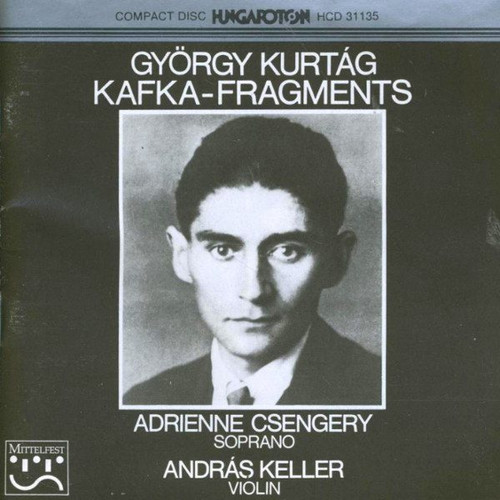
Kafka-Fragments
A wonderful CD, recorded under Kurtag's supervision: the hour-long Kafka Fragments, completed in 1986, is his biggest work to date: it's a characteristic cycle of 40 tiny movements, scored for soprano voice and violin, that adds up to something far greater than the sum of its parts.The text is a mosaic of quotations from Kafka's writings, diaries and letters. The cycle is divided into four parts, articulated by the two longest movements; they draw a huge range of expression from soprano Juliane …
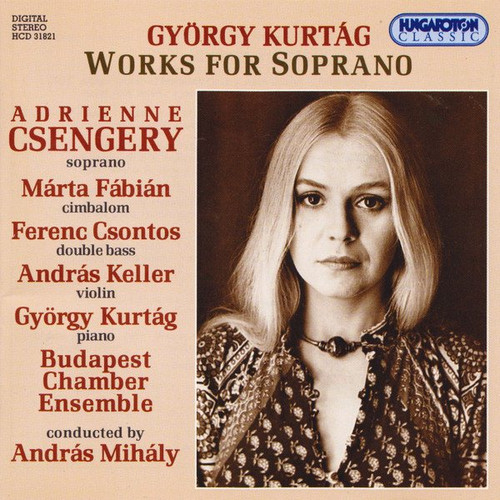
Works for Soprano
Kurtág's attachment to speech is also to be sensed in the works from this first period of maturity, something which emerged more concretely in this CD maily cenetered around the Russian language, which he learned especially in order to read Dostoevsky, and which is almost "sacred" for him, in the way that Latin was for Stravinsky. In his Russian works, opp 16 to 19, Kurtág's response to Russian prosody transforms his musical dialect with a poignant lyricism; this is to be heard both in the works…
Works
An amazing introduction to Kurtag's complex work, this cd Gyorgy Kurtag is a modern master of the musical miniature, this 66-minute disc, containing six works, is split into nearly forty tracks, absolutely essential!

Portraitkonzert Salzburg 10.8.93
Recorded in Salzburg on August 10, 1993, this recording documents a portrait concert devoted to the music of György Kurtág that spans most of his career, from his Op. 1, first string quartet, written when he was in his forties, to works of recent years. The performers are a star-studded gallery of mostly-Hungarian musicians, many closely associated with Kurtág's music, including the pianist Zoltan Kocsis, the soprano Adrienne Csengery, the Keller Quartet, the cellist Miklos Perenyi and the compo…
Játékok - Games
György Kurtág's complete works for piano duet and two pianos from Játékok (Games) volumes I, III, IV and VIII, plus the 1956 Suite and transcriptions from Machaut to Bach, played by the Bugallo-Williams Piano Duo, co-produced with Bayerischer Rundfunk.

Just Before Dawn
2005 release ** "What we are here presenting is one of the most intimate releases Ants has produced ever. Luca Miti is a “strange” kind of composer and musician. And organizer, too. He has the uncommon attitude to make private experiences and let them become “public” in a very natural way. Primarily known for his compositions (most of them unconventional and ”experimental” in the best sense) and impro-live-written collaborations, he’s also a “perfomer” with many different sides. One of these as…

György Kurtág: Six moments musicaux & Officium breve / Antonín Dvořák: String Quintet op. 97
The Parker Quartet plays György Kurtág's Six moments musicaux and Officium breve, and with violist Kim Kashkashian Dvořák's String Quintet op. 97. Recorded November 2018 at Radiostudio DRS, Zürich, produced by Manfred Eicher.
Cantante e tranquillo
Slow movements and miniatures by Beethoven, Bach, Ligeti, Kurtág, Schnittke and Knaifel played by the Keller Quartett, with Alexei Lubimov in the Schnittke; recorded 1995-2012 in Vienna, Eichstätt and Zürich and compiled with producer Manfred Eicher.

Kurtág / Ligeti: Music for Viola
Kim Kashkashian plays György Kurtág's Signs, Games and Messages for solo viola (nineteen pieces) and György Ligeti's Sonata for viola solo (1991-94), recorded in May 2011 at Propstei St. Gerold and produced by Manfred Eicher.
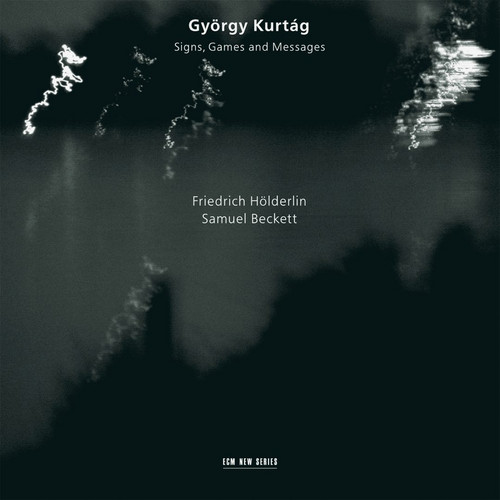
Signs, Games and Messages - Friedrich Hölderlin / Samuel Beckett
Three cycles by György Kurtág: Hölderlin-Gesänge op. 35a and ...pas à pas – nulle part... op. 36 sung by baritone Kurt Widmer, and Signs, Games and Messages for strings, with the Orlando Trio and Mircea Ardeleanu. Recorded 2002 at Radio Studio DRS, Zürich.
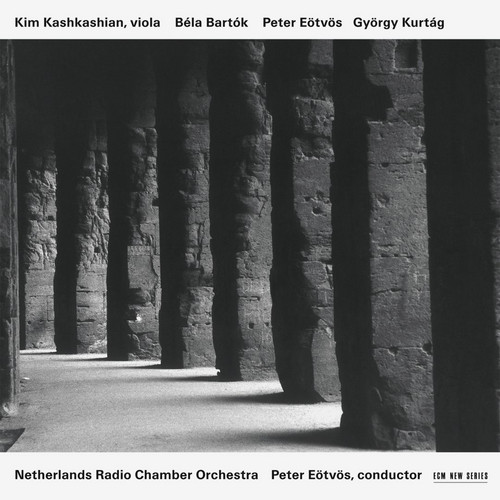
Béla Bartók / Peter Eötvös / György Kurtág
Kim Kashkashian plays Bartók's Viola Concerto, Peter Eötvös's Replica and György Kurtág's Movement for Viola and Orchestra with the Netherlands Radio Chamber Orchestra under Eötvös, recorded in 1999 at Muziekcentrum Vredenburg, Utrecht.
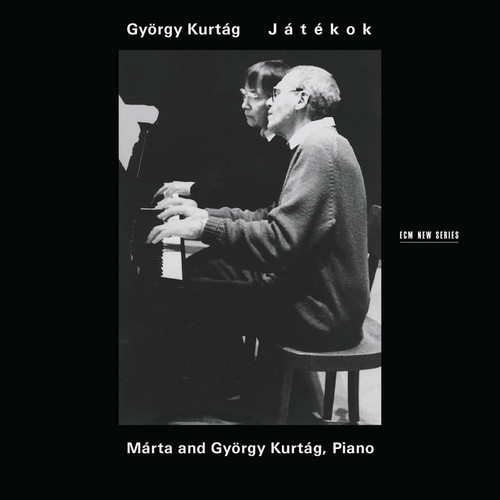
Játékok
György and Márta Kurtág play 30 pieces from his piano cycle Játékok (Games) and four of his Bach transcriptions, for two and four hands. Recorded July 1996 in the Mozart-Saal, Wiener Konzerthaus, produced by Manfred Eicher.
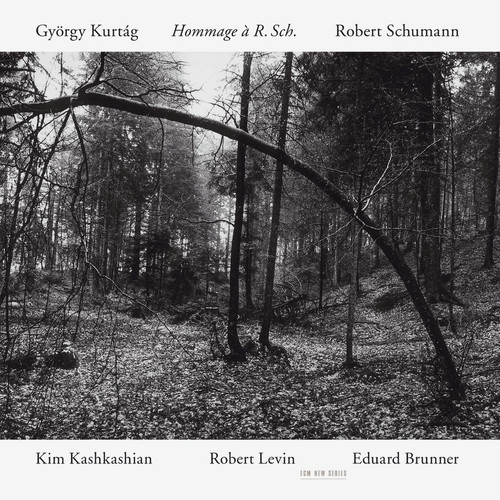
György Kurtág / Robert Schumann: Hommage à R. Sch.
Chamber music by György Kurtág and Robert Schumann for viola, clarinet and piano, played by Kim Kashkashian, Eduard Brunner and Robert Levin, recorded in 1992 and 1994 in the Kammermusiksaal of the Beethoven-Haus, Bonn.