György Kurtág, Witold Lutoslawski, Sofia GubaidulinaFeaturing: Arditti Quartet
Kurtág, Lutoslawski, Gubaidulina
LabelMontaigneGenreContemporary Composition
Out of stock
Tracked express shipping from Italy, no customs or import VAT in the EU. Shipping costs
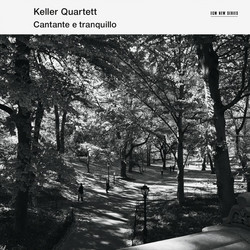
1994 release ** "The Arditti Quartet here performs all three of Kurtag's string quartets, along with Lutoslawski's one quartet, and Gubaidulina's second as well -- the recordings are from 1990. Kurtag's quartets are some of the finest of the 20th century, clearly fusing Webern and Bartok. What distinguishes Arditti's Kurtag from the Keller Quartet on ECM? (see my review). The AQ takes the tempos slightly faster. Not too fast, in fact I'd say if anything the KQ has slowed them down for dramatic effect. The tempo difference is likely one chief cause of the difference in affect -- the AQ sounds more anguished overall, whereas the KQ is slightly more restrained, more stoic. Of course the KQ is treated to Manfred Eicher's patented production, with its noticeable resonance, and this produces a darker tone, it seems. The Montaigne production of the AQ is more natural, with a clean, clear surface. The KQ adds three short Kurtag pieces for an all-Kurtag set, whereas the AQ adds the long Lutoslawski and shorter Gubaidulina quartets. The KQ comes in a gorgeous ECM package. Lutoslawski's quartet is one of his more radical works, like his "Symphony No. 2," but I don't think he's at his best at his most radical. The Alban Berg Quartet's recording is better, emphasizing the continuity from the classical tradition (see my review of the EMI Lutoslawski disc with the ABQ quartet). There are four sections, a long, slow opening movement which includes an element of improvisation and sounds gently chaotic, then a second movement that begins fast and agitated, culminating in an outburst which is followed by a sad, mournful, elegiac passage, and then a calm coda which returns to the sound of the first movement. Comparing the two versions, the ABQ's is warmer, and conveys the contrast between sections much more strongly than the Arditti Quartet, which plays the first movement with an edgier tone that undercuts the dramatic shift to the second movement. Finally, Gubaidulina's short but powerful and mystical "String Quartet No. 2." The Arditti recording is 10'41 long, while the equally excellent Kronos Quartet recording is only 8'24 long (see my review). The Kronos version is more vivid and detailed, with great separation of the four parts. This Arditti version is more homogenized, which emphasizes the mystical element with longer, slower tones. Both are excellent interpretations."
Format
Digital recording WDR Köln, July 1990
Includes 22-page trilingual booklet
© 1994 Auvidis France, ℗ 1991, 1994 Auvidis
Total playing time: 71'59".
Made in France.
Release notes
Digital recording WDR Köln, July 1990 Includes 22-page trilingual booklet © 1994 Auvidis France, ℗ 1991, 1994 Auvidis Total playing time: 71'59". Made in France.
| Quartetto Per A[r]chi Opus 1 | |||
| 1 | Poco Agitato | 0:56 | |
| 2 | Con Moto | 1:49 | |
| 3 | Vivacissimo | 2:59 | |
| 4 | Con Spirito | 1:40 | |
| 5 | Molto Ostinato | 2:02 | |
| 6 | Adagio | 4:14 | |
| Hommage À Mihály András - 12 Mikrolúdium Vonósnégyesre Opus 13 | |||
| 7 | I. | 0:42 | |
| 8 | II. | 0:27 | |
| 9 | III. | 0:27 | |
| 10 | IV. Presto | 0:12 | |
| 11 | V. Lontano, Calmo, Appena Sentito | 1:44 | |
| 12 | VI. | 1:11 | |
| 13 | VII. | 0:50 | |
| 14 | VIII. Con Slancio | 0:18 | |
| 15 | IX. | 0:52 | |
| 16 | X. Molto Agitato | 0:28 | |
| 17 | XI. | 1:22 | |
| 18 | XII. Leggiero, Con Moto, Non Dolce | 0:39 | |
| 19 | Officium Breve In Memoriam Andreae Szervánszky Opus 28 | 11:29 | |
| Quatuor À Cordes | |||
| 20 | Introductory Movement | 8:43 | |
| 21 | Main Movement | 16:49 | |
| 22 | Streichquartett Nr. 2 | 10:41 | |
- Rohan De Saram
- Cello
- Westdeutscher Rundfunk
- Co-producer, Photography By [Arditti Quartet & Kurtág]
- Martin Andrae
- Engineer [Sound]
- Arditti String Quartet
- Ensemble
- Harry Vogt
- Executive-Producer
- Hartmut Lück
- Liner Notes
- Görgen
- Photography By [Arditti Quartet & Kurtág]
- Guy Vivien
- Photography By [G. Kurtág & W. Lutoslawski Cover Photographs]
- Marion Kalter
- Photography By [S. Gubaidulina Cover Photograph]
- François Eckert
- Recording Supervisor
- Angela Plogmaker
- Technician
- Levine Andrade
- Viola [Alto]
- David Alberman
- Violin
- Irvine Arditti
- Violin