We use cookies on our website to provide you with the best experience. Most of these are essential and already present.
We do require your explicit consent to save your cart and browsing history between visits. Read about cookies we use here.
Your cart and preferences will not be saved if you leave the site.

John Cage

John Cage (1912 to 1992) was an American composer, writer, philosopher and printmaker, and the figure who did most to widen the idea of what music can be. Educated in California and on a study tour of Europe, he studied with Henry Cowell and Arnold Schoenberg, gave up painting for music in 1934 and in 1940 devised the prepared piano, inserting bolts and rubber between the strings so that one instrument became a percussion orchestra. From Music of Changes (1951) he composed with chance operations drawn from the I Ching, so that his own taste would no longer decide the notes, and with 4'33" (1952) he framed silence and the sounds around it as a piece.
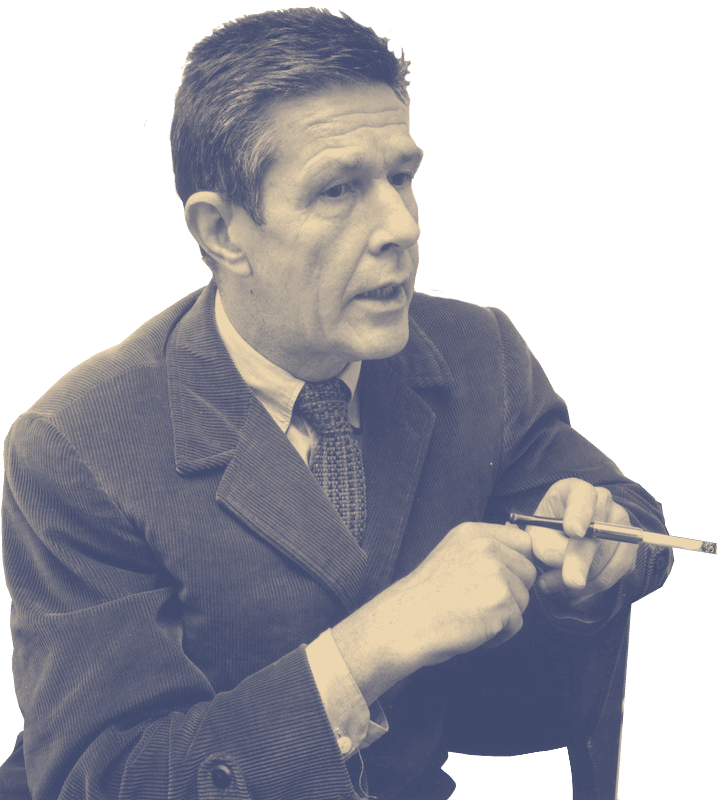
John Cage (1912 to 1992) was an American composer, writer, philosopher and printmaker, and the figure who did most to widen the idea of what music can be. Educated in California and on a study tour of Europe, he studied with Henry Cowell and Arnold Schoenberg, gave up painting for music in 1934 and in 1940 devised the prepared piano, inserting bolts and rubber between the strings so that one instrument became a percussion orchestra. From Music of Changes (1951) he composed with chance operations drawn from the I Ching, so that his own taste would no longer decide the notes, and with 4'33" (1952) he framed silence and the sounds around it as a piece.
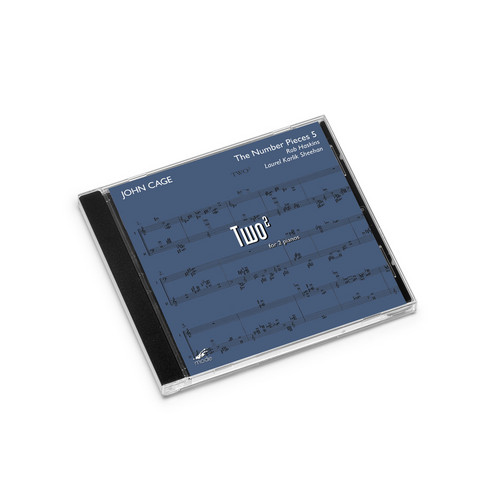
The Number Pieces 5 - Two2
John Cage's Two2 (1989) for two pianos, a renga-based number piece built on time brackets, played in a 74-minute performance by Rob Haskins and Laurel Karlik Sheehan, from the Complete John Cage Edition.
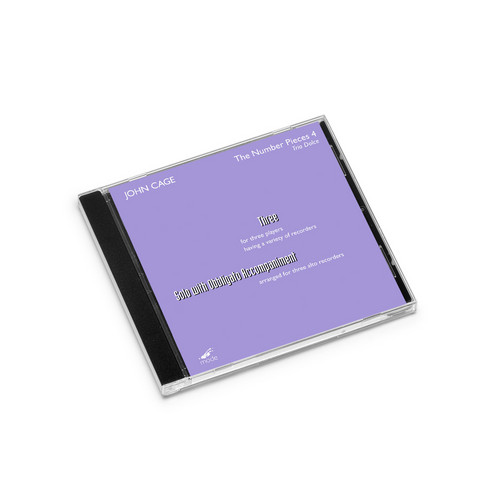
Number Pieces 4
First recording of John Cage's Three (1989) for three recorder players, with his early Solo with Obbligato Accompaniment of Two Voices in Canon (1933-34), performed by Trio Dolce. The Number Pieces 4.
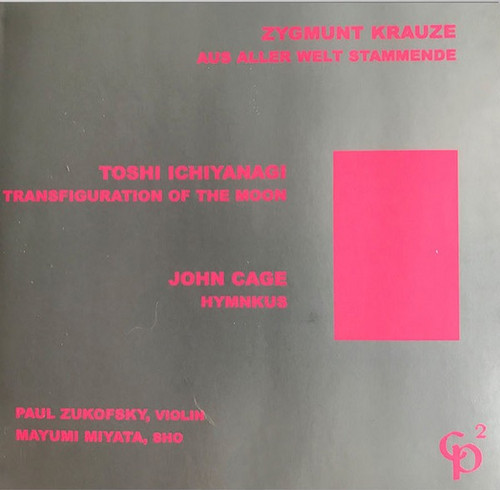
Aus Aller Welt Stammende / Transfiguration Of The Moon / Hymnkus
** 2021 Stock ** CP² Recordings presents Zygmunt Krauze: Aus Aller Welt Stammende, Toshi Ichiyanagi: Transfiguration Of The Moon, John Cage: (1912 - 1992) Hymnkus (version for violin). The Krauze was recorded at Hip Pocket Studios, N.Y.C., on Dec. 10…
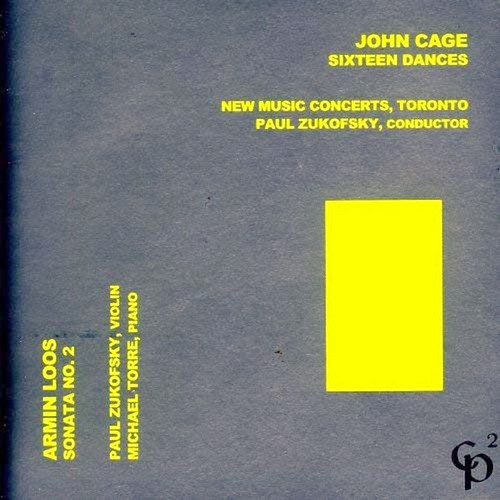
16 Dances / Sonata No​.​2 for Violin and Piano
** 2021 Stock ** CP² Recordings presents John Cage: 16 Dances; Armin Loos: Sonata No​.​2 for Violin and Piano. Performed by New Music Concerts, Paul Zukofsky, Conductor; Paul Zukofsky, Violin, Michael Torre, Piano. This recording was originally relea…
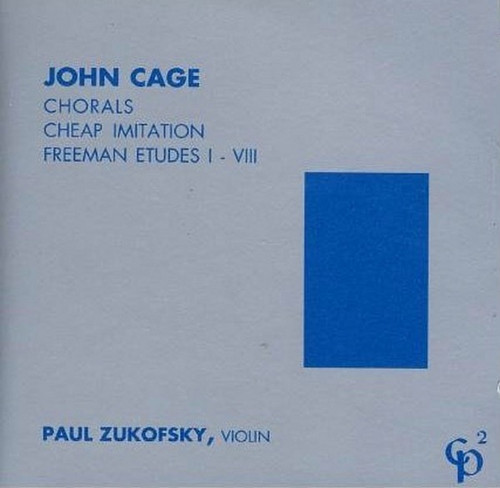
Chorals / Cheap Imitation / Freeman Etudes I​-​VIII
** 2021 Stock ** CP² Recordings presents John Cage: Chorals / Cheap Imitation / Freeman Etudes I​-​VIII performed by Paul Zukofsky, violin. The original recording of the Freeman Etudes was supported in part by public funds from the New York State Cou…
Every Mushroom Is a Good Mushroom
Every Mushroom Is a Good Mushroom includes recipes by John Cage alongside original artworks and texts from Cage and mushroom enthusiasts Isabelle Bucklow, Francesca Gavin, Jason Fulford, Polly Geller, Erik Kessels, Phyllis Ma, Katty Maurey, Michael P…
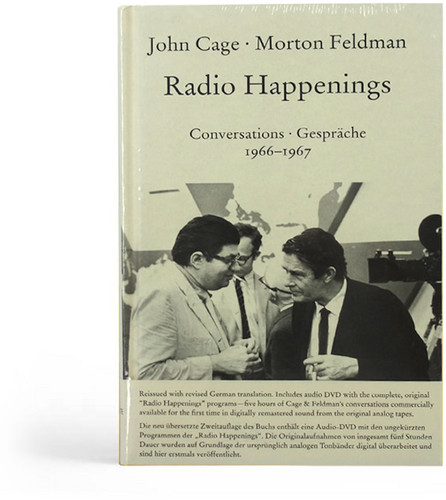
Radio Happenings
** 224-page hardcover book  with audio DVD of the complete 5-hours of audio from the radio broadcasts** In 1966-67, radio station WBAI in New York City invited composers John Cage and Morton Feldman to make 5 one-hour radio conversations. Unscripted …
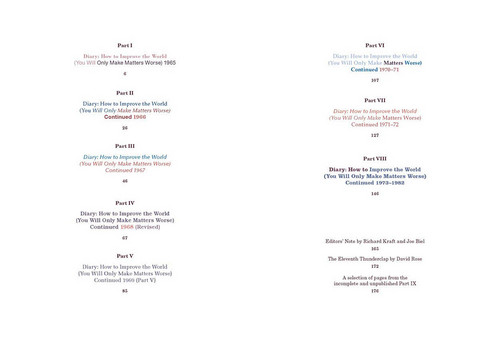
Diary: How to Improve the World (You Will Only Make Matters Worse)
"Over 16 years, beginning in 1965, John Cage compiled anecdotes, observations and koanlike tales, originally typing everything on an IBM Selectric and using chance methods to determine the formatting of texts that twist down each page. The Siglio edi…
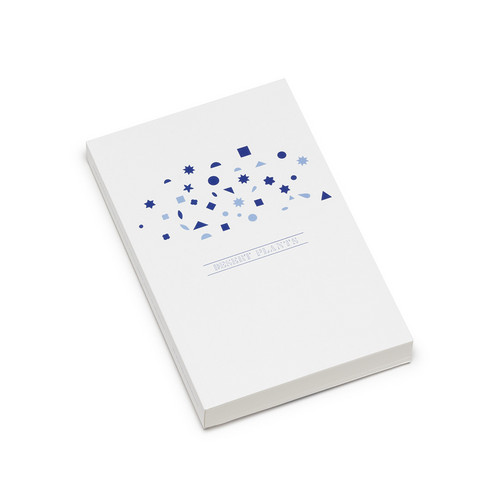
Desert Plants
Facsimile reprint of Walter Zimmermann's book Desert Plants, his interviews with American experimental composers from a 1976 trip to America, with a CD of the surviving interview recordings as MP3 files.
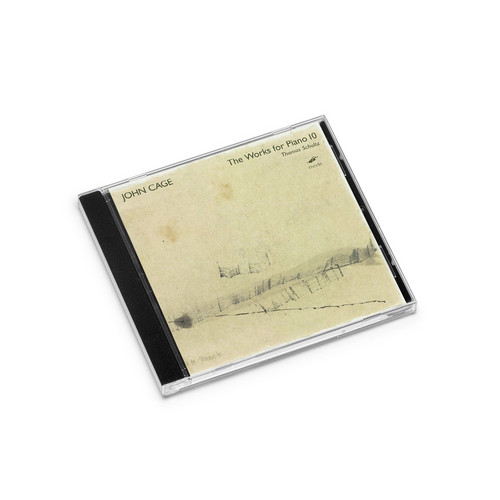
The Works for Piano 10
Volume 10 of Mode's John Cage piano series, with Thomas Schultz playing Two Pieces for Piano (1935), Solo for Piano from the Concert for Piano and Orchestra, Two Pieces for Piano (1946) and Swinging (1989).
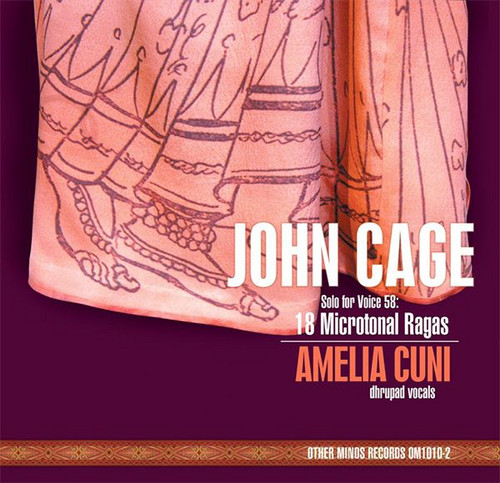
Solo for voice 58 : 18 microtonal ragas
**2021 stock** The world premiere recording of Solo for Voice 58 by legendary American avant-garde composer John Cage. Italian-German dhrupad singer Amelia Cuni is the ideal interpreter, trained in classical Indian singing but also able to improvise …
John Cage Meets Sun Ra: The Complete Film
* Restocked, reduced price * The never-before-seen in its entirety, visual documentation proving this avant-garde collaboration of mythic proportions did indeed occur. Recorded at Sideshows by the Seashore along the Coney Island boardwalk on June 8th…
The 25-Year Retrospective Concert Of The Music Of John Cage (2Lp
Recorded live at Town Hall, NYC in May of 1958, this historic concert (organized by Jasper Johns and Robert Rauschenberg) was a retrospective of Cage’s work from 1934 to the present. The set documents the concert held in the town hall of New York Cit…
John Cage Meets Sun Ra: The Complete Concert
If you were going to envision the ultimate avant-garde meeting-of-the-minds jam session, who would you pick? Even the most hopeful fan of strange and innovative music couldn't have seen this one coming: on one afternoon in 1986, at Coney Island's dil…
A Cage of saxophones 1
Cage's late works for saxophones, Four5, Five4 and Hymnkus, with Ulrich Krieger's arrangements of Ryoanji and Five, played by Krieger and German new music performers. Volume 24 of the Complete John Cage Edition.
The Number Pieces 2: Five³
John Cage's Five³ (1991), one of the late number pieces, for trombone and string quartet, played by Monique Buzzarté and the Arditti String Quartet. Cover etching by Cage, liner notes by James Pritchett.
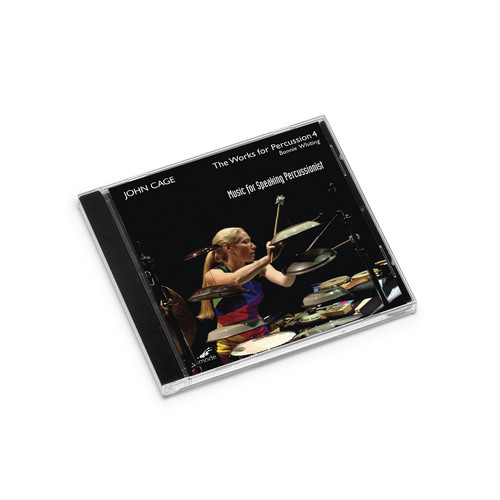
Cage Edition Vol.52 : The Works for Percussion 4
John Cage works for a speaking percussionist, including Bonnie Whiting's realization 51'15.657" and Music for Two (By One), the early voice and piano songs, and a piece by Allen Otte built on Cage's methods.
Klang Der Wandlungen
From the liner notes by Jakob Ullmann (translated by Peter Gebert and Molly McDolan): "It was during a break in the inaugural meeting of the East German section of the IGNM (International Society for Contemporary Music) in March of 1990 when Reinhard…
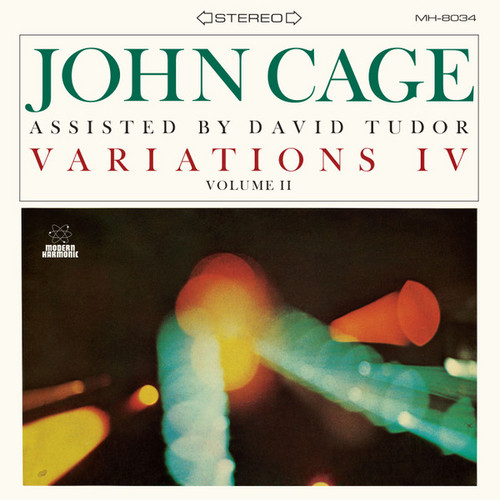
Variations IV, Vol. II
A 1965 journey into found sound; this is John Cage. Another seminal volume of indeterminate music, from an icon of experimental sounds. Reissued for the first time and thematically on gorgeous clear vinyl! It could be argued that there is no more …
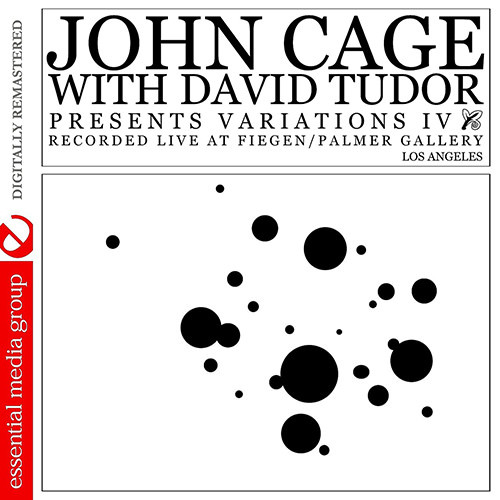
Variations IV, Vol. I
"Due to unprecedented demand" for the first volume of Everest's 1965 release of John Cage's Variations IV (perhaps unique at the time given the experimental nature of the material), a second selection of music culled from Cage and associate David Tud…
1 3 4 5 6 7 8 9 10 11 12 13