Lou Harrison
Lou Silver Harrison (May 14, 1917 – February 2, 2003) was an American composer. He was a student of Henry Cowell, Arnold Schoenberg, and K.R.T. Wasitodiningrat (Pak Cokro). Harrison is particularly noted for incorporating elements of the music of non-Western cultures into his work, with a number of pieces featuring traditional Indonesian gamelan instruments, and several more featuring versions of them made out of tin cans and other materials. The majority of his works are written in just intonation rather than the more widespread equal temperament. Harrison is one of the most prominent composers to have worked with microtones.
Lou Silver Harrison (May 14, 1917 – February 2, 2003) was an American composer. He was a student of Henry Cowell, Arnold Schoenberg, and K.R.T. Wasitodiningrat (Pak Cokro). Harrison is particularly noted for incorporating elements of the music of non-Western cultures into his work, with a number of pieces featuring traditional Indonesian gamelan instruments, and several more featuring versions of them made out of tin cans and other materials. The majority of his works are written in just intonation rather than the more widespread equal temperament. Harrison is one of the most prominent composers to have worked with microtones.
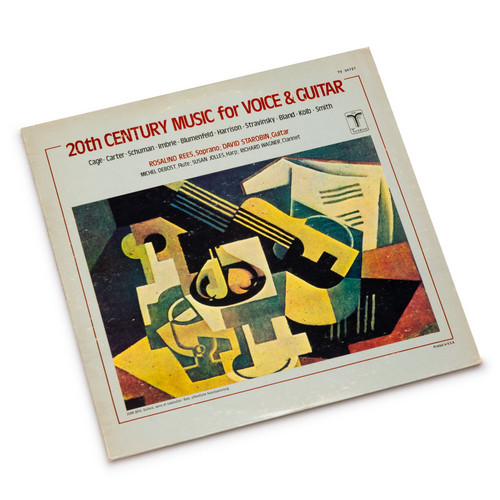
John Cage, Elliott Carter, William Schuman, Andrew Imbrie, Harold Blumenfeld, Lou Harrison, Igor Stravinsky, William Bland, Barbara Kolb, Gregg Smith
20th Century Music For Voice & Guitar (LP)1978 LP on Turnabout with several mainly avant-garde compositions or adaptations for voice and guitar performed by Rosalind Rees and David Starobin. With insert.
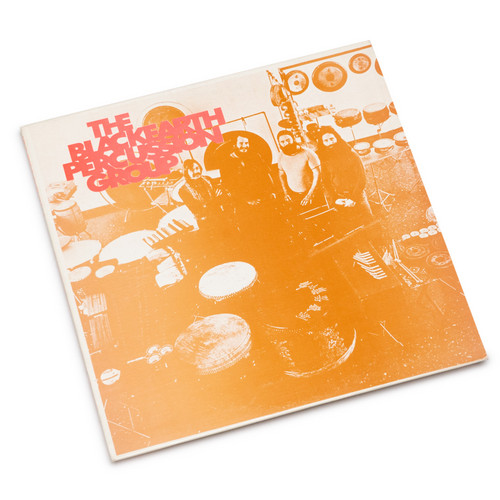
Blackearth Percussion Group (LP)
Great 1974 album on Opus One with six compositions for percussion (and prepared piano), including Cage's Amores and a rare recording of a Bertoncini piece. Never re-issued on either LP or CD. With inserts.
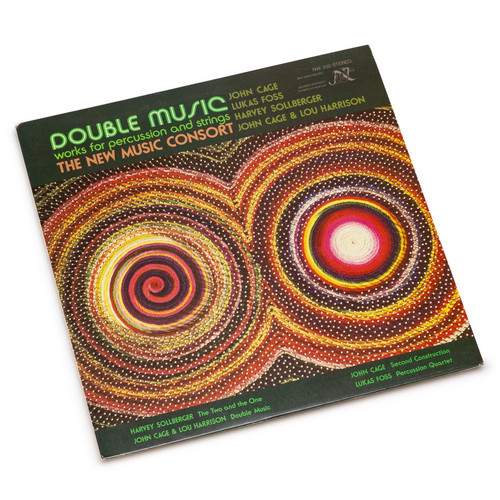
Double Music (LP)
Cage's 1940 piece for percussion and his 1941 collaboration with Harrison plus two compositions for percussion from the 1970's and 80's, performed by The New Music Consort and released by New World Records in 1985.
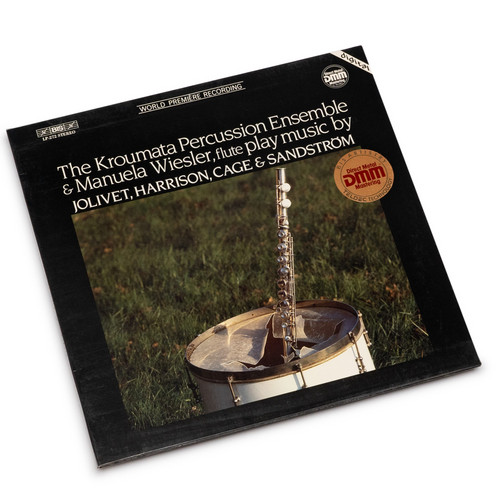
The Kroumata Percussion Ensemble & Manuela Wiesler, Flute, Play Music By Jolivet, Harrison, Cage & Sandström (LP)
Cage's 1943 composition for percussion and prepared piano, plus Harrison's 1939 and Jolivet's 1965 compositions fol flute and percussion, performed by the Swedish ensemble and released by BIS in 1984.
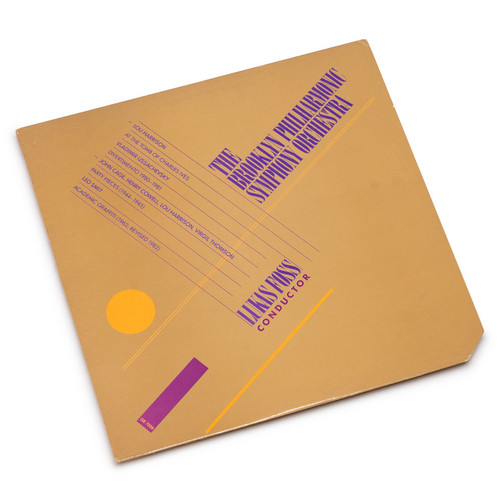
At The Tomb Of Charles Ives / Divertimento / Party Pieces / Academic Graffiti (LP)
Cage's mid-1940's "exquisite corpses" pieces in collaboration with Cowell, Harrison and Thompson, plus Ussachevsky's 1981 electronic valve instrument composition and two 1960's compositions by Harrison and Smit, performed by The Brooklyn Philharmonic Symphony Orchestra conducted by Lukas Foss abd released by Gramavision in 1983.
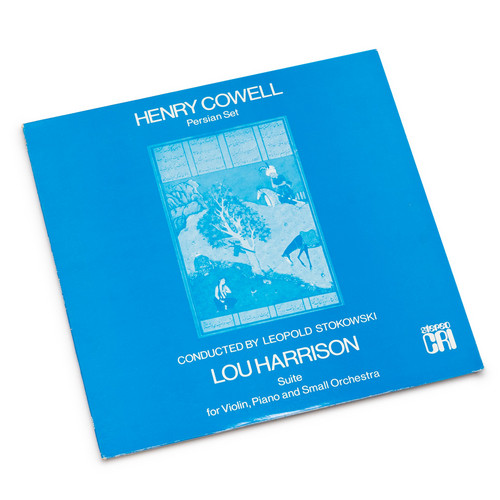
Suite / Persian Set (LP)
1970's re-issue of the 1957 LP on CRI with the pairing of two cross-cultural works composed on the 1950's by the two original and innovative composers, beautifully incorporating respectively Indonesian and Iranian music elements.
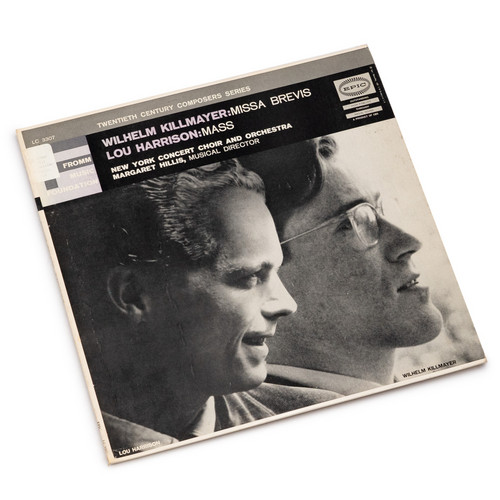
Mass / Missa Brevis (LP)
Two rather unique contemporary masses for mixed chorus (one plus instruments) composed in the 1950's and released on Epic's "Twentieth Century Composers Series" in 1957.
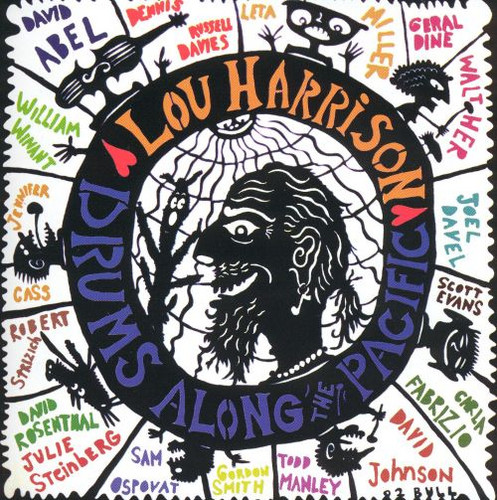
Drums Along The Pacific
2003 release ** "People uncertain about the appeal of an album of percussion music should know two things up front. First, the three longest pieces on Drums Along the Pacific feature a non-percussion solo instrument. Second, Lou Harrison's interest in percussion music was split equally between rhythm and melody. In percussion-only pieces like "Simfony #13" and "Song of Quetzalcóatl" -- both performed here by the William Winant Percussion Group -- he uses sets of instruments with different pitche…
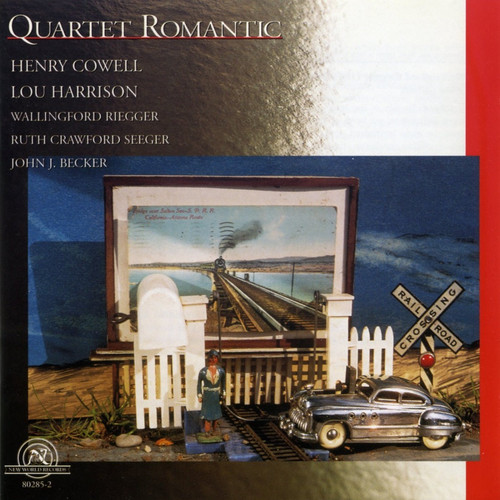
Quartet Romantic
The generation of American composers who came of age in the 1920s are now generally acknowledged as seminal figures in the creation of a truly indigenous American art music. Quartet Romantic makes available for the first time on CD several important chamber works by four of these figures - Henry Cowell, Ruth Crawford Seeger, Wallingford Riegger, and John Becker - as well as an early work by Cowell's most famous pupil, Lou Harrison.
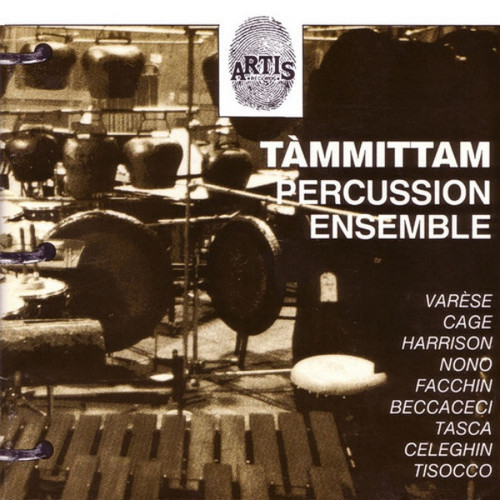
Tàmmitam Percussion Ensemble
1990 release (RARE) **
Ionisation (1933) Edgar Varèse 5:58Trio (1936) John Cage 3:56Canticle (1939) Lou Harrison 4:13Polifonica Monodia Ritmica (1951) Luigi Nono 8:50Gloria E Morte (Words By Marco Luzzi) Guido Facchin 1978 11:21Concerto Da Camera(1986) Roberto Beccaci 9:43Pavone, Mulo, Volpe (1987) Saverio Tasca 5:00Il Respiro Della Notte (Liric By Elena Budini) Luigi Celeghin (1989) 3:55Omaggio A Giocando Duchamp Vinci Leonardo Alfredo Tisocco (1975)
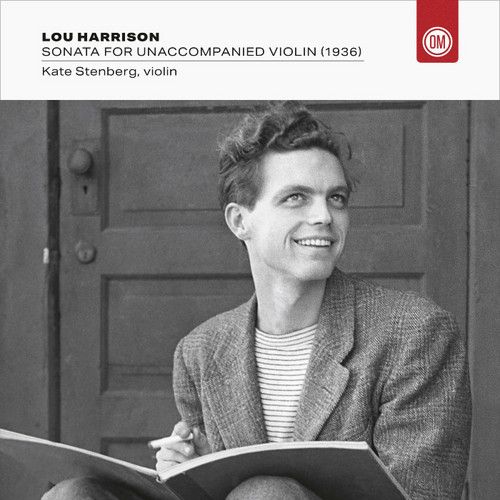
Sonata for Unaccompanied Violin
Other Minds is excited and proud to bring you a near-unheard early composition by legendary American Maverick composer Lou Harrison, Sonata for Unaccompanied Violin (1936), performed by our friend Kate Stenberg. This short piece was written by the precocious composer when he was barely out of high school, still a teenager, but already a year deep into studies under Henry Cowell, studies that occurred during Cowell's stint in San Quentin State Prison.
The piece was entirely unheard from its comp…

The Path at West Holding and Other Poems (Book)
*300 copies limited edition* A collection of the nineteen late poems (1992-2003) of the Renaissance man of music, art, dance and literature, Lou Harrison. Elegantly printed with color illustrations. Including the long ten-part tribute to the composer's longtime partner William Colvig, "The Path at West Holding."
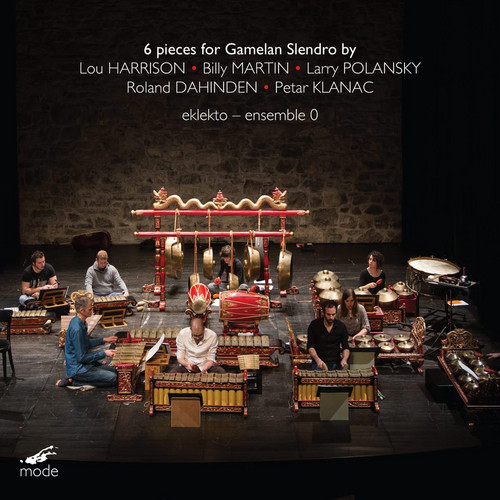
6 Pieces for Gamelan Slendro
Six pieces for gamelan slendro by Lou Harrison, Larry Polansky, Petar Klanac, Billy Martin and Roland Dahinden, played by the French ensemble 0, the Swiss percussion group Eklekto and Gamelan Oksitan.
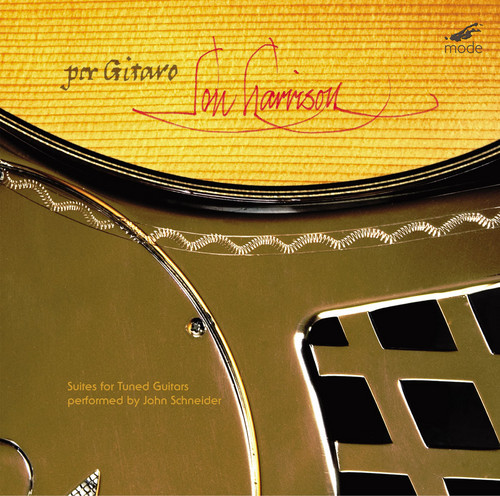
Por Gitaro: Suites for Tuned Guitars
First complete recording of Lou Harrison's reconstructed suites for just-intonation guitar and of the Ditone Set, played by John Schneider, with the first recording of Harrison's Handel homage for guitar and gamelan.
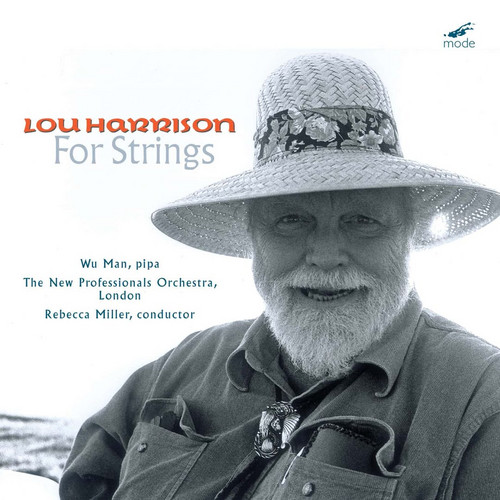
Music for Strings
Lou Harrison's Suite No. 2 for Strings, Suite for Symphonic Strings and Concerto for Pipa with String Orchestra, three first recordings in their categories, played by Wu Man and The New Professionals Orchestra, London, conducted by Rebecca Miller.
Die Natur der Klange: Neue Musik fur Harfe
Gabriele Emde-Hauffe was born in 1953 in Darmstadt, Germany. She received a humanistic education at a local grammar school in Darmstadt and started studying the harp after her A-levels, first in Darmstadt and finishing in Cologne. Conducted by Péter Eötvös, she worked out modern chamber music and modern improvisation by J. G. Fritsch and Vinko Globokar. Passing her exams in 1980 and 1981, she continued her studies of musical science at Cologne University, based on her thesis, "The Harp bet…
Earle Brown Contemporary Sound Series Vol. 1
Few figures of the American avant-garde wore as many hats as Earle Brown. Composer, graphic notation pioneer, member of the New York School alongside John Cage, Morton Feldman, and Christian Wolff - but also, and crucially, a record producer whose ear shaped one of the most important document series in 20th century music. Between 1960 and 1973, working first for Time Records and then Mainstream Records, Brown curated the Contemporary Sound Series - 18 LPs presenting works by 49 composers from 16…
Scenes from Cavafy: Music for Gamelan
Lou Harrison’s (1917–2003) long-term love affair with the Indonesian gamelan had its roots in a course he took from Henry Cowell in the spring of 1935. As Harrison refined his understanding of traditional gamelan procedures during the 1980s, he began to transfer these compositional ideas to works for Western instruments. At the same time, Harrison continued to compose for the Indonesian ensemble itself, indulging a fascination for Asia that had been part of his life since his youth while …
Chamber And Gamelan Works
Lou Harrison believed fervently in music’s power to create cultural bridges. To this end he applied his prodigious skills and creative energies to creating syncretic works that link diverse musical languages. Faulted at times for his eclecticism, Harrison responded with a vibrant defense of hybridity, cultivating a musical multiculturalism long before that term—or even the concept—held the currency it now enjoys. Harrison’s major contributions to twentieth-century American music lie in three mai…
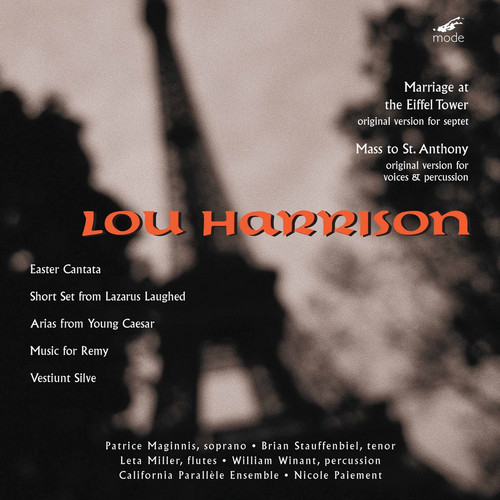
Works 1939 - 2000
Overview of Lou Harrison's work from 1939 to 2000, with first recordings including the original septet version of Marriage at the Eiffel Tower, Mass to St. Anthony, Easter Cantata, arias from Young Caesar and Music for Remy.