Back in stock

Shock
Special 2LP version of EM Records' John Cage Shock series, compiled from the three CD releases. Featured works: 26'55.988" for 2 Pianists and a String Player, Piano Music #7, 0'00", Variations II. Performers include: David Tudor, Toshi Ichiyanagi, Kenji Kobayashi, Yoko Ono and John Cage. Includes rare photos and liner notes in Japanese and English, plus commentary by Toshi Ichiyanagi. In October 1962 John Cage and his great interpreter/co-visionary David Tudor visited Japan, performing seven …
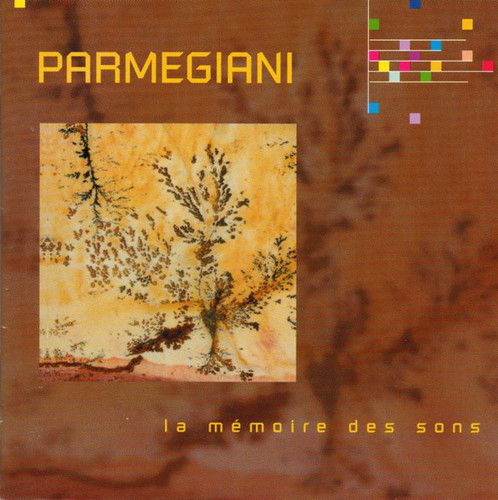
La memoire des Sons
Features 3 works: "Capture Éphémère" (1967); "Sons-jeu" (1987); "La Mémoire des Sons" (2001). "Excepting some rare mixed pieces, Bernard Paremegiani's works as a whole take the form of music for 'fixedsounds', coming within the scope of the immense repertoire of electro-acoustic music. From his training in the art of mime and his experience as a sound engineer, Parmegiani has retained a taste for a hand-to-hand approach (sound/embodiment, as we could be tempted to say) with various sound mate-ri…
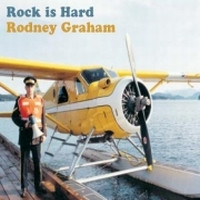
Rock is hard
vancouver's rodney graham is a superstar of modern art and film-with countless installations at acclaimed galleries around the world spanning the last 20 years (new york, berlin, paris, rome, athens, spain, tokyo, la, london, chicago, belgium-you name it, he's been there), and a longtime notable musician born out of the classic vancouver punk and new wave scene. we are pleased to distribute this debut solo album of unique, eclectic, literate, and mature rock songcraft. names dropped around here …

Live At The Waterworks Berlin
Founder of the Steel Cello Ensemble (1970s) featuring various players over the years. The music was produced on steel instruments like the Bow Chime or the Steel Cello that were built by Rutman himself. Among the musicians he collaborated with were Rudi Moser (drummer of Die Haut and Einstürzende Neubauten), Matthias Bauer and Carsten Tiedemann. This is a recording of a concert by Robert Rutman and his steel cello's recorded at a Berlin Art Gallery. If you are unfamiliar with the Steel Cello Ens…
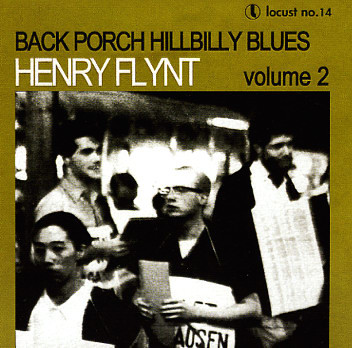
Back porch hillbilly blues vol. 2
LP version. Avant-hillbilly master fiddler Henry Flynt scuffles through a most peculiar set of electrified and acoustic bumpkin fiddle howls and screeches circa early to mid 1960s. From the enviable opening 'echo rock', in which Flynt does his best to compete with the electro-echo buzz of a Jorgen Ingmann or Link Wray to the beauteous instrumental glow of the extended modal country jam of 'Jamboree', Flynt proves once again that his is not a music simply rooted in the taut belt of New York isms,…

Noise As a Language
Abstemious Austrian composer who committed suicide in 2007. Two long pieces, one that builds up from violins all making a slightly different type of scratching. The second piece uses computer processing, and does a great job of establishing a droning floor and then dropping through to a lower frequency beneath, or suddenly revealing a pulse without simply fading things in & out. Comes with a book that contains an interview with Zibigiew Karkowski (Weirdo Records)“So the point is that so mu…
Cut-ups, drones and other weird
American noise group formed 1990 by Joseph Roemer and Rodger Stella in Pittsburgh, Macronympha is rediscovered today through a serie of reprint of old cassettes. Vinyl reissue of a 1993 Macronympha recording, previously issued on CDR in 2007 by Mother Savage. Transparent green vinyl, limited to 350 copies.
Muharram 1392
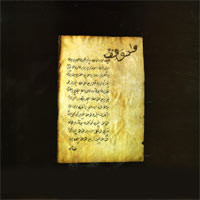
**restocked, few copies left** Almost sold out in pre-sale, act fast! As this album is a treasure, a minblowing reissue (dated 1972) of an intense, spontaneous droney improvisation and the complex Michael Ranta's chiming rhythms interlaced with trance-alike collective passages. It’s a monster! ""...tomorrow i will send you the CD of a very strange anarcho spontaneously improvised sound tableau. it is one of the very first musical projects with Ranta, when we met in Egypt in 1972. i didn't listen…
Poisson
Work of this quality tends to be the product of a self-contained and selfconcsious tradition, even if a hermetic one. And in this case I fancy I can hear the flowering of a Northern/Midlands sensibilty that setms orignally from the A Band, Youngs and Wickham-Smith, and Ashtray Navigations. It is informed by ecstatic jazz but its roots are in pragmatic sonic experimentalism of a determindedly autochthonous kind. You can almost smell the witch trials in this, and I urge you all to catch a h…

Back porch hillbilly blues vol. 1
LP version. A remarkable collection of hillbilly minimalism, by one of the forgotten heroes. These are blocks of generic material subtly changed by reiteration and lack of development. Like Beefheart, Henry Flynt is one of the rare examples of musicians who fearlessly experimented with the blues and folk forms in the face of all contemporary and experimental music orthodoxies. An important recording and a great listen.
Dream
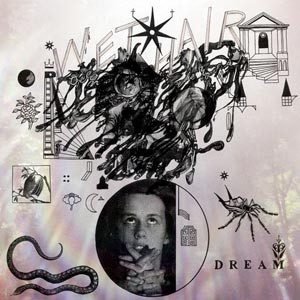
This review for Wet Hair’s excellent debut full-length is dedicated to the late Barry Goldwater, five-term U.S. Senator. In 1984, Senator Goldwater wrote the Cable Franchise Policy and Communications Act, allowing local governments to require public, educational, and government access channels on television sets in their area. This act also wiped said local government’s hands clean of whatever content these channels would feature. Because of this act, because of Barry Goldwater, many a ni…
Transparent Winter
Transparent Winter follows on from the debut release on the always excellent Time-Lag label and releases on the equally great PSF, Opax and A Silent Place. Painting Petals On Planet Ghost is the trio of Ramona Ponzini with Roberto & Maurizio Opalio (aka My Cat Is An Alien). Here they return for a new full length vinyl release on Blackest Rainbow. PPOPG create some wonderfully fragile and unusual experiments that fall somewhere between folk, psychedelia and drone. Ramono Ponzini sings in Ja…
Far Side Virtual
RESTOCKED, last copies around - The Wire's Releases of the Year!!!!!!James Ferraro paints a 21st century still life on his debut album for Hippos In Tanks. The record is called Far Side Virtual. Each song, a melodious reflection of the moment now, comes shrink-wrapped in HD fidelity as glossy as a 2012 Toyota Prius. Ferraro's muse is some enigmatic modern metropolis, where the streets are as slick as i-Pads, and where the symphonies ring with Macbook message alerts. Through the steam risi…
Natives Are Restless
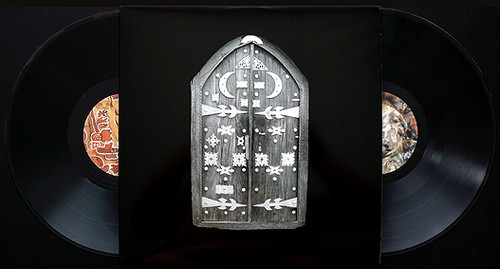
Recorded in 2005/2006 in Portugal and Europe... and they like to dance to the sound of tribal music!
Portraits
Beautiful new full length LP featuring Jefre Cantu-Ledesma (Root Strata, Tarentel), Evan Caminiti & Jon Porras from Barn Owl, Lisa McGee (Higuma), Gregg Kowalsky (Date Palms), Marielle Jakobsons (Date Palms), Maxwell Croy (Root Strata/EN) Steven Dye & Tony Cross (Tarentel alum) and Michel Elrod, who plays tambura with Date Palms, Barn Owl & The Alps among others. Edition of 500. Screen printed jackets. First 100 on color vinyl.
This large group is somehow able to focus and refine their so…
Inland
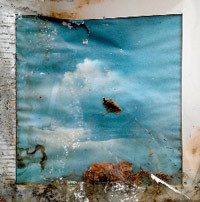
Kye is proud to present Inland, the new LP by Clapton-based Astor. Advancing the cause of 2012's 'Alcor' LP, 'Inland' finds Mark Harwood and sometime collaborator Maja Larsson further complicating reason with dark and circuitous audio constructs. Inland' is sonically conceptualised through the meticulous choice of instrument used: ranging from an array of bells, gongs and ethno-percussion, alongside petrified piano melodies and a grinding organ. Accordingly, this is complemented by the use of T.…
The Shipyard
Tor Lundvall has graced us with yet another remarkable album this year. Previously, Lundvall had introduced himself to Dais with his masterpiece album Sleeping & Hiding and struck lightning twice with the resilient The Seasons Unfold box set and now we are humbled to be crafting the strings with the curation of his most recent effort. The Shipyard was recorded during the dramatic season change-over of '09/'10, during which time Lundvall was immersing himself in portrait studies of local maritime…
Danza Meccanica - Italian Synth Wave Vol. 2 1981 - 1987
"Mannequin is sincerly proud to announce the second volume of the much acclaimed italian New Wave Italian compilation. "Danza Meccanica" is the latest, unmissable chapter in the story of Italian post punk - the less traditionally rock branch. It outlines the approach taken by ten more or less unknown groups who all deserve rediscovery and to be remembered alongside luckier outfits. Ten tracks that spell out the manifesto of a scene fascinated by electronic innovation, a scene that used the sound…
Night within
Last copies, sold out at source: guest contributions include David Sylvian, Daniel O'Sullivan (Miracle and Ulver), Duke Garwood and many others with the two creators, Daniel Lea and Matthew Waters, both taking a directorial role. The album was sculpted in Reykjavik by Ben Frost, enhanced by his signature aural physicality and visceral sub bass. The album is a vast collision of sound, from free brass and woodwind to "geometric" bowed cymbals and metallic percussion.But more than simply music, the…
Home
in just a few short years multi-instrumentalist, singer-songwriter, composer and all round renaissance man Peter Broderick has shot from being a darling of the underground to something far more substantial. Constantly touring, Peter has accrued fans far and wide with his alluring folk songs and gorgeous post-classical compositions, but all this had to start somewhere.A few years ago Peter was kind enough to send Type a package of all his material prior to writing ‘Float’. This came in …