Music from Germany
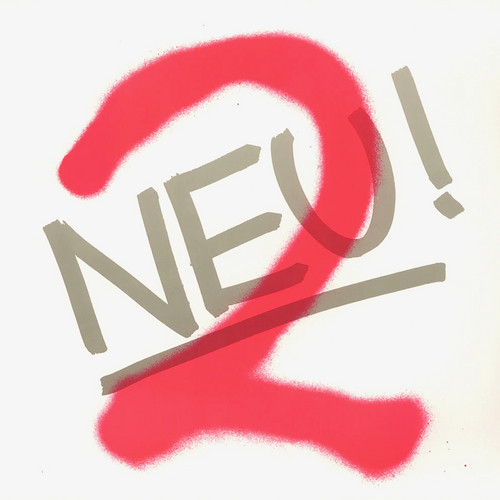
Neu! 2
2024 Repress. A striking gatefold reissue of Neu!'s hugely influential second album, originally released in 1973, supplied by the Gronland label. The A-side's main feature, 'Fur Immer' feels like a counterpart - or even an update - of the opener on their debut, 'Hallogallo', projecting a single, disciplined musical idea across eleven minutes of soaring propulsive precision. One of the most important features of Neu! 2 is the album's second side: having run out of money to record a second side of…

Neu! 75
2024 Repress. Another finely turned out gatefold Neu! edition from the Gronland camp, Neu! '75 is widely regarded as the band's last truly seminal recording together, and was committed to tape after the group reconvened following Michael Rother's time playing as part of Harmonia (the krautrock super-group that also included Cluster). In addition to the more ambient inclinations of the two previous albums (which can still be heard on the concrete sound interactions of 'Leb Wohl'), a newfound rock…
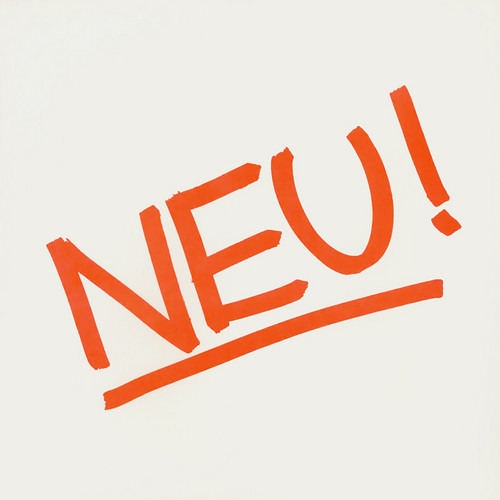
Neu!
2024 Repress. Neu! were formed by Kraftwerk members Michael Rother and Klaus Dinger who took the sparse early Kraftwerk electronic sound and utilized many effects like lock-groove rhythms and minimalist melodies currently used by today's electronic artists. Neu! created a new kind of rhythm that bridged the gap between rock n roll's syncopation and dance music's four-to-the-floor beats. Stereolab's Tim Gane says "Neu!'s longer tracks are far closer to the future of house and techno than guitar r…

Japlan
Der Plan were invited to Tokyo in 1984 to play six concerts for Seibu, a Japanese department store chain. Seibu were staging a “German Week”. But how did they come to choose Der Plan, of all bands? Why not an Oktoberfest combo or the Scorpions? Moritz Reichelt explains: “German New Wave was really popular in Japan. They knew more about it than people here at home. Catalogues and magazines detailed every obscure record and depicted the covers. This particular department store chain was linked …
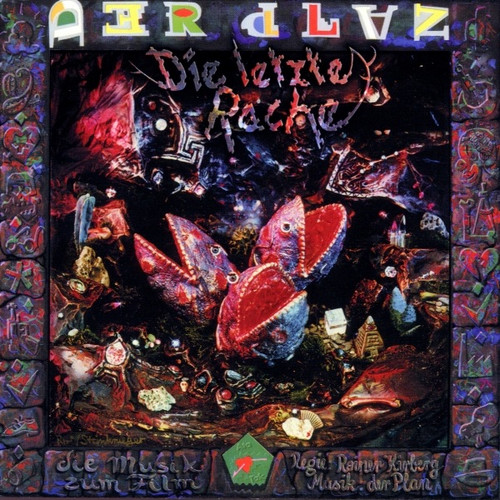
Die letzte Rache
Der Plan (Moritz R, Frank Fenstermacher, Pyrolator) were instrumental in ushering in the German New Wave (NDW) and are considered free spirits of synthesizer pop: electronic music created with minimal means, sometimes experimental, playful or even bordering on dilettantism, but always with a sense of humour.
Retrospectively, it makes perfect sense that Der Plan created a soundtrack. For one thing, visuals were almost as important to Der Plan as their music. And if every self-respecting pop b…
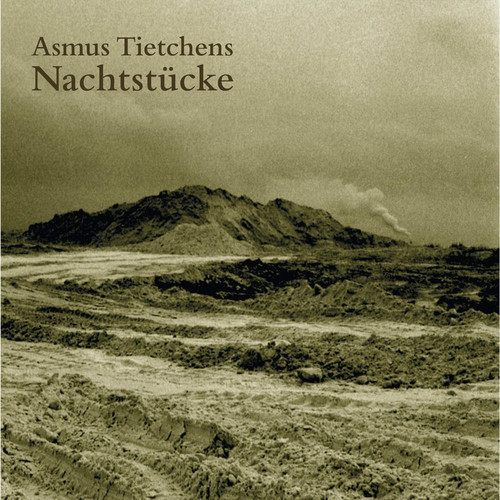
Nachtstucke
LP version. Pressed on 180 gram vinyl. Nachtstücke owed its publication to former Tangerine Dream member Peter Baumann, who was asked by the French label Barclay/EGG to produce three albums focusing specifically on German electronic music. He was working with Hans-Joachim Roedelius at the time, who had been given a few Tietchens tracks on cassette. When Baumann heard Roedelius play them in the studio during a break in proceedings, they sparked his interest and he met up with Tietchens some time …
Der Funfte Himmel
LP version. Pressed on 180 gram vinyl. Between 1981 and 1983 Asmus Tietchens released four albums on the Sky Records label, fusing rhythmic set pieces and off-kilter sounds into gaudy escapades of saccharine artificiality. The "pseudo-pop" epithet reflected their frequently ironic air. All four records have been reissued by Bureau B in their original form. What remained may be found on this collection. Der fünfte Himmel ("The Fifth Sky") retrieves those pieces which were denied a place on the or…
In die Nacht
Bureau B reissues Asmus Tietchens' third solo album on Sky Records, originally released in 1982. It stands to reason that any musical journey undertaken by a skeptic like Asmus Tietchens is destined to head into the night (In die Nacht) rather than into the day. In die Nacht, the third album in the so-called time signal ("Zeitzeichen") phase, continuing in the same vein as Biotop (BB 141CD/LP) and Spät-Europa (BB 142CD/LP), while laying down its own stylistic markers, no doubt attributable to th…
Litia
LP version, on 180 gram vinyl. Released in 1983, the Litia album concluded Asmus Tietchens' études phase and bid a farewell to rhythmic synths -- well, almost. All the signs of "pseudo pop" as heard on Biotop, Spät-Europa, and In die Nacht resurfaced: squeaky sounds and protracted, rattling rhythms grouped into abstract forms through their accentuated artificiality. Sporadic noisiness is as much a part of it as is a winking gesture, which should not detract from the basic sobriety of the work, h…
Silber
A collection from Conrad Schnitzler's archive, recorded between 1974 and 1975, originally released on LP only in 2009. Contains the complete original material (three more tracks than the 2009 release) on CD for the first time (with original running order). Just when you think you have grasped Conrad Schnitzler's master plan, every time you kid yourself into predicting what you are about to hear, the next record comes along to prove you wrong. Motorik is writ large throughout. Even the less rhyth…
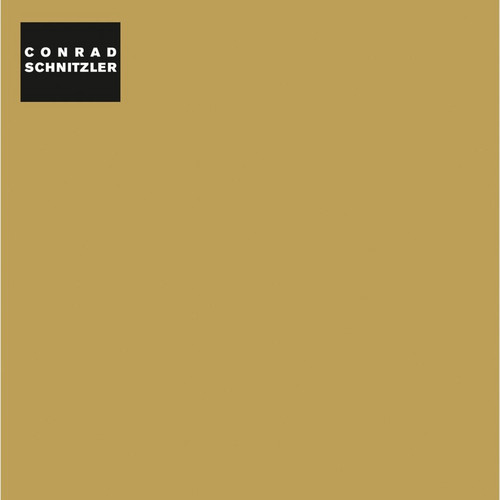
Gold
LP version. Bureau B presents a song collection from Conrad Schnitzler's archive, recorded between 1976 and 1978, originally released by the small German label Marginal Talent in 2003. In the comprehensive canon of Schnitzler releases, the music on the Gold album stands out a mile in every respect. Judged on the sound alone, there is little to suggest that the material was recorded as long ago as the 1976 to 1978 period. There is more at play here than two tape recorders, analog synthesizers and…
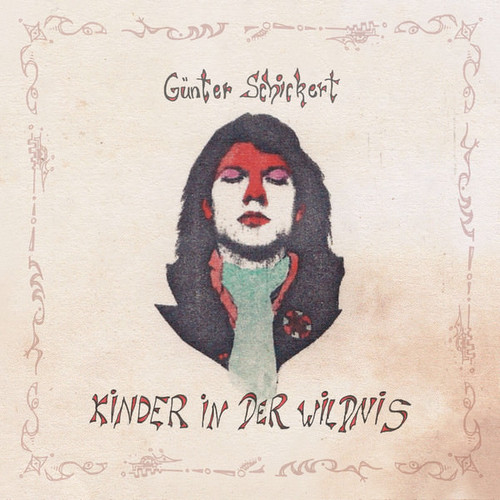
Kinder in der wildnis
The fact that this album appeared at all in 1983 owes less to Günter Schickert and more to Steven and Alan Freeman, who sought him out for their Krautrock encyclopedia The Crack in the Cosmic Egg. On learning that Schickert had heaps of recordings in his archive, the Freeman brothers proposed compiling an album. Schickert agreed and handed over material which the English YHR label had released in cassette form. Kinder in der Wildnis is a more heterogeneous album than either of its predecessors, …
Congratulacion
More from the inexhaustible archive of Berlin's electronic anarchist. Schnitzler stacks pulsing sequences and caustic tone-colours into restless, self-contained machines of sound: uncompromising, hypnotic and utterly his own.
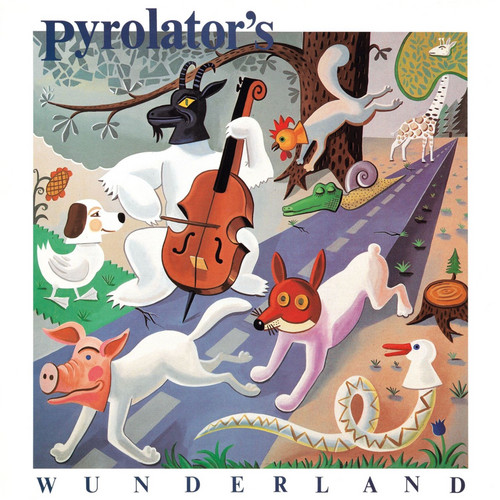
Pyrolator's Wunderland
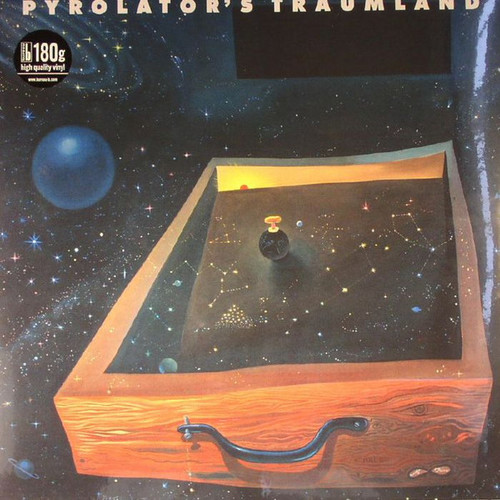
LP version, on 180 gram vinyl. Bureau B reissues Pyrolator's Wunderland, originally released on Ata Tak in 1984. Quote 1: "I have always strived for the opposite of whatever is hip at the time." (Pyrolator in June 2013) Quote 2: "Wunderland is so beautiful -- the first time I heard this record, I cried." (Andreas Dorau). New York City, 1983. Andreas Dorau has a gig at Danceteria and Pyrolator accompanies him as sound engineer. Back then, it really looked as if Ata Tak could make a go of it in th…
Pyrolator's Traumland
LP version, on 180 gram vinyl. Bureau B reissues Pyrolator's Wunderland, originally released on Ata Tak in 1984. Quote 1: "I have always strived for the opposite of whatever is hip at the time." (Pyrolator in June 2013) Quote 2: "Wunderland is so beautiful -- the first time I heard this record, I cried." (Andreas Dorau). New York City, 1983. Andreas Dorau has a gig at Danceteria and Pyrolator accompanies him as sound engineer. Back then, it really looked as if Ata Tak could make a go of it in th…
Do You Know Otahiti?
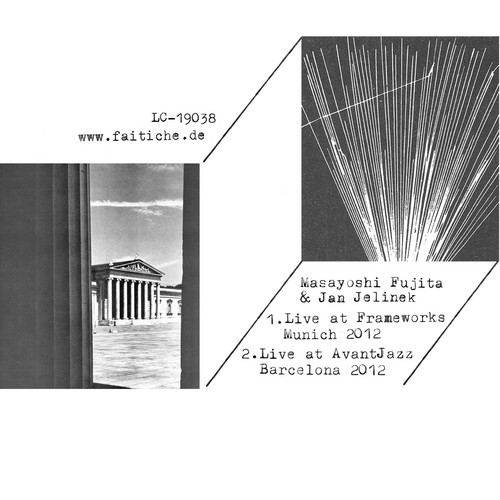
The third of four Faitiche compilations (due to be collected in one boxset), 'Do You Know Otahiti?' features Jan Jelinek in collaboration with Japanese vibraphone player Masayoshi Fujita, along with two solo pieces. Recorded live at Frameworks, Munich, 2012, the first duo part ascends from hushed jazz to a slow swelling cosmic vortex with wonderful subtlety, and the 2nd, Live at AvantJazz, Barcelona, 2012 feels more exotic, drifting and lilting, with trickling drums and dusty ambience. The title…
Just like a flower when winter begins
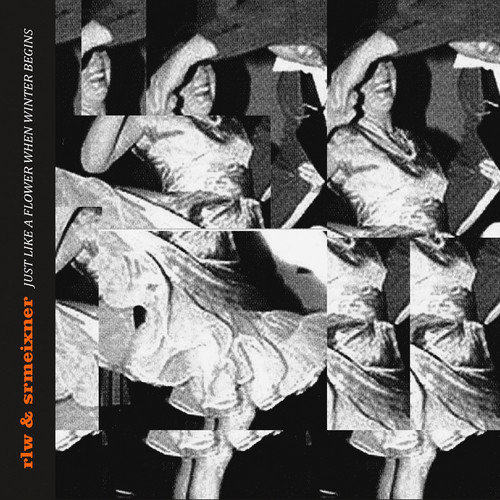
Recorded by RLW (Ralf Wehowsky of P16.D4) and srmeixner (Stephen Meixner of Contrastate) between 2010 and 2013. The first emanation of the project came up with two versions of one mutual piece (Sunglasses by rlw, Wishing by srm). The core structural elements of the release can be seen in srm's meditation on sentiment (old hearts) and rlw's textased pieces (Prach-tjunge, Alle, Definition). More instrumentally based are Gummidorf (srm) and Spaßbremse rlw). Beyond this a signment both artists have …

Fast ohne Titel, Korrosion
Black Rose Recordings are proud to present the exceptional new album by Asmus Tietchens. Corrosion is a degradation mechanism. It is an insidious process often difficult to recognise until deterioration is well advanced. Are these new pieces a comment on the current state of noise music, serious music or both? As a pioneer of electronic composition his work spans over three decades and doesn't fit easily into any one category. Early recordings ranged from experiments with tape machines and elect…

Harding greens. Symphonie fur Kartonagen
22 cardboard boxes in various sized bowed by 22 players with bowing technique that produce a new, almost silent sound in all imaginable nuances.
World premiere with the Echtzeitmusikensemble, conducted by Titus Engel with: Alexandre Babel, Burkhard Beins, Tim Blue, Anthea Caddy, Johnny Chang, Gesine Conrad, Werner Dafeldecker, Chris Dahlgren, Agnieszka Dziubak, Helena Gough, Andreas Hirtler, Tisha Mukarji, Nathalie Hörhold-Ponneau, Berit Jung, Klaus Kürvers, Hannes Lingens, Morton Olsen, Michael…

The Cassiber Box 1982 - 1992
Milestone reissue! In 1982 Cassiber (phonetically: ‘a message smuggled out of prison’) crashed like a locomotive into the Deutsche Neue Welle. Founded by Heiner Goebbels, Alfred Harth, Christoph Anders and Chris Cutler, Cassiber managed to fuse materials and attitudes drawn from experimental rock, fringe jazz, punk, pop, plunderphonics, improvisation, close structure and musique concrete with an energetic and complex form of studio (and then concert) composition that was unique in its comb…