Asmus Tietchens
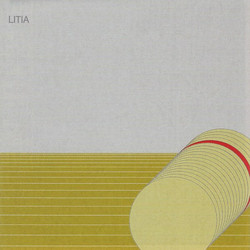
Litia (Lp)
Tracked express shipping from Italy, no customs or import VAT in the EU. Shipping costs
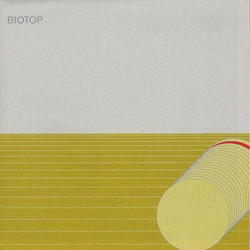
LP version, on 180 gram vinyl. Released in 1983, the Litia album concluded Asmus Tietchens' études phase and bid a farewell to rhythmic synths -- well, almost. All the signs of "pseudo pop" as heard on Biotop, Spät-Europa, and In die Nacht resurfaced: squeaky sounds and protracted, rattling rhythms grouped into abstract forms through their accentuated artificiality. Sporadic noisiness is as much a part of it as is a winking gesture, which should not detract from the basic sobriety of the work, however. Musik aus dem Aroma Club (1998) is Tietchens' first openly-parodic work, not that he had ever lacked humor. Take the plays on words in his titles, with "Unterhaltungsmusik" mutating to "Unterhaltsmusik" ("light" music becomes "livelihood" music) or the appropriation of terminology from respiratory medicine ("Nebulizer" is another word for an atomizer). The banality of everyday life proves itself to be unconquerable: "Auf Elf" ("On Eleven") refers to the fact that the piece is archived on a tape with the number 11 -- nothing more profound than that. What sets Litia apart from its three predecessors is the wider pool of instruments at Tietchens' disposal. For the first time, he had a digital rhythm machine which could play samples; then there was the Korg Polysix synthesizer, a hybrid of analog and digital technology. The polyphonic transition piece could not actually create samples, but could at least simulate the sounds of instruments. As the Korg Polysix and rhythm machine could be synchronized, "a whole new world of sound" beckoned.Günter Körber of Sky Records exited the scene after Litia, as Tietchens turned his attention to "rhythmic-harmonic set pieces." It was not until 1996 that Rattenheu was issued, featuring material which dated back to 1984 and now -- augmented by further tracks from this period -- representing the fifth "Zeitzeichen" album to be reissued by Bureau B.
Format
2013 reissue on Bureau B. All of the names in the line-up of "Das Zeitzeichenorchester" are anagrams of Asmus Tietchens. Credits translation:
Digitale Synthetics = Digital Synthetics
Rhythmusprogramme = Rhythm Programs
Effekte = Effects
Peripherie = Peripheral Equipment
Lebende Regler = Living Controllers
Rokko Ekbek is an anagram of Okko Bekker. Recorded and mixed at Audiplex Studios, Hamburg
Release notes
Originally released 1983 on [url=https://www.discogs.com/Asmus-Tietchens-Litia/release/299470]Sky 087[/url]. Issued with a printed inner sleeve with liner notes and credits. ℗ + © 2013 Bureau B Made in the EU. All of the names in the line-up of "Das Zeitzeichenorchester" are anagrams of Asmus Tietchens. Credits translation: Digitale Synthetics = Digital Synthetics Rhythmusprogramme = Rhythm Programs Effekte = Effects Peripherie = Peripheral Equipment Lebende Regler = Living Controllers …
| A1 | Zeebrügge | 7:13 | |
| A2 | Abhuster Nebulizer | 2:22 | |
| A3 | Unterhaltsmusik | 2:23 | |
| A4 | Vorsaison | 4:18 | |
| A5 | Pollys Square Dance | 2:54 | |
| B1 | Torpedo Ahoi | 5:12 | |
| B2 | Energie-Dossier | 2:31 | |
| B3 | Ritual Der Kranken Freude | 9:41 | |
| B4 | Litia | 1:40 | |
| B5 | Auf Elf | 1:44 |
- Tina Tuschemess
- Cover
- Hans Tim Cessteu
- Drum Programming [Rhythmusprogramme]
- Tussi Schemante
- Effects
- Sam 'The Cute' Sins
- Electronics [Peripherie]
- Kerstin Holzwarth
- Layout [Reissue]
- Kai U. Jürgens
- Liner Notes
- Gareth Davies
- Liner Notes [Translation]
- Willem Makkee
- Mastered By
- Mischa Suttense
- Mixed By [Lebende Regler]
- Rokko Ekbek
- Producer
- Gunther Buskies
- Producer [Reissue]
- Thomas Worthmann
- Producer [Reissue]
- Achim Stutessen
- Synthesizer [Digitale Synthetics]
- Asmus Tietchens
- Synthesizer [Synthetics], Composed By