Music from Japan

Mellow Dream
On Mellow Dream, Ryo Fukui deepens the lyrical sparkle of Scenery into something more sculpted and powerful: bittersweet themes, surging originals and a clearer, three‑dimensional swing that many hear as the true apex of his studio work.

Ryo Fukui Trio at the Slowboat 2004
On Ryo Fukui Trio At The Slowboat 2004, Ryo Fukui turns the ninth anniversary of his Sapporo club into a late‑career summit: Phineas‑ and Flanagan‑inspired fire, Shorter‑charged intensity and Slowboat’s living‑room warmth fused into powerful, precise, deeply fulfilled playing.

Live At Vidro '77
On Live At Vidro ’77, Ryo Fukui Trio explode the cool perfection of Scenery and Mellow Dream into raw stage heat: a newly unearthed club tape where “Mellow Dream” stretches past 16 minutes and standards ignite into hard‑swinging, edge‑of‑the‑seat catharsis.

A Letter From Slowboat
On A Letter From Slowboat, Ryo Fukui makes a late‑career return to the studio that feels like a love note to his Sapporo club: standards and originals rendered with stronger touch, deeper emotion and an almost glowing lyricism shaped by a lifetime at the piano.

My Favorite Tune
On My Favorite Tune, Ryo Fukui steps out alone at the piano for the only time on record, revisiting “Scenery” and “Mellow Dream” while unveiling northern‑lit originals that fuse bebop depth with a distinctly Hokkaido sense of stillness and space.

Moon Stone
On Moon Stone, Mikio Masuda channels the plush 70s crossover of Bob James and Ramsey Lewis into a distinctly Japanese fusion: electric keys, supple grooves and subtly psychedelic guitars gliding between jazz, rock and mellow funk.

Masao Yagi Plays Thelonious Monk
On Masao Yagi Plays Thelonious Monk (1960), Masao Yagi leads a sharp Tokyo quintet through an all‑Monk program, translating Thelonious’s craggy angles into a supple, swinging Japanese modern‑jazz dialect without smoothing away the music’s built‑in mischief.
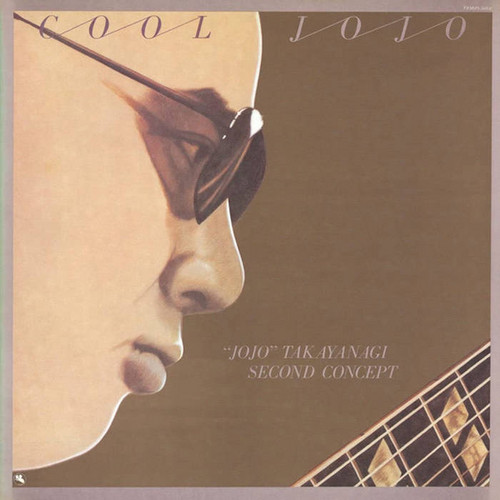
Cool Jojo
Cool Jojo was recorded from 3 to 5 December 1979 at Epicurus Studio in Tokyo under the direction of guitarist Masayuki Takayanagi. The album features the band ‘Second Concept,’ combining electric guitar, saxophone, keyboards, bass, and drums. The programme consists mainly of original compositions reflecting the band's electric jazz and experimental orientation in the late 1970s.
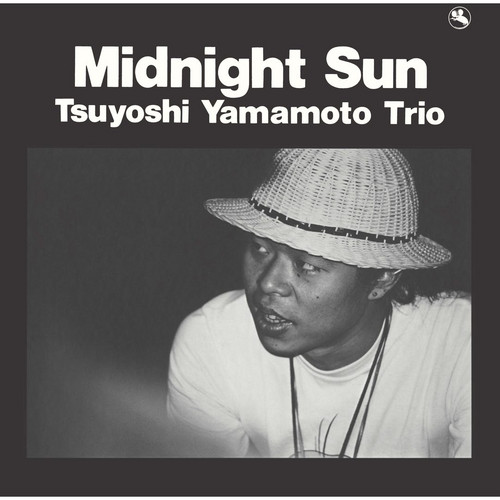
Midnight Sun
Recorded in Tokyo in June 1978 after his stay in the United States, Midnight Sun captures the Tsuyoshi Yamamoto Trio in a format typical of the Three Blind Mice aesthetic: full, dynamic sound and natural breathing of the playing. Between standards (‘Autumn Leaves’, ‘Love Is Here To Stay’) and more personal themes, Yamamoto favours melodic narration, with a deep left hand and a very singing touch.

Aya's Samba
Johnny’s Disk record is an independent jazz label run by the owner of jazz cafe Kaiunbashi no Johnny located in Rikuzentakata city in Iwate prefecture, Japan. The legendary label released a string of albums of high quality but down-to-earth music, spanning from modern jazz, avant-garde jazz to left-field pop. Albums such as “Farewell my Johnny / Left alone” and “Aya’s samba” has reached cult status among fans as some of the best works to come out of the japanese jazz scene.
Another japanese jazz…

Apryl Fool
The Apryl Fool’s self-titled album Apryl Fool (1969) is a singular psychedelic rock record born from the collaboration between Japanese musicians Hiro Yanagida and Takashi Matsumoto and American producer Gary Walker. The album fuses West Coast psychedelia with baroque pop, orchestral arrangements, and subtle Eastern melodic sensibilities, creating a richly textured and cosmopolitan sound that stood apart from both mainstream American psych and contemporary Japanese rock. Though commercially over…

Nirvãna-Symphonie (LP)
Majestic fusion of avant-garde and traditional Buddhist chanting and bells, the composer's 1958 cosmic masterpiece released in 1962 on Time's "Series 2000" contemporary music series directed by Earle Brown, with cover by Yoko Ono.

Nirvana Mandala (LP)
European edition released on Philips in 1980 of the two cosmic symphonic masterpieces composed in 1959 and 1960 fusing Western avant-garde and the Buddhist world.

Bacchanale / Phonologie Symphonique / Music For Symphony Orchestra / Triptique For String Orchestra (LP)
1971 Italian edition on La Voce Del Padrone's "Modern classics" series of the Angel/Toshiba LP with four orchestra compositions composed in the 1950's blending Western avant-garde with Japanese tradition. With insert.

Asterism / Requiem / Green / The Dorian Horizon (LP)
1970 album on RCA which is the best introduction to the Japanese composer's beautiful orchestral music of the 1960's, conducted by Seiji Ozawa. Essential.
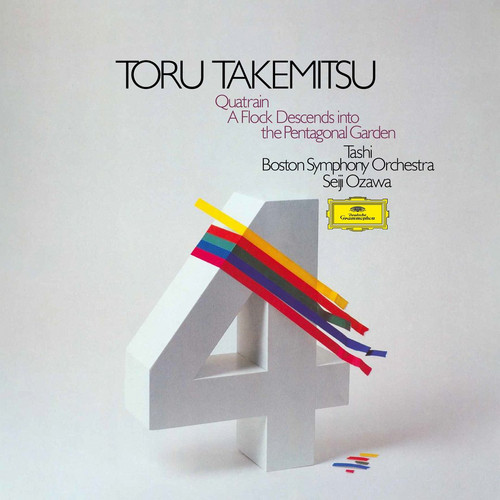
Quatrain / A Flock Descends Into The Pentagonal Garden (LP)
Classic 1980 DGG release with two of the Japanese composer's most acclaimed and accessible compositions from the 1970's.
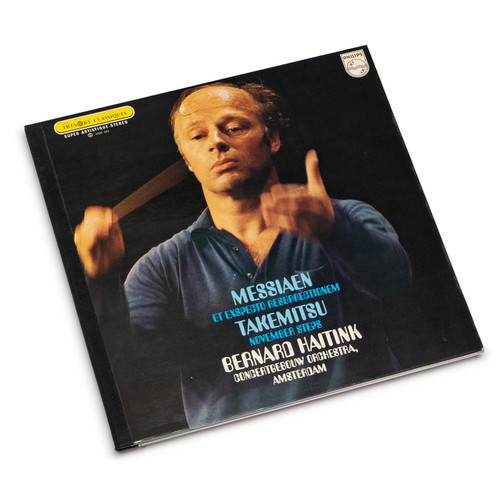
November Steps / Et exspecto resurrectionem (LP)
Appropriate pairing of two orchestral avant-garde masterpieces composed in the 1960's on Philip's 1970 LP in the "Collection Trésors Classiques".

Piano Space 1 (LP)
1978 LP on Angel with a selection of experimental piano compositions from the box set with the same title, focusing on pieces by Japaniese composers from the 1970's, perfromed by Aki Takahashi.

12.16
Tori says "12:16 is a piece where I recorded all the sounds of my daily life from waking up in the morning to going to bed at night on December 16, 2025, compressed that recording into an approximately 15-minute track, added my piano and other materials (such as Lee Morgan's riff, the line " Wandering around the mountains is painful" from the Noh chant "Yamanba," and Kazuo Funaki's 1969 song "Yūbae no Futari"), played it at the live venue, and performed along with it. The PC operation at the ve…

Grimethorpe Special (LP)
Four avant-garde works for brass band composed in the 1970's and performed by the Grimethorpe Colliery Band conducted by Elgar Howarth, released on Decca's "Headline" contemporary music series in 1977. With insert.