Music from United States
Music For Percussion Quartet
As early as in 1942, in Credo in Us, Cage employed not only a percussion ensemble but also sounds from the radio and records. Therefore, quite in accordance with what the composer would have wished, the materials used by the Percussion Ensemble Mainz in this recording range from Beethoven's fifth symphony (vinyl record, including the rustling) to ABBA, Tina Turner and advertising slogans. It goes without saying that rhythms play an important part in music for percussion. Cage, though, was also i…

Sonatas & Inteludes
The sonata originated in the Baroque as a small, one-movement form, which nevertheless already contained the core of the sonata to be later developed and composed in elaborate detail by the Viennese Classics. In his Sonatas and Interludes John Cage stuck to the concise, one-movement form, thus establishing a link to Scarlatti and Bach's preludes as well as to Chopin's Préludes and Satie's piano pieces. Other than many of his later, freer works, these small but complex gems are fixed and noted do…
Three Voices
This piece is sung by the Swiss “deep voice”, Marianne Schuppe in trio with herself, a feat made possible by playing back recordings of her own voice. This is not minimal music; melodic lines arise, sensual, beautiful, and undoctored, swaying like a lullaby, yet boosting the overall rhythmic intensity. There cannot be many works which demand of the soloist such careful timing, intense concentration and voice control.
For Bunita Marcus
For Bunita Marcus was written in 1985. "This work, which I have dedicated to Bunita Marcus, [...] deals with the death of my mother, and with the notion of a slow death. I simply didn't want the piece to die. So I used this unwillingness compositionally in order to keep the piece alive, like a patient suffering from an terminal disease, for as long as possible." (Feldman) It is not the loud raging, the last furious revolt of a dying human being that Feldman depicts here, but a slow nodding off a…
Triadic Memories
In other works, such as For Philip Guston, which continues for several hours, Morton Feldman actually would go beyond the bounds of possibility, also overtaxing the concentration of both his musicians and his audience. Nevertheless, like these other words Triadic Memories also requires contemplation, listening without restlessness. Though perhaps not intended by Feldman, a strong contemplative element is inherent particularly in this composition, settling like a haze on the tones that seep in sl…
Violin and Orchestra / Coptic Light
Morton Feldman dedicated a whole series of compositions to the relationship between solo instruments and the orchestra: after Cello and Orchestra (1972), Piano and Orchestra (1975), Oboe and Orchestra (1976) and Flute and Orchestra (1977/78) his Violin and Orchestra (1979) marks the conclusion of these "relationship works." The variety of sound accumulated around the violin, or through the violin, in less than an hour's time ranges from delicate whispers to cantilenas in rich tones and sharp rep…
Orchestral Works & Chamber Music
In the early 1970s Feldman increasingly turned his attention to works for orchestra, in most cases combined with a solo instrument, like Piano and Orchestra (1975). One aspect that was important to him in all of these works was a research into sound, an "unceasing effort to create, by way of exclusion and integration, by operating with colored projection surfaces and various spatial levels, a kind of self-supporting structure elastic enough to take up the exactly fixed initial impulse and contin…
Piano and Orchestra, Palais de Mari, Piano
In the early 1970s, Feldman increasingly turned his attention to works for orchestra, in most cases combined with a solo instrument. The compositions dating from this period include, among many others, Cello and Orchestra (1972) or Oboe and Orchestra (1976). One aspect that was important to him in all of these works was a research into sound, an "unceasing effort to create, by way of exclusion and integration, by operating with colored projection surfaces and various spatial levels, a kind of se…
Neither
An opera? An anti-opera? A monodrama? Whatever it may be: Neither (1977) marks the meeting of the kindred artistic souls of Samuel Beckett and Morton Feldman.
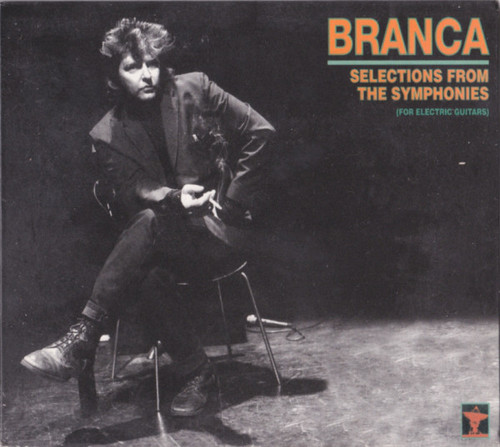
Selections From The Symphonies (For Electric Guitars)
Intro sampler collection of Glenn's various guitar orchestra classics for the uninitiated. Glenn has personally selected a track listing representative of his absolute unique-on-this-planet vision, with material ranging from the delicate celestial beauty of Symphony No. 3 to the demonical, otherworldly terror unfurled in No. 10. Selections is the ultimate 'in' to Branca's work if you're yet unacquainted with the most influential composer of the era.
Monoliths & Dimensions
FINALLY ARRIVED: SUNN O))) is proud to present their seventh studio album in 10 years of existence. The album showcases the core guitar duo--STEPHEN O'MALLEY and GREG ANDERSON--incorporating influences from a plethora of guest musicians, bringing the Sunn O))) sound to epic new levels. The band also collaborated with composer EYVIND KANG on various acoustic ensembles, in addition to the Helios fueled electric guitars and basses. Key players on the album include Australian guitar genius OREN AMBA…
23 Standards Quartet
This 4-CD set (4.5 hours of music) was recorded during a series of concerts in 2003 by Antony Braxton's quartet featuring Kevin O'Neil on guitar, Kevin Norton on percussion, Andy Eulau on bass and Anthony Braxton on saxophone. Here they perform standards. Personnel: Anthony Braxton (saxophone); Kevin O'Neil (guitar); Andy Eulau (bass instrument); Kevin Norton (percussion). Recording information: 2003.

Rose Pillar
180 Page Hardcover Book with 11" Record, featuring Kevin Drumm. What separates Dominick Fernows Prurient project from the rest of the contemporary underground cannon is its unyielding personal subject matter. From the inception of Prurient the concept has always utilized intimate details, photographs, letters and other ephemera culled from places where most artists would choose to obscure. Prurient draws these details into focus more than ever on Rose Pillar, a 180-page hardbound book of Fernows…
Récital Paris 1971
Beautiful solo work from Anthony Braxton -- recorded live in Paris at the start of the 70s, and a fair bit more sensitive than some of his earlier work on that scene! Side one features a beautiful take on Duke Ellington's "Come Sunday" -- one that runs for 25 minutes, and which features Braxton blowing straight, and almost with some of those Lee Konitz-inspired modes he was using around the time. The tune's still got some of the darkness you might expect from Braxton -- but things really go out …
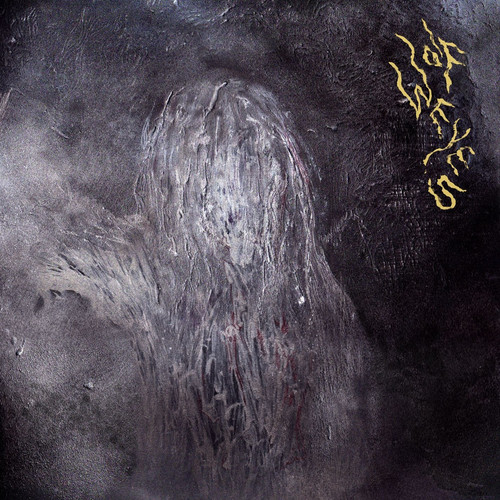
Human Animal
These songs are rotten with metal, reeds, consciousness-erasing islands of black doom, bass-heavy rippers, late night free terror jams, and pure mayhem. The new double-bass attack is showcased on "Human Animal"/"Rusted Mange" with scraping strings and a full terror-shriek workout. New directions are countered by "Rationed Rot" which revisits the eerie Throbbing Gristle-esque vocal deployment that dates from Wolf Eyes' "Dread" LP. The album also features the band's first cover, the No Fucker's an…
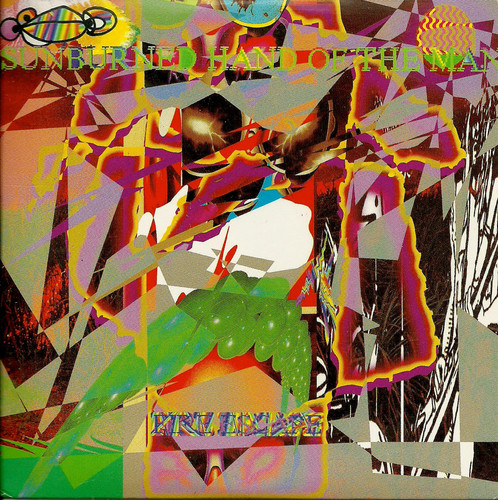
Fire Escape
EXCLUSIVE! Produced by FOUR TET. The relationship between Four Tet & SHOTM began in August 2003 when Kieran Hebden, read the cover story of The Wire, which touted SHOTM as leaders of the "New Weird America." That story sent Hebden on a search for Sunburned records & he's been a fan ever since. In 2004, Hebden asked Sunburned to tour with them. A couple of years later in March 2006, Hebden asked the band if they would like him to record them with the idea that he would take the recordings & const…

Live At Slug\'s Saloon 1972
6CD set. Sun Ra & the Arkestra played every Monday night at Slug's Saloon in the Lower East Side of NYC for over 5 years, from 1966-1972. This is the 1st released documentation of this long residency, comprising 2 complete shows (6 hours total) recorded over the summer of 1972. High quality recordings that capture the Arkestra emerging from their psychedelic phase & moving back towards their jazz roots.
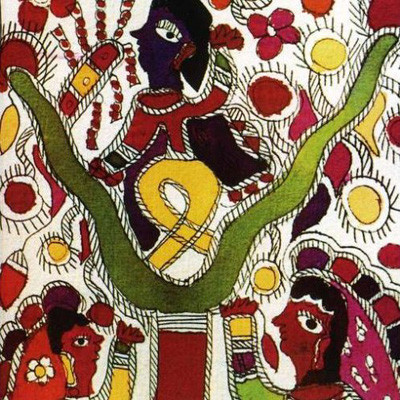
Napoleon & Josephine Singles Vol. 2
Vol. 2 in a series feat. rare singles & unreleased tracks. Includes 4 tracks originally targeted for the classic album "Dante's Disneyland Inferno," as well as one unreleased track, an alternative mix & two extended tracks, including the full 22-minute version of "Reflection Of A Young Boy Eating A Can Of Dog Food On A Siny Red X-Mas Ball".
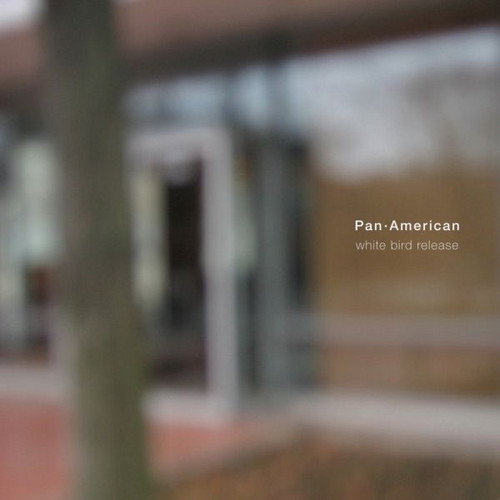
White Bird Release
Vinyl! The sixth album from Mark Nelson's longtime solo project following Quiet City. A mix of warmth & foreboding expansiveness, neither of which is minimal nor overdone.
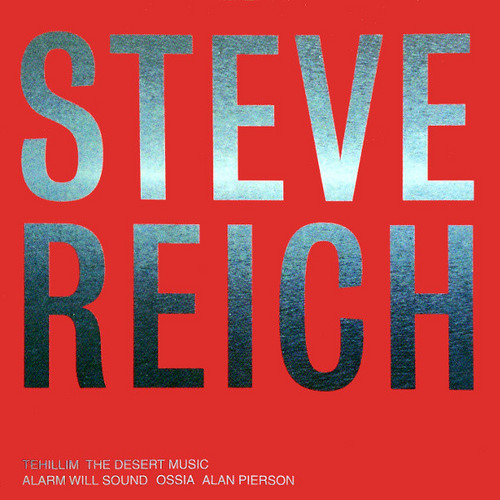
Steve Reich: Tehillim The Desert Music
Two Reich masterpieces, definitively recorded, featuring a crystalline, high-energy Tehillim with the ONLY RECORDING of the newly revised version of The Desert Music. A must for Reich fans. For freshness and focus, the new recording of Tehillim surpasses the 1981 recording by Mr. Reich & his own ensemble.