Music from United States
Beckett Material
Morton Feldman's 1976 trilogy Orchestra, Elemental Procedures (soprano, choir, orchestra; Beckett text) and Routine Investigations, with Claudia Barainsky, WDR Rundfunkchor and WDR Sinfonieorchester Köln under Peter Rundel; recorded 2010 and 2013.
Cage After Cage
Six works by John Cage for solo percussion, among them Variations I, Child of Tree, Inlets and 27'10.554", performed by Matthias Kaul on some ninety instruments and objects; recorded at Deutschlandfunk, Cologne, April 2014.
One7 / Four6
John Cage's Number Pieces One7 and Four6 (both 1990) in their first recordings for piano, by Sabine Liebner, who plays all four layers of Four6 by overdubbing. Recorded 2012 and 2013, coproduced with Bayerischer Rundfunk.
Solo for Piano
John Cage's Solo for Piano, the piano part of the Concert for Piano and Orchestra (1957/58), in a 70-minute realisation by Sabine Liebner, co-produced with Bayerischer Rundfunk.
Late and Unknown: Works on Rolls
Late and previously unknown works for player piano by Conlon Nancarrow, including Study No. 48 for two superimposed rolls and For Ligeti, recorded on the composer's own instruments; a co-production of WDR and the Paul Sacher Stiftung.
Early Piano Pieces
Piano music by Morton Feldman from 1950 to 1977, from the Intermissions and Nature Pieces to Last Pieces and Piano, played by Sabine Liebner on two CDs, a coproduction with Bayerischer Rundfunk.
As Fast as Possible
Works by Conlon Nancarrow for orchestra, ensemble and pianos, including Player Piano Studies in live transcriptions, plus Paul Usher's Nancarrow Concerto for pianola, with Ensemble Modern, WDR Sinfonieorchester Köln and Rex Lawson, WDR production 2004-2005.

Tocsin - 6 Thru +2
Following their maxi CD »Tinnitus Vu« on Touch in 2004 »Tocsin« is the first full lenght album produced together by these two renowned sound artists. Whereas »Tinnitus VU« was mostly the result of Z'ev reworking material by Jackman, »Tocsin« is the result of the artists agreeing to meet and work together in the studio. They created and recorded sounds from a piano (which can be found at RMS Studios London) and a stainless steel instrument (built by Z'ev circa 1989), over the course of several ho…
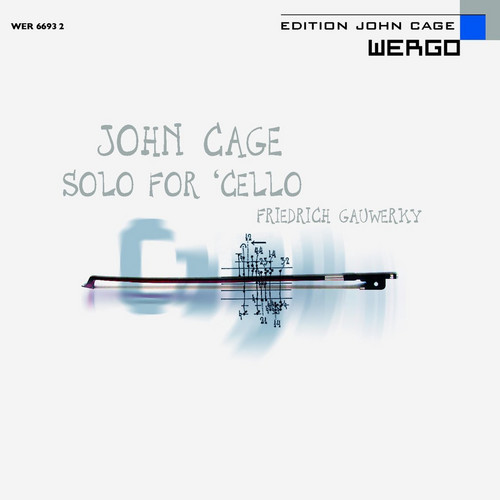
Solo for Cello ...
Works for cello by John Cage from 1953 to 1978, including Solo for Cello, 59 1/2 Seconds for a String Player, Atlas Eclipticalis for two cellos, Variations I and Etudes Boréales, played by Friedrich Gauwerky, coproduced with Bayerischer Rundfunk.
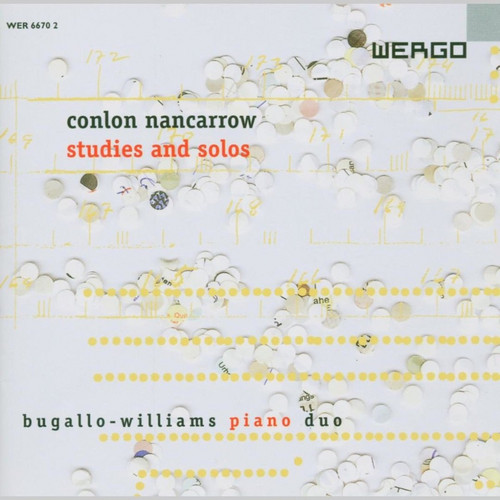
Studies and Solos for Piano
Conlon Nancarrow's Studies for Player Piano in transcriptions for piano four hands, the Three Canons for Ursula, Tango?, Blues, Sonatina and other pieces, played by the Bugallo-Williams Piano Duo (Helena Bugallo and Amy Williams).
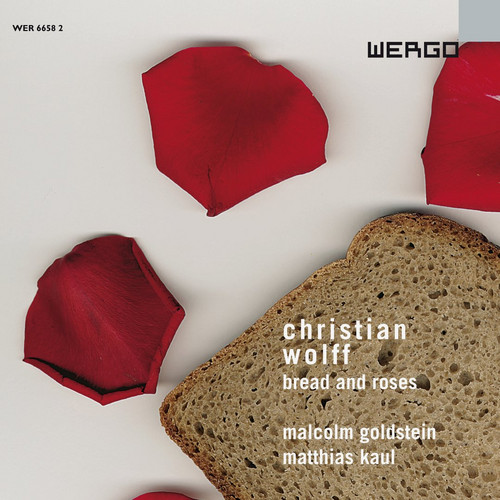
Bread and Roses
Christian Wolff's For 1, 2 or 3 People, Exercise 27, Bread and Roses and Edges, played by violinist Malcolm Goldstein and percussionist Matthias Kaul (also voice and hurdy-gurdy), recorded at Hessischer Rundfunk in 1999 and 2002.
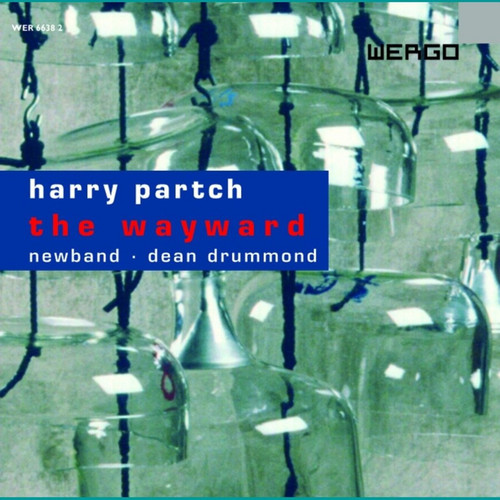
The Wayward
Harry Partch's The Wayward (Barstow, San Francisco, The Letter, U.S. Highball), hobo texts set for voices and Partch's own instruments, played by Newband under Dean Drummond, recorded in New York in December 1999.
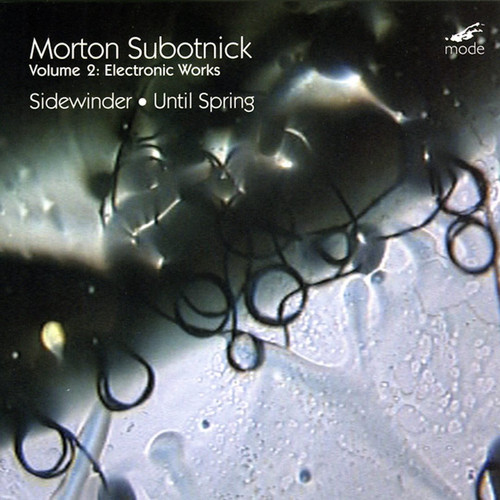
Volume 2: Electronics Works
Two classic analog electronic works by Morton Subotnick, Sidewinder and Until Spring, in multi-channel surround sound, previously available only on LP, in the second volume of his electronic works.
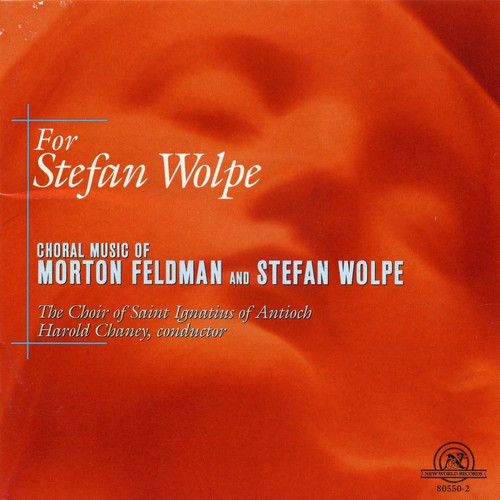
Choral music of
Choral Music of Morton Feldman and Stefan Wolpe
Stefan Wolpe (1902-1972), one of the great teachers in
twentieth century music, is also now recognized as one of its most
significant composers. His Two Chinese Epitaphs, composed in
Jerusalem in 1937, illustrates the composer's deep allegiance to
socialist issues. He wrote the work swiftly and in anger, just after
learning that the Basque town of Guernica had been bombed by the
Fascists the previous week. He chose to set two poems by Louise …
For Bunita Marcus
Morton Feldman (1926-1987) remains a legendary and key figure in modern American composition. A pioneer of aleatoric and indeterminate music, he was a master of minimal improvisation. Despite many thematic fluctuations in Feldman's compositional style throughout his career, a significant turning point took place in 1949, when he met John Cage, commencing an artistic association of crucial importance to music in America in the 1950s. Cage was instrumental in encouraging Feldman to have confidence…
Morton Feldman
Beautiful collection of Morton Feldman's earliest, shorter piano works from the early 50s, going through the late 70s
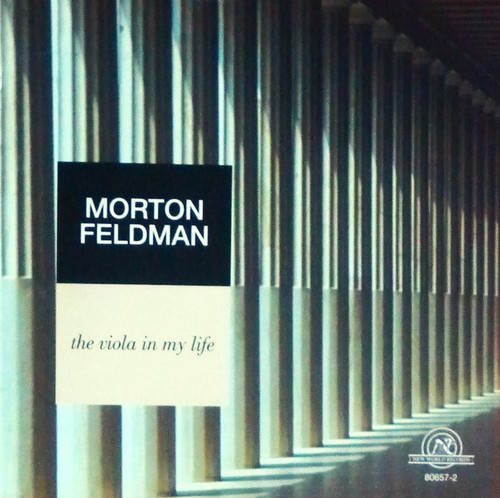
The viola in my life
"The music on this recording illustrates the essential integrity of the work of Morton Feldman (1926-1987) and one of its fundamental strengths -- its continuously unfolding unanimity of purpose. There are few composers of his generation whose first and last published work (in Feldman's case 'Journey to the End of Night' of 1949 and 'Piano and String Quartet' of 1986) span youth and final years with such a concentrated viewpoint. There are, however, landmarks in the music of Feldman that are lar…
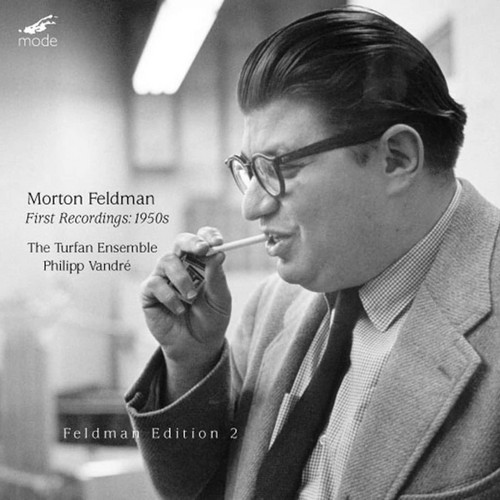
First recordings: 1950s
Thirteen first recordings of early Feldman works from 1950 to 1953, including Intersection for magnetic tape, the Music for Jackson Pollock film score with Pollock's narration, Nature Pieces and Variations, played by pianist Philipp Vandré and the Turfan Ensemble.
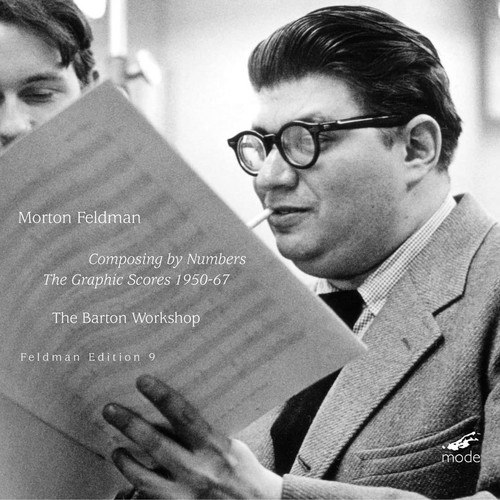
Composing By Numbers: The Graphic Scores 1950-67
Thirteen of Morton Feldman's graphic scores, 1950-67, played by the Barton Workshop and soloists including Frank Denyer and Taco Kooistra, with first recordings of several ensemble works. Volume 9 of Mode's Feldman Edition.