★Hat Hut Records
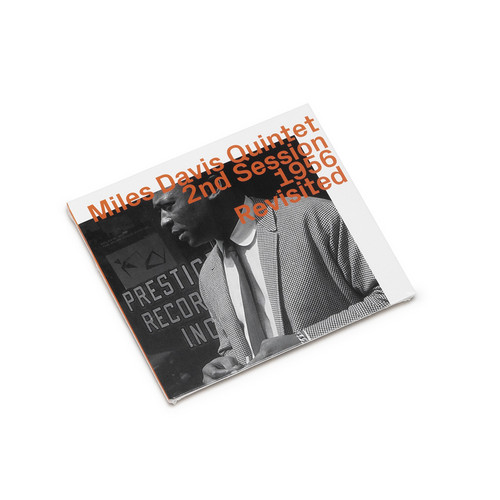
2nd Session 1956 Revisited
Here is a chance to hear Miles Davis in something close to real time. Small matter that most collectors of hard bop will have these sides already and will be familiar with a particular running order. Perhaps those who have invested in the complete sessions will have a clearer sense of the continuity of these remarkable sessions, but that now familiar obsession with the burrs and snarf of the studio process may win out over musical appreciation. What happened at Van Gelder’s on October 26 1956 is…

Thelonious Monk Quartet: Live Five Spot 1958, Revisited
Temporary Super Offer! Johnny Griffin came to Thelonius Monk with a reputation as a speed demon – double-timing the tempo was his default mechanism, elaborating melodies with a mixture of mellow swing and complex bop phrasing. Their contrasting nature – Griffin’s fluid extravagance and Monk’s percussive dissections – intensified by Roy Haynes’ forceful divisions of the beat, generate a tension unlike any of Monk’s subsequent groups' – Art Lange
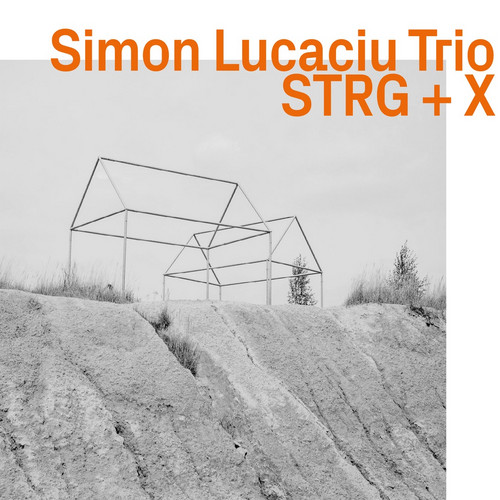
STRG + X
Temporary Super Offer! 'The CD’s title is borrowed from computer language: STRG + X is the key combination for “cut to the clipboard” to be temporarily stored and pasted somewhere else at a later time. Perhaps the most important quality of this carefully thought-out yet anything but cerebral music: it is aware of its means and can twist and turn and rearrange them as it pleases, in which case improvised contexts create their own forms and play with original material in a fresh, new way. This is …
Compositori Sardi Contemporanei
Temporary Super Offer! Compositori sardi contemporanei produced by the Swiss label Hat Hut Records Basel and directed by Werner X. Uehlingeris a snapshot of the Sardinian contemporary music world with an initial focus on eight composers Luciano Chessa, Andrea Granitzio, Paolo Pastorino, Riccardo Collu, Giuseppe D'Amico, Giovanna Dongu, Claudio Sanna, and Luca Sirigu. The project is conceived as a work in progress, therefore with constant updating of the repertoire and attention to what is happen…

Hush
Temporary Super Offer! We can only answer that question from an individual perspective, based upon our perception of place, and space, and time, and stimuli. Each of these categories exists within a complex of contexts – for example, there is the stimulus of personal relationships, the stimulus of our health and that of others around us, the stimulus of political events, the stimulus of work, the stimulus of art. A work of art provides an interactive opportunity to ignite our perception with th…
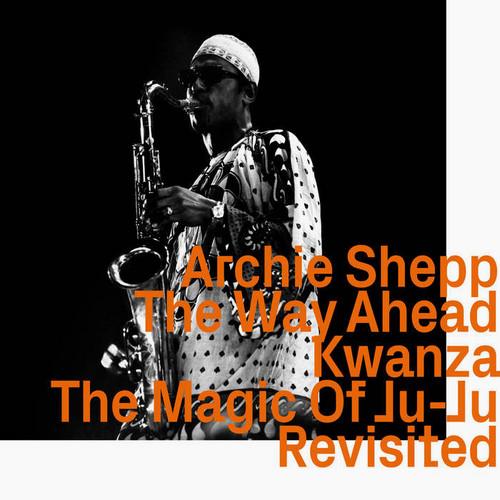
The Way Ahead - Kwanza - The Magic of Ju-Ju, revisited
Temporary Super Offer! Allow me to expand on a much restated quote from Albert Ayler: "Coltrane was The Father, Pharoah was The Son, and I was...The Holy Ghost.” If we remain with the Christian iconography, that makes Archie Shepp, Simon Peter, or the Apostle Peter whom Jesus called the rock upon which he built his church. Christened by his tenure in the early 1960s with Cecil Taylor, Shepp was baptized into what we now call a modernist approach. In meeting Coltrane, a man always searching for a…

Play Annette Peacock, Revisited
Temporary Super Offer! By 1965, Paul Bley had settled on the trio format, and touring Europe revealed a warmer reception for music that employed chordless improvisations, three-way rhythmic counterpoint, unfamiliar melodic constructs, and malleable song form. But there was an equally momentous conceptual change in the group’s material, as the adventurous pieces by Carla Bley were gradually being replaced by those of Paul’s new partner, Annette Peacock. - Art Lange
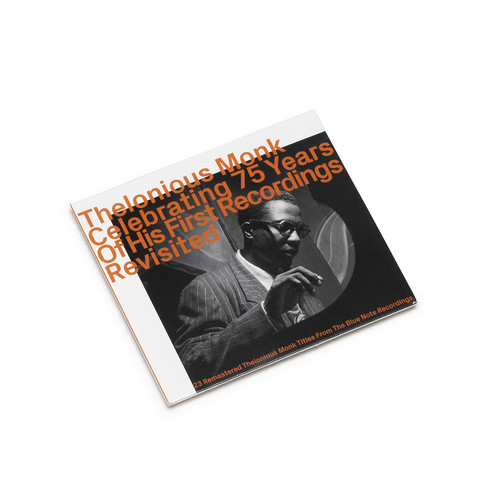
Celebrating 75 Years Of His First Recordings
Temporary Super Offer! Thelonious Monk devised a new theoretical basis for his compositional aesthetic, an unorthodox, deconstructed and reinvented pianistic approach that defined his music’s unique rhythmic and melodic parameters. The piano was the vehicle of expression for his compositional mindset. - Art Lange
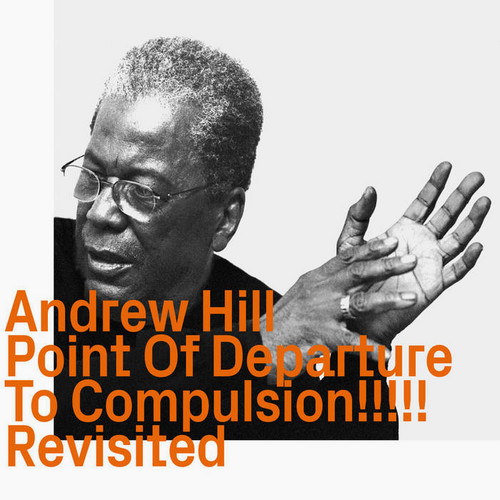
Point Of Departure to Compulsion!!!!! revisited
Point of Departure was an inflection point in Hill’s output for Blue Note, his penchant for formal complexity and compacted materials – which he revisited beginning in 1969 with a nonet date, tracks with a string quartet-augmented ensemble, and an album with voices – giving way to what proved to be a short-lived foray into the minimally scored pieces that distinguished Compulsion!!!!!. The two recording sessions were separated by only eighteen months, but they were among the most convulsive in j…
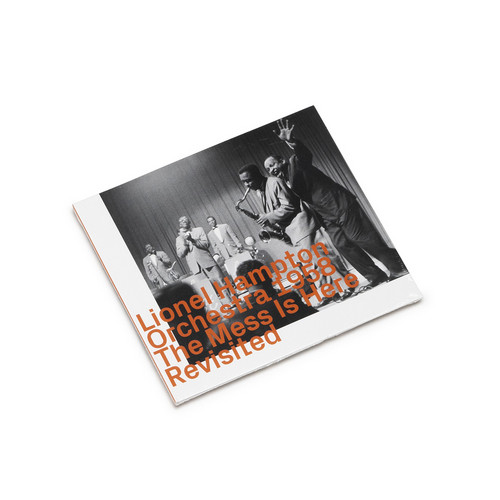
The Mess Is Here 1958, Revisited
Recorded live 1958 in Stuttgaert. First time on CD. Performed by: Eddie Williams, Art Hoyle, Eddie Mullens, Dave Gonzales, Macky Kasper trumpets; Louis Blackburn, Wade Marcus, Larry Wilson, trombones; Leon Zachary, Bobby Plater, alto saxophones; Andy McGhee, Gerald Weinkopf, tenor saxophones; Lonnie Shaw, Werner Baumgart, baritone saxophones; Lionel Hampton, vibraphone & piano; Oscar Dennard, piano; Billy Mackel, guitar; Julius Browne, fender bass; Wilbert Hogan drums; Cornelius "Pinocchio" Jame…
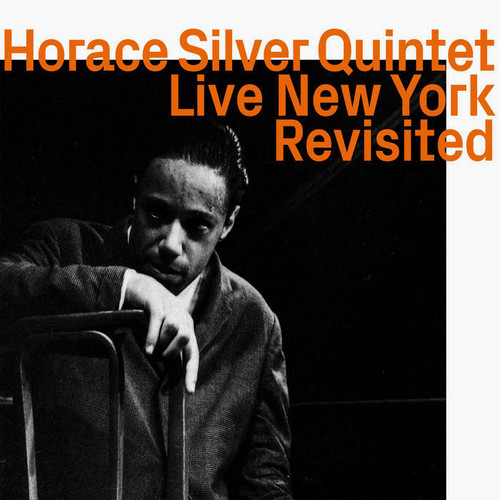
Live New York, Revisited
Temporary Super Offer! Recorded 1964, 1965 & 1966 live New York. 7 Tracks, 2 tracks never on CD available. "This fabulous album, recorded during three New York club engagements in 1964, 1965 and 1966, ranks among the finest in the pianist/composer's illustrious catalogue. There are several things going for it: the quality and shared intentionality of the two, slightly different, lineups; the choice of material and its careful sequencing; the vibrancy of the performances, which is enough to pract…

Fire Music To Mama Too Tight, Revisited
Temporary Super Offer! 'Jost may have had Fire Music and Mama Too Tight in mind when he suggested that by 1965 Archie Shepp spoke “basically two musical languages whose grammar and syntax had hardly anything in common.” This reflected the commentaries’s insistence that a chasm existed between free jazz and mainstream jazz practices, and, implicitly, between the New Wave in Jazz and the New Breed led by James Brown. What was revolutionary about Shepp’s music is that it rejected the underlying bin…
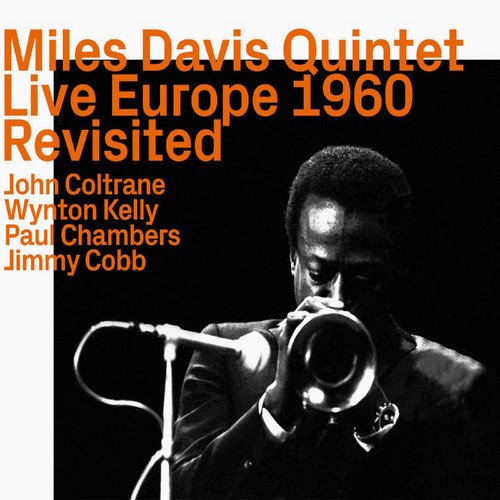
Live Europe 1960 revisited
Temporary Super Offer! 'The Miles Davis Quintet of early 1960 was an endangered, embattled entity. Davis and his frontline foil John Coltrane had been drifting apart stylistically and temperamentally for months. United in the embrace and exploration of modal devices on the trumpeter’s seminal Kind of Blue album released the previous summer, bandleader and sideman were increasingly at odds as to where to go next with the celebrated innovations.' - Derek Taylor
Unison Polyphony
Temporary Super Offer! Christoph Gallio and Markus Eichenberger, both born in 1957, have known each other since the early eighties and have played together a lot during this time, listening to music, visiting bars and occasionally taking a dip in the Rhine. At some point, their paths got lost until they crossed again in 2018 to regularly sound out their musical languages and create something new. Their performance at the "40 Years of WIM Zurich" festival remained unforgotten for many.
Eichenber…

With(Exit) To Student Studies, Revisited
Temporary Super Offer! 'Cecil Taylor’s whole career was a wave-front of exploration. The analogy with light is apposite enough. He evolved so fast most of us never quite caught up and relied instead on a few safe generalisations that momentarily applied around 1962 and only occasionally thereafter. Taylor rarely referenced the space programme, and admitted towards the end of his life that he had found the moon landings “banal”. Like Sun Ra, he was a cosmonaut of sound, breaking free of gravity a…
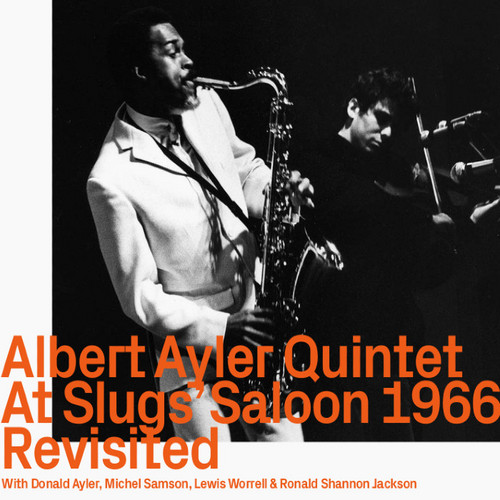
At Slugs’ Saloon 1966, Revisited
Temporary Super Offer! 'Among the jazz innovators, Albert Ayler is still considered a solitary figure to this day. From 1964 on he pursued his vision with firm determination. Like no other artist he used well-known melodies from military, marching, blues, gospel and minstrel show music as a starting point, and from these biographical earworm references he set out with the greatest expressiveness into an unconditionality that caused productive disturbance, which his music still does. On the one h…

Ezz-thetics & The Stratus Seekers Revisited
Temporary Super Offer! On Ezz-thetics: Eric Dolphy alto saxophone, bass clarinet, Don Ellis trumpet, David Baker trombone, George Russell piano, Steve Swallow double bass & Joe Hunt drums. On The Stratus Seekers: Paul Plummer tenor saxophone , John Peirce alto saxophone, Don Ellis trumpet, David Baker trombone, George Russell piano, Steve Swallow double bass & Joe Hunt drums. The six albums that George Russell recorded in just two years – starting with Sextet at the Five Spot in September 1960 …

Favorites Revisited
Temporary Super Offer! 'The studio side of Coltrane’s catalog has greater consistency in terms of caliber of aural presentation, but fewer occasions for extended improvisation and creation. This is particularly evident in an analysis of the recordings made of his Classic Quartet comprising pianist McCoy Tyner, bassist Jimmy Garrison and drummer Elvin Jones. An ensemble that was a work in progress well before it was a finished cohort, Coltrane’s most fertile band was also best suited to the hot h…
Make That Flight
Temporary Super Offer! 'Even a cursory revisiting of Houle and von Orelli’s previous recordings confirms that the stark forum afforded by a horn duo strips their music to its essentials, their shared ability to make unorthodox forms and materials sing and dance being the most salient. Fresh, distanced, and potentially transformative perspectives abound on this album, and not just about the music of any other artist; but, more importantly, the tug and pull between the continuity represented by tr…

Miles Davis Quintets Stockholm Live 1967 & 1969 Revisited
Temporary Super Offer! 'Was there more than one Miles Davis? Could he be both the Prince of Darkness and the purveyor of cool? A drug addict and an athletic boxer? A hip bebopper and a protohippie? A flamboyant dresser and a shy vulnerable soul? A brutal misogynist and an insecure romantic? The answer is yes, and yes. Miles Davis was both a creator and a destroyer. His chameleon-like nature can be explained by the times in which he lived and created his art. These live recordings in Stockholm, S…
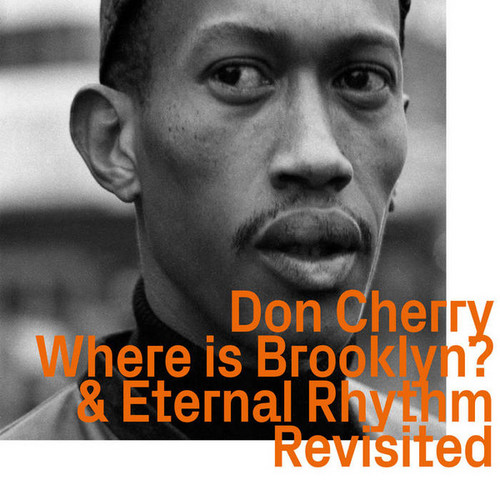
Where Is Brooklyn? & Eternal Rhythm
Temporary Super Offer! These sessions were recorded exactly two years apart, in early November 1966 and 1968 (both were released in 1969). While they can’t be called “bookends” by any means, they do bracket a remarkable period in Don Cherry’s musical evolution, on his journey from the more strictly jazz environments, as adventurous as they were, of Ornette Coleman, Albert Ayler and others, to a philosophy that embraced many non-Western traditions. While these included various African forms, espe…
Hieroglyphs
Temporary Super Offer! "‘Hieroglyph’ is a word that history has gradually prised away from its linguistic roots as the Greek term for sacred carvings. Over time it came to be associated principally with the enigmatic symbols found in Egyptian burial sites and because these symbols resisted translation for so many centuries the word hieroglyph became a synonym for incomprehensibility. It was the discovery of an artefact – the socalled ‚Rosetta Stone‘, containing both hieroglyphs and parallel text…
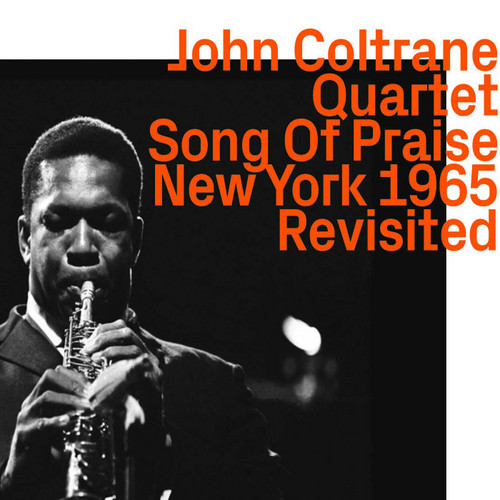
Song Of Praise, Live New York 1965
Temporary Super Offer! "These Half Note recordings from March 26 and May 7, 1965, two dates from an extended stay at the club, were captured as a radio broadcast. ezz-thetics has re-sequenced the music here to demonstrate Coltrane’s approach to incorporating all his inventions into a performance, while also mapping a future to his music." – Mark Corroto
Producers note: "We have re-sequenced these tracks to allow the listener to become part of the development of the music and to follow J…
Nothing Is...
Temporary Super Offer! "Attempts to dismiss Sun Ra as an “outsider” artist, an eccentric who made strange claims, are always own goals. Of course he was an outsider. That was precisely his point. And not just an outsider. He came from so far away we could not imagine it. But he also came from right inside American culture and was deeply shaped by it. There is perhaps no more representative an American artist of the modern period. If the Saturn V rocket was the symbol one kind of hegemony, govern…
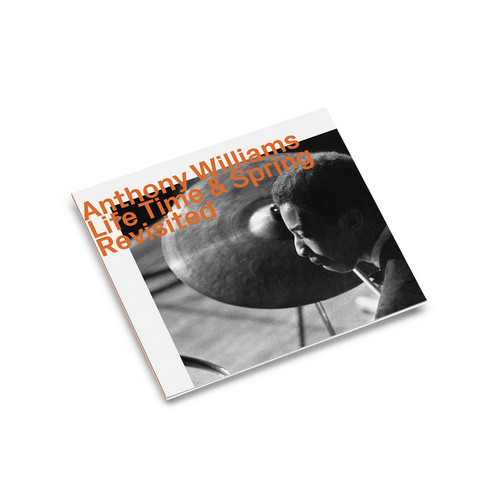
Life Time & Spring (Revisited)
Temporary Super Offer! "Life Time posited a radicalism quite different from the other watershed recordings of 1964. Anthony Williams had an overt, unconventional approach to form, accentuated by the time constraints of a LP side and the various configurations he employed... By the time the 19-year-old Williams returned to Van Gelder Studio to record Spring with Hancock, Peacock, Rivers, and Shorter, the avant-garde was ascending... He retained some of the parameters
of Life Time ..." - Bill Sho…
Decibel
Temporary Super Offer! Cat Hope is a composer, performer, songwriter, noise artist and researcher. She is lautist, experimental bassist and artistic director of Decibel new music ensemble, which led to her being awarded the Australian APRA|AMC Award for Excellence in Experimental Music. Decibel are a new music ensemble that focus on the integration of acoustic and electronic instruments in chamber music performance, founded in Western Australia in 2009. They are world leading interpreters of gra…
For John Cage
Temporary Super Offer! John Cage was an evangelist for a new mode of listening in which we would listen to everything with the same attention that we bring to music. For John Cage proposes instead that we listen to this music as if it were everything. While these two instruments are playing there is nothing else, just a violin and a piano. Even the process of remembering, normally so important in helping us make sense of what we hear, is altered: the ‘tenuous’ rhythms of For John Cage articulat…
Sold Out
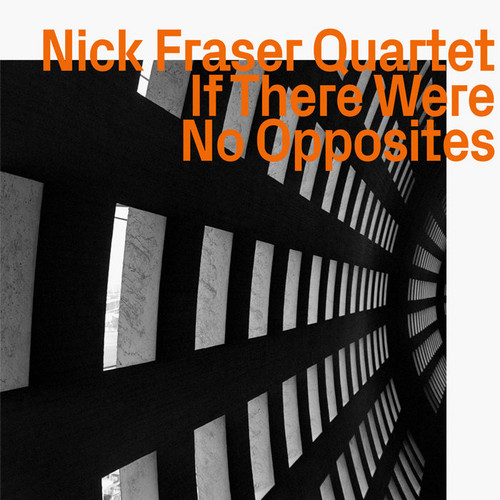
If There Were No Opposites
Temporary Super Offer! A couple of the pieces on Nick Fraser's If There Were No Opposites, the quartet’s fourth album, were adapted from Fraser's compositions for dance productions by Decidedly Jazz Danceworks." But while the original versions of “Shoe Dance” and “The Fashion Show” had to adhere to rigid timing requirements in order to coordinate with the rest of the stage production, the quartet lets the music flow in more free-wheeling fashion. The quartet first recorded in 2012, and its perso…
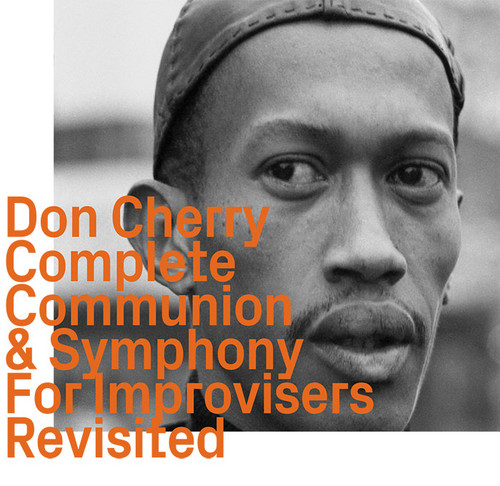
Complete Communion & Symphony For Improvisers
Temporary Super Offer! Don Cherry cornet, Gato Barbieri tenors saxophone, Pharoah Sanders, tenor saxophone & piccolo, Karl Berger vibes & piano, Henry Grimes & J.-F. Jenny-Clark double bass, Edward Blackwell drums. Following a 1964 Albert Ayler tour, trumpeter Don Cherry remained in Europe, working on new concepts of improvising based on form itself, developing his concepts with saxophonist Gato Barbieri, vibraphonist Karl Berger & bassist J.F. Jenny Clark, composing two brilliant albums: 1966'…
Things In Between
Temporary Super Offer! "This album features the relatively unusual quartet line-up of two pianists and two percussionists. Equally unusual, though less so than it once was: the leader
on this date, pianist Judith Wegmann, is equally at home in improvisation and composed music. She's a composer, and an interpreter of composed music – her recording of Morton Feldman's Triadic Memories and For John Cage appeared recently on this label. But she's also a free improviser who draws on the tradition o…
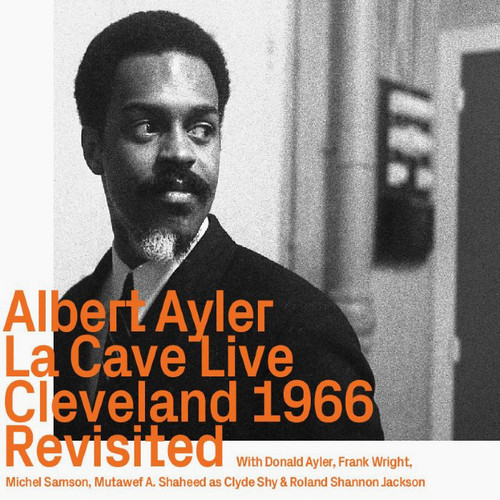
La Cave Live, Cleveland 1966
the first authorized release by permission of the Estate of Albert Ayler of the two concerts played at La Cave, Cleveland on April 16 & 17, 1966. Remastered for best possible sound of these under difficult technical circumstances recorded performances.
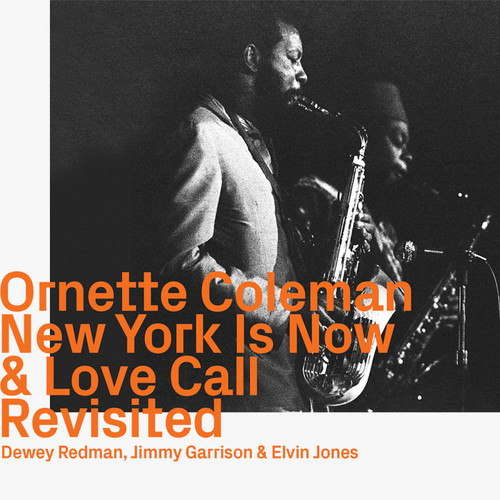
New York Is Now & Love Call Revisited
Temporary Super Offer! New York is Now! and Love Call are rarely mentioned in surveys of Ornette Coleman’s music, and they are often glossed over when they are cited…. Even in commentary focusing on Coleman’s recordings for Blue Note between 1965 and ‘68, these albums tend to be overshadowed by the two volumes of At the “Golden Circle” Stockholm... However, these last sessions before Coleman’s departure for Impulse! are pivotal, influential albums that merit reassessment. – Bill Shoemaker"Alto s…

Copenhagen 1963 „Revisited“
Temporary Super Offer! Despite persisting labeling of its music as avant-garde, The New York Contemporary Five played unthreatening contemporary jazz almost as often as it explored more daring materials. Two of Thelonious Monk’s loveliest melodies – “Monk’s Mood” and “Crepuscule with Nellie” – were embedded into their sets, aswell as three of Ornette Coleman’s more accessible, swinging vehicles, “O.C.,”“When Will the Blues Leave,” and “Emotions.” These pieces provided a perspectiveof contemporar…

Chasin The Trane, The Village Vanguard 1961
Temporary Super Offer! John Coltrane is the steady catalyst, channeling galvanizing thoughts and energy through the tangible mechanics of his horns and sometimes running momentarily afoul of the lacunae between intent and implements. That it was all accomplished from the comparatively cramped confines of a basement jazz club stage is both the miracle and promise of momentous jazz music. The boon of emotional reciprocity between band and audiences was in optimal effect across these nights, even i…
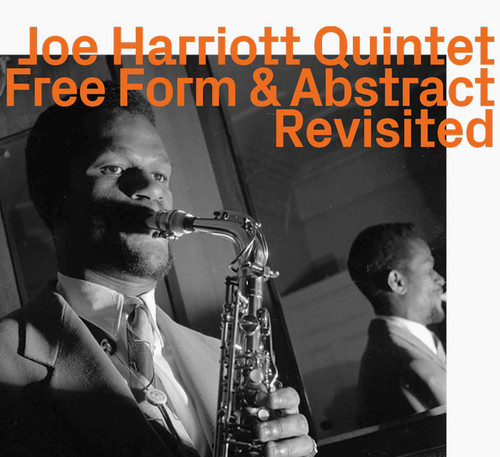
Free Form & Abstract, Revisited
Temporary Super Offer! Unheard music from this key reedman on the British avant scene in the 60s – This double album features Joe Harriott working with a quintet that includes Shake Keane on trumpet, Pat Smythe on piano, Phil Seaman on drums, and Coleridge Goode on bass – playing in territory that's somewhat in the neighborhood of his Abstract and Free Form albums. 'Abstract is split over two dates some months apart, with some change of focus over the set. Free Form has more of the drama of a si…

New York Eye And Ear Control 1964, Revisited
Temporary Super Offer! Ezz-Thetics presents New York Eye And Ear Control 1964, Revisited. Albert Ayle tenor saxophone, Don Cherry cornet & trumpet, John Tchicai alto saxophone, Roswell Rudd trombone, Gary Peacock double bass and Sunny Murray drums.
As a visitor of the Albert Ayler Quintet concert 1966 in Lörrach, Germany and producer of his recordings since 1982, I like to present New York Eye And Ear Control by Albert Ayler, remastered, given permission for it by Desiree Ayler-Fellows of the Al…

Die Unwucht
Neither musician has to be dominant to prove that he has something to say. Instead of trying to outdo each other, they develop a compelling, very soulful world of their own. In the history of jazz they are two more rhapsodists continuing the tradition, while changing the context of the stories and thus making them plausible. What is amazing is their calm maturity that does completely without the frills of elec- tronics. Dense and compact but at the same time transparent and delicate the music pr…

Free Fall Clarinet 1962, Revisited
Temporary Super Offer! The trio of Jimmy Giuffre, pianist Paul Bley, and Steve Swallow on acoustic bass, through their previous recordings and live concerts in Europe, had reached the precipice of complete improvisational freedom. The leap came with Free Fall. What I feel to be the more revealing and revolutionary aspects of this album, however, are to be found in the five unaccompanied clarinet pieces. – Art Lange
With this release we like to celebrate Jimmy Giuffre at 100. (26. April 1921 – 24…

Touching & Blood 1965/66
Paul Bley is a master of the piano trio. He showed new and different ways of exploring the complex triangular geometry of what has arguably become jazz’s signature formation. Bley’s early recording with Charles Mingus and Art Blakey promised great things to come. He emerged more fully as part of Jimmy Giuffre’s innovative trio with Steve Swallow, but it was with his own trios of the mid to late 1960s, with drummer Barry Altschul and bassists Kent Carter and Mark Levinson, that he really began to…

Nephlokokkygia 1992
Temporary Super Offer! To be free. What does that actually mean? Not in a social or even political sense. But as a human being? As a musician? When we speak of free improvised music, freedom is the mother of all things. And that in a literal- al sense. You free yourself from yourself. As human beings, we always act with the sum of what we have collected, stored and reflected in all the years before. An improviser does not have to apply his knowledge and skills intellectually, but instinctively. …