Milton Babbitt, Mel Powell
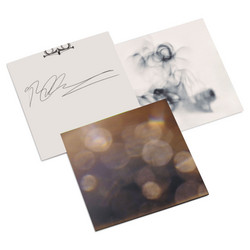
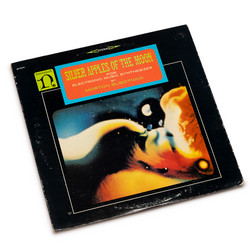
A Solo Requiem / Haiku Settings / Filigree Setting / Three Synthesizer Settings (LP)
condition (record/cover): NM / NM Insert included.
Milton Babbitt and Mel Powell represent two trajectories within American high modernism that converged around electronic music while diverging in almost every other respect. Babbitt - theorist, teacher, the most systematically rigorous of the American serialists, whose 1958 essay "Who Cares If You Listen?" (published under that title without his approval) became the most notorious manifesto of compositional complexity in the American tradition - developed his synthesizer works at the Columbia-Princeton Electronic Music Center using the RCA Mark II synthesizer, an instrument of almost unlimited precision that allowed him to realise his pitch-class, rhythmic, and dynamic structures with an exactitude impossible in live performance. Powell had arrived at his compositional maturity via a very different route - as a celebrated jazz pianist in the swing era, who studied with Paul Hindemith, then redirected himself toward contemporary classical composition and electronic music. His Haiku Settings bring the economy and spatial delicacy of the Japanese form to bear on a chamber vocal idiom. Two composers for whom difficulty is not an aesthetic posture but a natural consequence of thinking seriously about what music can be. On Nonesuch.