Kronos Quartet, Philip Glass
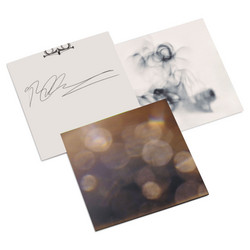
Kronos Quartet Performs Philip Glass (2 LP)
Kronos Quartet Performs Philip Glass gathers the first five numbered string quartets into a single, concentrated frame, but this album focuses on the cycle’s central core: Quartets No. 2 (Company), No. 3 (Mishima), No. 4 (Buczak), and No. 5, the latter composed explicitly for Kronos Quartet. Originally released in 1995 and recorded at Skywalker Sound with producers Judith Sherman, Kurt Munkacsi, and Glass himself, the record plays like a quietly radical redefinition of the string quartet as a vehicle for late‑20th‑century minimalism. Rather than using the medium to revisit classical rhetoric, Glass treats it as a chamber‑sized extension of his own ensemble: repeating cells, oscillating arpeggios, and phased harmonies distilled into a lean, four‑voice texture that reveals his writing at its most intimate and exposed.
Quartet No. 2 evolved out of incidental music for Beckett’s Company, and its four brief movements feel like compressed monologues - sighing, ascending figures and gently unsettled harmonies that never quite resolve, as if the material were pacing inside its own constraints. Quartet No. 3 adapts music from the Mishima film score, each movement tied to a chapter of Yukio Mishima’s life and work; in this context, the material feels less like soundtrack and more like a suite of character studies, alternating taut rhythmic propulsion with episodes of almost frozen stillness. No. 4 (Buczak) is a memorial piece for artist Brian Buczak, its long, singing lines and slowly shifting harmonic fields carrying a weight of grief and tenderness that Kronos underline through sustained, glowing tone and careful pacing.
Quartet No. 5, the first written directly “for Kronos” rather than adapted from other projects, sits at the centre of the album’s reputation. Glass himself has spoken of approaching it after realising he no longer needed to “take a serious tone” in the old, burdensome sense, choosing instead to write “a quartet that is about musicality, which in a certain way is the most serious subject.” The piece unfolds in five movements of intricate counterpoint and luminous sonority, the rhythmic cells constantly recombining so that the music feels in perpetual motion even when the harmony moves only by small increments. Critics at the time singled it out as “some of Glass’s best music since Koyaanisqatsi,” praising his “ear for sumptuous string sonorities” and the way the quartet balances his trademark drive with an almost classical sense of phrase and proportion.
Across the album, Kronos play less as hired interpreters and more as long‑term conspirators. Their partnership with Glass dates back to the mid‑1980s, when they first recorded the string writing for Mishima and began performing his quartets in concert, and that familiarity reads in every bar: attacks are clean but never mechanical, inner voices are given as much character as the outer ones, and the ensemble’s dynamic control keeps the music from collapsing into sameness. On release, the record was widely hailed as “an ideal combination of composer and performers,” reaching the Top 10 on Billboard’s classical chart and helping define how a generation would hear Glass’s chamber work, much as earlier recordings had framed his ensemble pieces and operas.