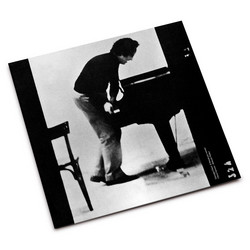
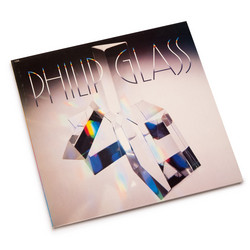
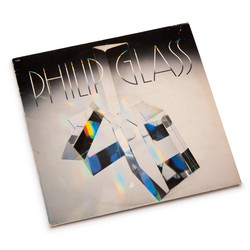
Philip Glass’s seminal 1982 album Glassworks remains one of the most influential and accessible works in contemporary classical and minimalist music, bridging the worlds of concert hall and popular listening with timeless elegance.
Originally conceived as a “Walkman‑suitable” work, Glassworks was designed for intimate, personal listening on cassette, with a special headphone‑oriented mix that brought listeners deep inside Glass’s intricate, pulsing sound world. The album’s six short, vividly contrasting movements—“Opening,” “Floe,” “Islands,” “Rubric,” “Facades,” and “Closing”—showcase Glass at the height of his powers, combining hypnotic repetition, lyrical melodies, and a driving rhythmic energy that defined a generation of new music. Glassworks marked a turning point in Glass’s career, offering a more concise, pop‑inflected approach compared to his earlier large‑scale operas and ensemble works. With pieces under ten minutes each, the album became a true crossover success, introducing minimalist music to a broad audience and becoming Glass’s best‑selling record to date.
Critics and listeners alike have praised Glassworks as a perfect introduction to Glass’s distinctive style: sharp, hard sonorities; densely packed, slowly evolving patterns; and an unstoppable linear flow that draws the ear in and refuses to let go. The album’s emotional immediacy and structural clarity have made it a favorite for film, television, and stage, while its influence can be heard across ambient, electronic, and contemporary classical music.