Ernst Krenek
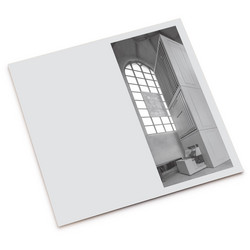
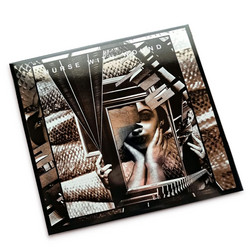
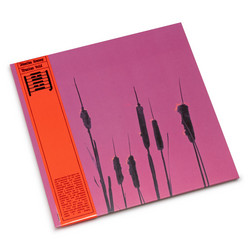
Aulokithara / Wechselrahmen / Three Sacred Pieces / Echoes From Austria (LP)
condition (record/cover): NM / NM | Ernst Krenek (1900-1991) composed 242 opus numbers across seven decades, moving through atonality, neoclassicism, jazz-inflected opera, Schubert-haunted Romanticism, twelve-tone technique, total serialism, and electronic music - not as a dilettante but as someone who genuinely needed each language at the moment he used it. Born in Vienna, student of Schreker, briefly married to Mahler's daughter Anna, author of the scandalously successful jazz opera Jonny spielt auf (1927) and the twelve-tone opera Karl V (banned by the Nazis before its Viennese premiere), exile in America from 1938, teacher of George Perle, Robert Erickson, and Richard Maxfield, he settled in Palm Springs, California in 1966 and went on composing until 1989. This LP, recorded near his desert home, documents the late Krenek with the composer himself at the piano - a 76-year-old modernist performing his own music in the Coachella Valley.
Aulokithara Op.213a (1971-72) is the centerpiece: twenty minutes for oboe (English horn), harp, and tape. The title fuses the aulos and kithara - the two fundamental instruments of ancient Greek music - with their modern descendants and a tape part that adds a third, electronic dimension. Premiered in Mainz, October 1972, by Heinz Holliger and Ursula Holliger at an Ars-viva-Konzert of the Südwestfunk. Here performed by James P. Ostryniec (oboe) and Karen Lindquist (harp), with the tape part prepared by the composer. The interaction of ancient timbres with electronic sound is handled with Krenek's characteristic precision and dry wit - no mysticism, no nostalgia, just three sound-worlds made to coexist.
Wechselrahmen (Changing Frame) Op.189 (1964-65) sets six poems by Emil Barth (1900-1958) for soprano and piano: Black Muse, The Shadow, Oaths, Statement, Changing Frame, Brighter Than Rhinestones. Beverly Ogdon, soprano, with Ernst Krenek at the piano. Three Sacred Pieces for chorus, on texts from Proverbs (Go Thy Way, There Be Four Things, There Be Three Things), performed by the College of the Desert Vocal Ensemble conducted by John L. Norman. Echoes from Austria (Echos aus Österreich) Op.166 (1958), seven piano pieces, again with Krenek himself performing - brief, concentrated, serial miniatures that refract the remembered Austria of his youth through a technique that Austria had once rejected as degenerate. LP on Baroque Records, 1976. Published Bärenreiter.