Hans Zender
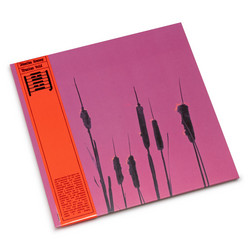
Elemente / Litanei / Recitativ (LP)
condition (record/cover): NM / NM Insert included. | Three works from the mid-1970s to 1980 by Hans Zender (1936-2019), a figure who occupied a unique position in postwar German music: a major conductor - chief at Bonn, Kiel, Saarbrücken Radio, Hamburg State Opera - who was simultaneously a composer of absolute seriousness and originality. This is not the familiar case of the conductor who composes light pieces on the side. Zender's music is as uncompromising as anything on the Wergo catalogue, shaped by serial technique, Zen Buddhism, Heraclitus, Hölderlin and Japanese calligraphy in equal measure. He studied composition with Wolfgang Fortner in Freiburg, attended the Darmstadt courses annually from 1949 - as a teenager - and absorbed the aesthetics of both B.A. Zimmermann and Boulez before finding a voice that owed nothing to either. His later works include the landmark "composed interpretation" of Schubert's Winterreise (1993) for tenor and small orchestra and three operas - Stephen Climax (after Joyce and Hugo Ball), Don Quijote de la Mancha and Chief Joseph. He taught composition at the Frankfurt Musikhochschule from 1988 to 2000; Isabel Mundry was among his students.
Elemente (1976) takes up the entire first side. Described on the sleeve as a "radiophone Komposition für zwei Lautsprechergruppen" - a radiophonic composition for two loudspeaker groups - it is a tape montage built from recordings of two earlier Zender works: Modelle (1971-73), a piece for variable forces ranging from a minimum of five instruments to multiple orchestras, and Canto V (Kontinuum und Fragmente) (1972-74), a setting of Heraclitus for voices with optional percussion instruments. The title Elemente carries a double meaning - the basic elements of sound that Zender extracts and recombines, and the pre-Socratic elements of the Heraclitean world that Canto V invokes. This is radiophonic art in the German tradition of the Hörspiel, but conceived by a composer rather than a radio dramatist - the two loudspeaker groups function as spatial counterparts, not stereo channels, creating an architecture of projected and reflected sound. Zender was chief conductor of the Rundfunk-Sinfonieorchester Saarbrücken throughout this period (1971-84), and the proximity to broadcast technology and its creative possibilities clearly shaped the work. Elemente sits alongside BREMEN WODU (1967), his electronic study after Heißenbüttel for four loudspeaker groups, as one of Zender's rare ventures into purely electroacoustic territory - a composer who worked primarily with live performers but who understood the studio as a compositional space with its own logic.
Litanei (1976) for three cellos belongs to the period in which Zender's music turned decisively toward East Asian thought and aesthetics. The works immediately surrounding it - Muji No Kyô (1975) for voice, flute, violin and piano, and the beginning of the Lo-Shu cycle (1977-87) - all reflect this engagement with Japanese poetic concentration, calligraphic gesture and Zen notions of emptiness and presence. The title, however, points West - Litanei, the liturgical form of repeated invocation and response. Three cellos in dialogue: an instrumentation that suggests both the austerity of a monastic chant and the warmth of three voices speaking in the same register. The cello was central to Zender's sound world - it appears throughout his chamber works and in the Kantate nach Meister Eckhart (1980) alongside alto voice, alto flute and harpsichord.
Recitative (1980) closes the disc. The title again signals Zender's lifelong preoccupation with the relationship between music and speech - a concern that runs from the early Cantos cycle (1965-74) through the Hölderlin lesen series (1979-2000) to the operas. Recitative, the vocal form that hovers between singing and speaking, between measured music and free declamation: Zender abstracts the principle and applies it to instrumental sound, creating music that has the urgency and directional force of speech without words. The three works on this LP trace a path from the public, spatial dimension of radiophonic art through the intimacy of three cellos to the concentrated drama of a single instrumental voice - a portrait of a composer whose thought moved constantly between the poles of contemplation and utterance.
LP with insert. Wergo WER 60 088, 1982. Liner notes by Hans Zender and Wolfgang Schreiber, English translation by Stefan De Haan.