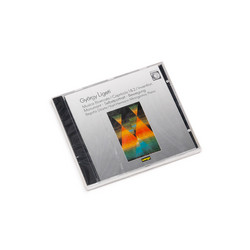
Gyorgy Ligeti
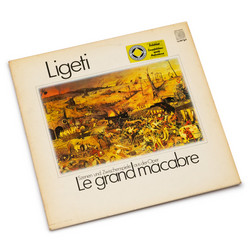
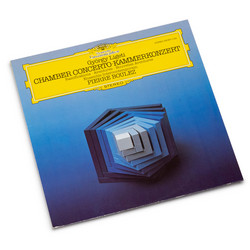
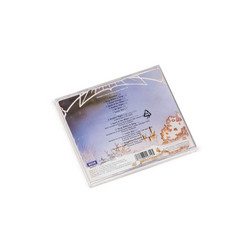
Melodien For Orchestra / Double Concerto For Flute, Oboe & Orchestra / Chamber Concerto For 13 Instrumentalists (LP)
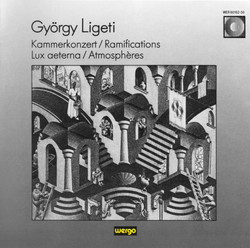
condition (record/cover): NM / NM | Insert included. This trio of works by György Ligeti represents a pivotal transitional period (1969–1972) where his "micropolyphony" sound-masses began to crystallize into more transparent, individual melodic lines. These specific pieces were famously paired on a definitive Decca recording (1976) featuring the London Sinfonietta conducted by David Atherton. Melodien for Orchestra (1971): A "rounded" piece where Ligeti's earlier "sound clouds" (like Atmosphères) begin to break apart into discernible, overlapping melodies. It uses a small orchestra and features three distinct layers: background sustained tones, middle-ground figurations, and foreground melodies. Double Concerto for Flute, Oboe and Orchestra (1972): A two-movement work exploring microtonality and complex "clocks and clouds" textures. Unlike a traditional concerto, the soloists are often integrated into a "web of iridescence" with other woodwinds. The first movement is a slow, clustered mass, while the second is a fast, virtuosic "presto". Chamber Concerto for 13 Instrumentalists (1969–1970): Considered a "work of synthesis," it treats all thirteen players as virtuoso soloists.
Its four movements transition from dense micropolyphony to mechanical, "clock-like" staccato dances, ending with a "delirious virtuoso presto" that stops abruptly.