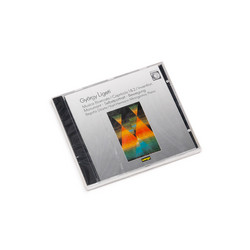
Gyorgy Ligeti, Bernd Alois ZimmermannFeaturing: Alfons & Aloys Kontarsky
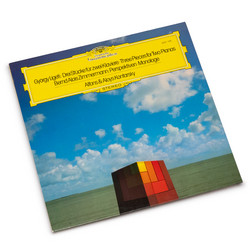
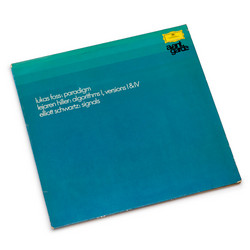
Three Pieces For Two Pianos / Perspektiven / Monologe (LP)
condition (record/cover): NM / NM (drilled promotional stamp on top left corner) | Insert included. Alfons and Aloys Kontarsky - the most important two-piano duo in the history of contemporary music, and possibly the most important in any repertoire since the mid-twentieth century. Everything of consequence written for two pianos after 1955 passed through their hands, much of it dedicated to them, and their authority on this record is absolute. Ligeti's Drei Stücke für zwei Klaviere (1976), commissioned by WDR Köln and premiered by the Kontarskys on May 15, 1976, belongs among his most important works - the bridge between Continuum (1968) and the Études pour piano that would begin in 1985. Monument imagines a vast statuary architecture in sound: six layers of dynamic grids generating moiré interference patterns, the music appearing three-dimensional, holographic, frozen in imaginary space. Selbstportrait mit Reich und Riley (und Chopin ist auch dabei) uses mobile key-blocking technique - one hand silently depresses keys while the other plays across both blocked and sounding notes at speed, producing rhythmic patterns of extraordinary complexity. Ligeti's title is an act of generous self-description: in 1972 he discovered Reich and Riley in California and recognized that they had arrived at similar territory independently - repetition, phase-shifting, pattern superimposition - and the piece ends with an allusion to the Presto from Chopin's B-flat minor Sonata that emerges organically from the minimal processes. Bewegung, the "liquefied variant" of Monument, dissolves the architecture into flowing virtuosity with ghostly allusions to Schumann and Brahms.
The coupling with Bernd Alois Zimmermann makes this record extraordinary. Perspektiven (1955-56), subtitled "Music for an Imaginary Ballet," was Zimmermann's first rigorous confrontation with serialism, premiered at Darmstadt - yet even here, within total serial organization, Zimmermann's theatrical temperament is audible: remnants of traditional pianistic gesture, traces of sonata form, suggestions of physical movement. Zimmermann himself proposed that the listener imagine a dancer and two dancers to this music. Monologe (1964) is the late Zimmermann at full power - five movements in which the serial thinking has been liberated into what the composer called "the spontaneous, associative, dream-like, even trance-like." Quotations from Bach organ chorales, Beethoven's Hammerklavier, Mozart's C major Piano Concerto K.467, Debussy's Jeux and Feux d'artifice, Messiaen's L'Ascension, the Pentecost hymn Veni creator spiritus, and jazz figures all appear, often simultaneously - Zimmermann's pluralistic philosophy of time made physical at the keyboard.
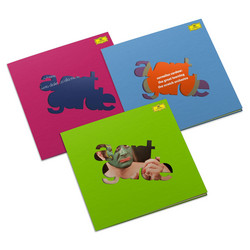
LP. Deutsche Grammophon 2531 102, 1980. Alfons Kontarsky and Aloys Kontarsky, pianos.