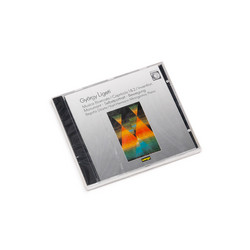
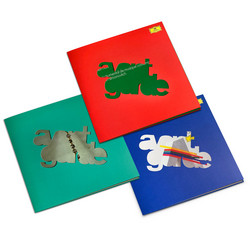
Gyorgy Ligeti
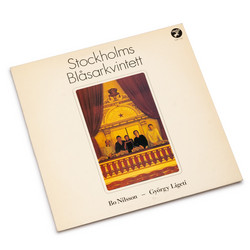
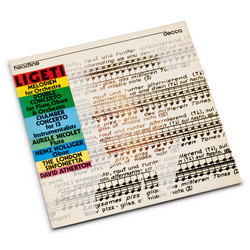
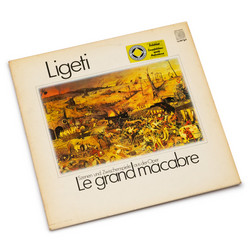
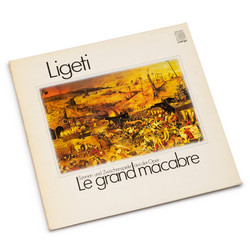
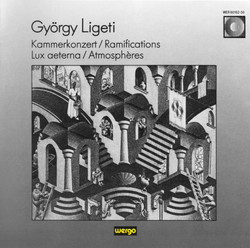
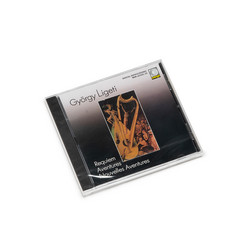
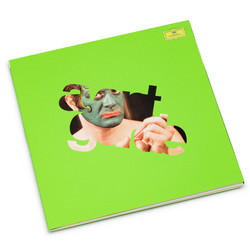
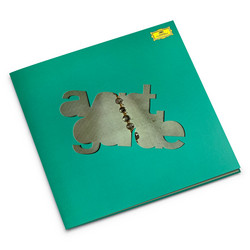
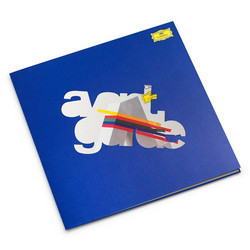
Chamber Concerto / Ramifications / Aventures / Nouvelles Aventures (LP)
condition (record/cover): NM / NM | This album represents a definitive period in 20th-century avant-garde music, famously captured in the authoritative recording by Pierre Boulez and the Ensemble Intercontemporain. These pieces showcase Gyorgy Ligeti’s transition from dense "micropolyphony" to more transparent, mechanical, and theatrical styles. Chamber Concerto (1969–70): Written for 13 soloists, this four-movement work is a masterpiece of "micropolyphony" where individual voices are woven into shimmering textures. It is often described as "insanely virtuosic," requiring each performer to act as a soloist while contributing to a complex, collective sound. Ramifications (1968–69): Scored for 12 strings divided into two groups, this piece is famous for its "mistuned" effect. One group is tuned a quarter-tone higher than the other, creating a dense, fluctuating field of sound where standard intervals are barely recognizable. Aventures (1962) & Nouvelles Aventures (1962–65): These "mini-operas" for three singers and seven instrumentalists utilize a nonsense language based on vowel sounds and Phonetic symbols. They are characterized by absurdist theatricality, with singers enacting incoherent, high-intensity dramas ranging from hysterical laughter to profound sadness.