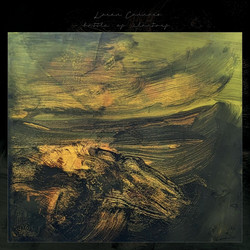
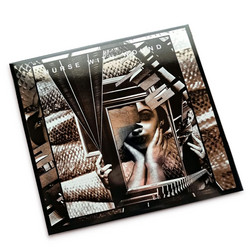
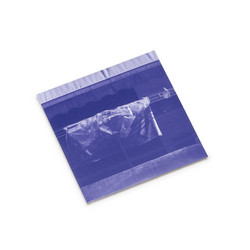
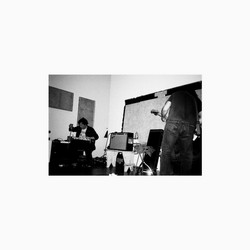
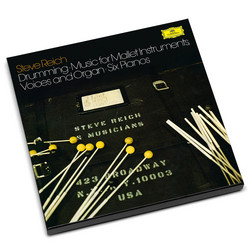
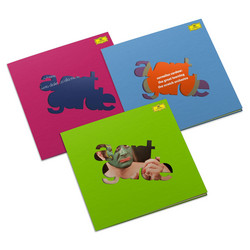
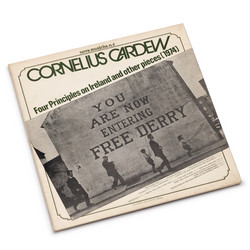
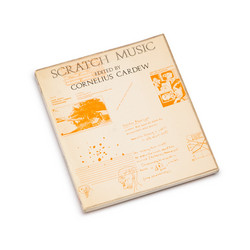
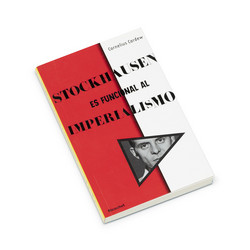
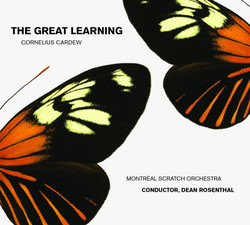
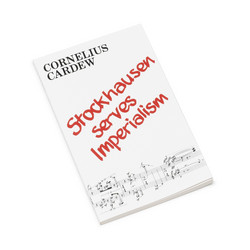
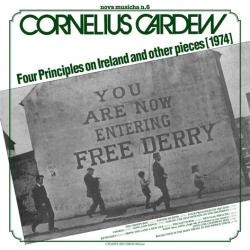
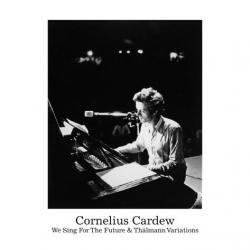
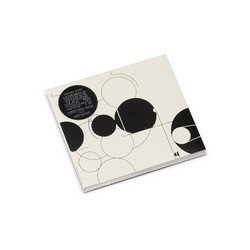
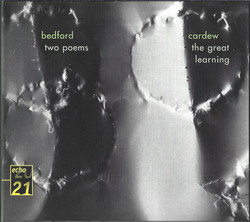
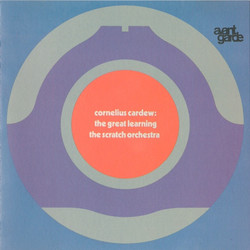
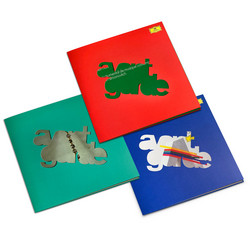
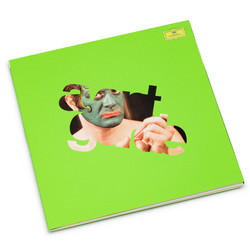
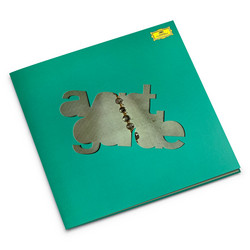
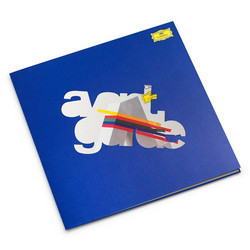
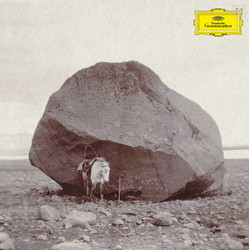
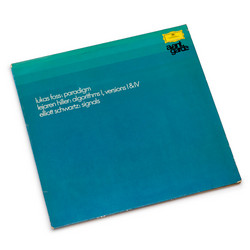
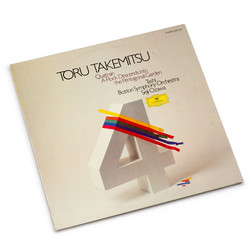
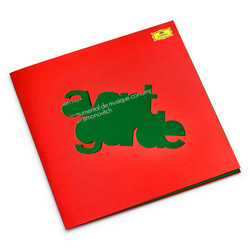
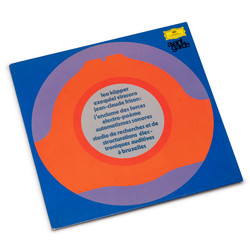
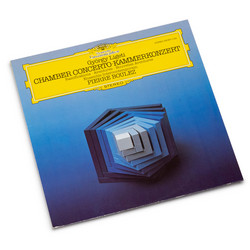
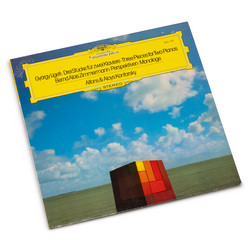
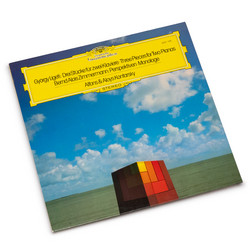
Limited and numbered edition, featuring original artwork and a newly designed, beautifully crafted collector’s sleeve with new liner notes by Bradford Bailey, and pressed on 180g vinyl. One of the most quietly radical entries in Deutsche Grammophon's legendary Avantgarde series - the run of albums issued between 1968 and 1971 that did more than almost any other label project to document the experimental music of its moment - returns to vinyl. Recorded in London in 1971, the Scratch Orchestra's reading of Paragraph 2 and Paragraph 7 from Cornelius Cardew's The Great Learning remains the central recorded document of one of the most genuinely utopian experiments in modern music.
Cardew had arrived at this point by an unlikely route. Trained at the Royal Academy of Music, he moved to Cologne at the end of the 1950s to assist Karlheinz Stockhausen at the WDR electronic studio, working at the heart of the European serial avant-garde before turning decisively away from it. Through the free-improvisation group AMM and, from 1969, the Scratch Orchestra he co-founded with Michael Parsons and Howard Skempton, he set out to dissolve the hierarchies that separated composer from performer and professional from amateur. The Scratch Orchestra gathered trained musicians, untrained enthusiasts, actors, and visual artists into a single body, and The Great Learning was the work that brought it into being.
Across seven paragraphs, the piece sets the Confucian text of the same name in Ezra Pound's 1936 translation, scoring each section for radically different forces. Paragraph 2 pits singers against drummers: the percussionists move through twenty-six rhythms in whatever order they choose while the voices intone the text on slowly shifting pitches, each group autonomous, the whole forming a dense, jostling collective. Paragraph 7 is for voices alone, and it is here that the work's deceptively simple genius surfaces. Each singer chooses a pitch and holds the opening word for the length of a single breath, then drifts toward a new note overheard nearby. Out of this rule a room slowly fills with clusters that gather, blur, and coalesce - a vast, breathing chord built entirely from individual choices, no two performances alike.
The session has its own footnotes in music history: it was the first time the young Brian Eno, then a Scratch Orchestra member, set foot in a recording studio. It also captures Cardew on the cusp of a profound break - within a few years he would renounce the avant-garde altogether for revolutionary politics, turning against Cage and Stockhausen in print. Because so much of the Scratch Orchestra's activity was improvised and never committed to tape, this recording stands as the most complete trace of what the ensemble was, and what it hoped music might become.
For this edition the original analogue two-track master tapes have been newly remastered and cut by Rainer Maillard and Sidney Claire Meyer at the Emil Berliner Studios, presented with the original artwork inside a newly designed collector's sleeve. A limited, numbered pressing of a title long out of print and increasingly hard to find.
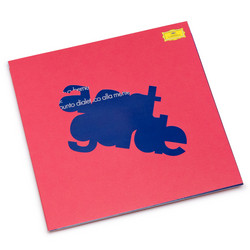
Both sides recorded at Studio di Fonologia della RAI di Milano. "Cybernetics III" composed in 1969 (By licence of S. Zerboni s.p.a., Milan, Italy) "Contrappunto Dialettico Alla Mente" composed in 1968 (By Licence of G. RIcordi & C. s.p.a. Milan, Italy)