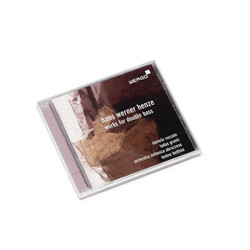
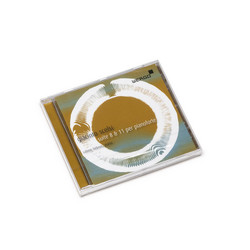
condition (record/cover): NM / NM Insert included. | The essential early document of Isang Yun (1917-1995), gathering four works from 1962 to 1967 - the period in which the Korean-born, Berlin-based composer fused East Asian musical thought with European avant-garde technique to produce something genuinely without precedent. Born in Tongyeong, Korea, Yun studied in Paris (1956-57) and with Boris Blacher in Berlin (1958-59), but his mature voice emerged only when he stopped trying to adopt European procedures and began instead to channel the principles of Korean court music - heterophonic texture, the primacy of the single decorated tone, the concept of sound as a living, breathing organism - through Western instrumental forces.
Loyang (1962) for chamber ensemble (woodwinds, percussion, harp, violin and cello) takes its title from the ancient eastern capital of China, the center from which Chinese court music was exported to Korea as tang-ak. A three-movement work built on a twelve-tone series but governed less by serial logic than by the gestural language of Korean a-ak (refined court music), it was Yun's first fully realized synthesis and the stepping stone to his international breakthrough. Gasa (1963) for violin and piano - the title refers to a traditional Korean vocal genre - distills the same principles into a duo of extraordinary intensity: Saschko Gawriloff and Bernhard Kontarsky in the recording.
Réak (1966) for large orchestra is the masterpiece. Premiered at Donaueschingen in October 1966 under Ernest Bour and the SWF-Sinfonieorchester - the recording here is that world premiere - it brought Yun immediate international recognition. The title denotes the ritual music performed at Korean royal ancestral ceremonies; Yun translates its slowly unfolding, ornament-saturated textures into orchestral sound of hallucinatory density, incorporating Korean bak (wooden clappers) and Thai gong among the Western instruments. Tuyaux Sonores (1967) for organ, played by Gerd Zacher at the Lutherkirche Hamburg-Wellingsbüttel, closes the disc - the organ's sustained tones and capacity for microtonal inflection making it an ideal vehicle for Yun's aesthetic of the single tone as living sound.
The LP was released while Yun was in prison. On 17 June 1967 - weeks after the Loyang recording session - the South Korean secret service (KCIA) kidnapped him and his wife from their Berlin home. Convicted of espionage for having visited North Korea in 1963, he was tortured, sentenced to death (later commuted), and released in 1969 only after sustained international protest from Stravinsky, Karajan, Ligeti and others. The gatefold edition includes an insert documenting his imprisonment. He became a German citizen in 1971 and continued composing in Berlin until his death in 1995. Grand Prix du Disque, Académie Charles Cros.
LP. Wergo WER 60 034, Studio Reihe Neuer Musik. Loyang: Ensemble des Sinfonieorchesters des Westdeutschen Rundfunks, Hans Zender. Gasa: Saschko Gawriloff (violin), Bernhard Kontarsky (piano). Réak: Sinfonieorchester des Südwestfunks, Ernest Bour. Tuyaux Sonores: Gerd Zacher (organ). Liner notes by Harald Kunz and Hans Zender.