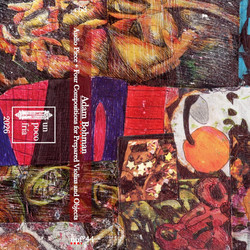
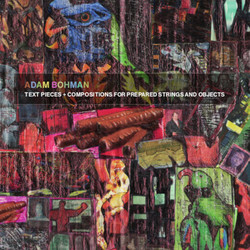
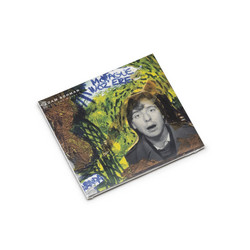
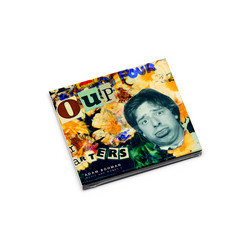
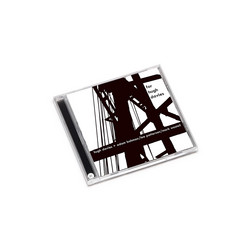
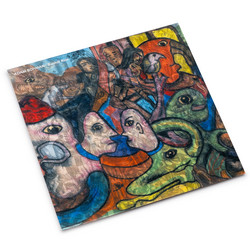
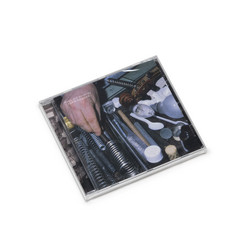
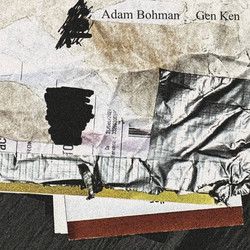
For more than forty years, Adam Bohman has been a quietly radical presence on the outer fringes of underground music, cobbling together home‑built instruments, found objects, tape cut‑ups, graphic scores and spoken detritus into a body of work that turns the bric‑a‑brac of English life into sound. Less widely acknowledged - though no less prolific - is the parallel universe he has been drawing, taping, colouring and collaging into existence since the mid‑1970s. Drawings, Collages, Paintings is the first book to bring that visual output into focus, gathering just some of the thousands of pieces made over more than half a century and presenting them as a sustained, unruly practice rather than a sideline.
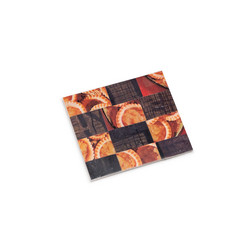
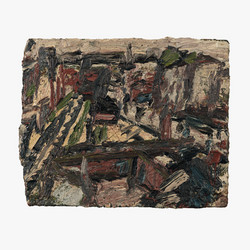
The volume moves from early pencil, pastel, crayon and ink works on sugar paper and repurposed card – haunted by creatures and demons, sepia‑saddened prospectors, smoked‑out cowboys and other Bohman familiars – to later biro‑heavy sheets in which takeaway menus, labels from tinned food and the photocopied litter of workplaces are caked together under strips of sellotape. It’s a world where cheap materials and low‑status imagery are not obstacles but catalysts: every scrap is a potential trigger for metamorphosis, every margin a site for further scrawling and smudging. Concert posters, doodles based on Ladybird book illustrations from adolescence, and recent collages sit side by side, revealing a continuity of touch and humour that runs through the decades even as the visual language mutates.
Across 208 pages, divided into “Early Works” and “Later Works,” the book attempts not just to document but to think with Bohman’s images. An extensive interview places him in conversation with Hamish Dunbar, teasing out the links between his sonic and graphic experiments, while an essay by Sophie Sleigh‑Johnson offers a critical, affectionate reading of his position as an “important English visionary” whose work has mostly circulated hand‑to‑hand, gig‑to‑gig, drawer‑to‑drawer. Drawings, Collages, Paintings is both an overdue act of recognition and an invitation: a chance to spend time inside a mind that has spent decades patiently scraping, gluing and scribbling at the edges, turning the throwaway into something indelible.
Soft cover, 272 pages, 27×21 cm