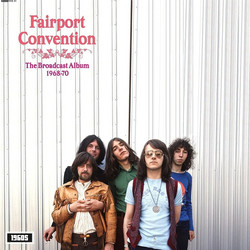
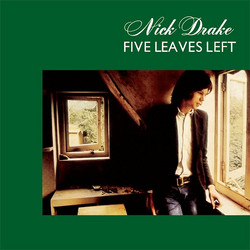
Nick Drake was twenty, and still an undergraduate at Cambridge, when he began recording Five Leaves Left. Nothing about it sounds like a debut. Issued by Island in 1969, the album came out of Joe Boyd’s Witchseason stable, the same small London office that looked after Fairport Convention, The Incredible String Band and John Martyn. Drake sat at its edge. He rarely played live, gave almost no interviews, and took his title from the slip of paper near the end of a packet of Rizla that warns the smoker how few are left. Boyd and engineer John Wood recorded him at Sound Techniques in Chelsea over the better part of a year, slowly, between terms.
The centre of the record is a guitar in tunings nobody else was using, fingerpicked with the evenness of a clock mechanism, and a voice miked so close it hardly rises above speech. Around it the room is kept sparse. Danny Thompson’s double bass moves under the songs like a second singer, Richard Thompson adds a few lines of electric guitar to Time Has Told Me, and Rocky Dzidzornu’s congas push Three Hours toward something close to a raga. The strings were written by Robert Kirby, a Cambridge friend with no professional credits, whose arrangements for Way to Blue and Fruit Tree owe more to baroque chamber writing than to anything in the pop of 1969. Way to Blue has no guitar at all, only voice and string players.
Then there is River Man. Drake wanted it to sound like Delius, and Harry Robinson gave him exactly that: a slow tide of strings rising and receding over a guitar figure in 5/4 that never once draws attention to its own oddness. It is the point where the English pastoral tradition and the folk club meet without either giving way.
The album sold a few thousand copies and disappeared. More than half a century on it is the place most listeners start with Drake, and this CD digipack edition keeps it within easy reach.