Henrik Raabe
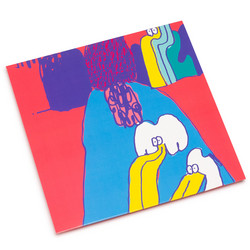
LDS (LP)
Tracked express shipping from Italy, no customs or import VAT in the EU. Shipping costs
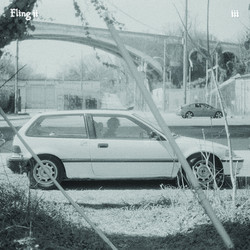
With LDS, Henrik Raabe emerges from behind the guitar of German trio Wareika to deliver a debut solo statement that sounds less like a side project and more like a long‑imagined parallel life. For years, Raabe’s playing has been wrapped inside Wareika’s minimal, jazz‑inflected deep house, his harmonic sense and liquid phrasing serving a music designed for late‑night sound systems. Here, tempo drops and the club recedes. In its place, he builds a downtempo environment where the same guitar and producer’s ear are set loose in a different kind of space - one that privileges grain, atmosphere and the slow accumulation of detail over the straight pull of a 4/4 kick.
The constellation of influences is broad but sharply distilled. Threads of jazz run through the voicings and phrasing; Afro‑leaning rhythm patterns and bass figures give the music a subtle forward lean; dub’s love of echo and negative space shapes how sounds hang and decay; new age and ambient sensibilities colour the palette with soft synth pads, chimes and distant field‑like textures. What could easily have become a grab‑bag of references instead feels remarkably coherent: Raabe treats these idioms less as genres to cite than as ways of handling time and resonance. Tracks glide rather than stride, shifting between small motifs and evolving textures, as if each piece were a room you gradually notice more things in the longer you sit there.
A useful imaginary map for LDS might be an encounter between The Durutti Column and Dennis Bovell, with Virginia Astley wandering in from the next studio over. You hear it in the aqueous, chorus‑touched guitars that sketch out melodic fragments rather than full themes, in bass and drum programming that nods to dub and lovers rock without ever going full sound‑system, in keyboard figures and wordless vocal hints that recall the pastoral side of 1980s UK experimental pop. Yet the overall feeling is more minimal, more exacting. Raabe’s German sensibility shows up in the restraint of the arrangements - motifs are introduced, repeated just as long as needed, then gently withdrawn; mixes are clean, allowing every echo tail and muted ghost‑note to register.
Across the album, Raabe treats repetition as a means of deepening focus rather than simply generating groove. A small guitar figure might cycle over a gently syncopated rim pattern, with tiny dub inflections on the snare or a bass note sliding a fraction late becoming the real point of interest. Elsewhere, layers of delayed guitar and synth float over quasi‑Afro polyrhythms, the result feeling both airy and anchored. There are no vocal “songs” in the conventional sense, but the music carries an understated lyricism; melodies arrive as glimpses, half‑remembered fragments that hover between foreground and background. It’s an album that invites - and rewards - close listening, yet never demands it aggressively; you can live inside it as easily as you can analyse it.
For Mule Musiq, LDS has all the makings of a defining 2026 release. It extends the label’s long‑standing interest in the borderlands between club culture and more introspective listening music, but does so with a voice that feels unusually personal and fully formed. Raabe doesn’t renounce his Wareika past so much as refract it through a different prism: the sense of swing, the harmonic curiosity, the subtlety of his sound design are all still present, but they’re turned toward an inward, twilight register. With each play, new connections and details surface - a faint counter‑melody in the delay, a small rhythmic hesitation, a background drone you hadn’t noticed before. LDS is one of those quietly ambitious records that, over time, rearranges the space around it - and, in the process, redraws what a “solo debut” from a deep‑house guitarist can be.
Release notes
„To my son Junu, who inspires me to be the best version of myself - every day“ All tracks written and produced by Henrik Raabe. mule musiq 305 made in eu distributed by kompakt www.kompakt.fm mulemusiq.com
| A1 | Nine.F.T.F. | 4:25 | |
| A2 | Kingston-Calcutta | 4:23 | |
| A3 | Seven | 4:06 | |
| A4 | So Fair And Foul A Day | 3:13 | |
| A5 | Maihar Dub | 3:27 | |
| A6 | Sakura | 2:36 | |
| B1 | Griot Conrète | 5:10 | |
| B2 | Burgundy | 3:36 | |
| B3 | Makalu | 3:07 | |
| B4 | Kaylash | 2:23 | |
| B5 | Filme | 3:54 | |
| B6 | Woody | 4:21 |
- Alex Nimmermann
- Lacquer Cut By