Stanislau Malenčyk, Giovanni Lami
Malenčyk / Lami (2LP)
"There is a suspicion that no one really knows how to deal with the legacy of the past." — Siarhiej Kraŭčanka
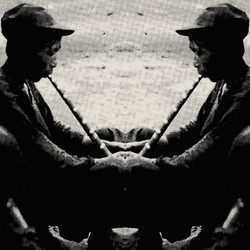
Stanisłaŭ Malenčyk (1928–2007) was a self-taught fiddler from a small village in Western Biełaruś, born on land that was then Polish territory. He never studied music formally, never worked a day on the collective farm — he supported his family solely through playing, crafting his own violins and harmonicas by hand. The music he played was made for a community: weddings, christenings, a room full of people, a shared life. As life moved to the cities and the village dissolved, that music lost the only place it could exist. By the end of his life, Malenčyk — nearly blind — was playing for whoever happened to be there: at the local bazaar, on district buses, moving through the aisles. He simply couldn't stay home. He had to play.
These recordings were made by ethnographer Mykoła Kozienka in Ščučyn in 1999 and have never been released until now. Giovanni Lami approached this archive from a distance that could hardly be greater — geographical, cultural, temporal. Every attempt to work directly with the melodies felt false, as if adding something redundant to music that required nothing more. He understood he shouldn't play on top of Malenčyk, but start from him. He extracted the harmonic structures, transformed them into MIDI data, and fed them through a network of modular systems, tape machines, and live-sampled objects — until almost nothing of the original remained. That's when Malenčyk's presence returned. Not as a quotation. As a principle.
"Where Malenčyk sought the rhythm of the body, I search for the rhythm of perception. My music arises from an attempt to listen to what remains of the desire to play for others — a longing for communion that no longer has a physical place, yet can still exist within sound." — Giovanni Lami
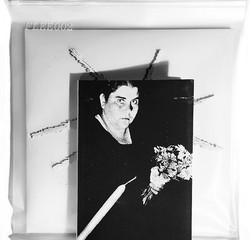
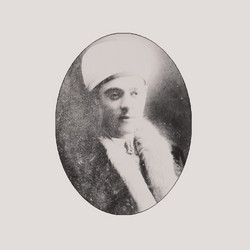
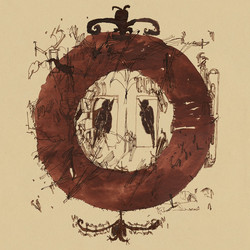
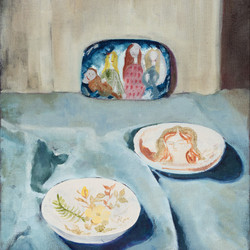
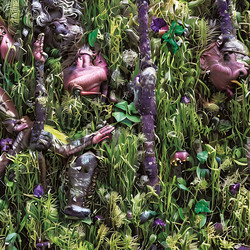
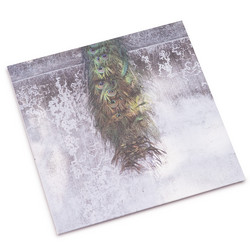
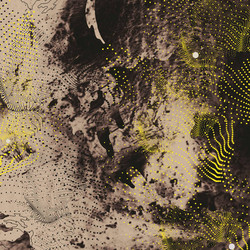
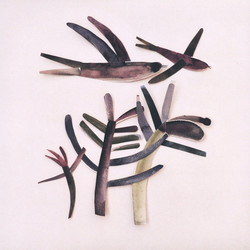
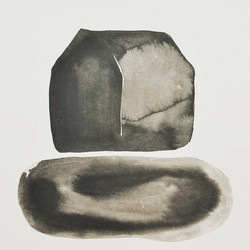
The record includes an essay by Siarhiej Kraŭčanka (SK.EIN) and collages by Volha Savič. The project was conceived and produced by Anton Aniščanka for Shatkavalka label. "The only bridge where we can all meet is that same eternal code: the heartbeat, the pulse, the simple desire to live and to sound." — Siarhiej Kraŭčanka