Armando Sciascia
Mondi Caldi Di Notte - Italian 60's Mondo Movie Sexy Themes (2LP)
Lucky Restock - Limited Quantities Please note: these are original copies that may show minor sleeve wear due to long-term storage. The vinyl is in excellent condition. Before the psychedelic freakout, before the heavy riffs of Distortions, there was the sweat and shimmer of European nightlife - and Armando Sciascia was its house composer. Mondi Caldi Di Notte gathers twenty-four tracks from the mondo sexy documentaries that Sciascia scored in the early 1960s, drawing from the archives of his own Vedette Records label to reconstruct a vanished world of neon signs, bongo drums, and continental decadence.
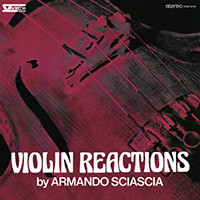
Born in Lanciano, Abruzzo in 1920, Sciascia received his diploma in violin, composition, and conducting from the Conservatory of Pesaro before moving to Milan in 1939. There he joined the orchestras of the Teatro Nuovo, the Pomeriggi Musicali, and RAI (serving as first violin), before forming his own ensemble and touring extensively across Europe. By the time he founded Vedette Records in 1962, Sciascia had already established himself as a composer and arranger of considerable range - skills that would prove essential as he simultaneously built one of Italy's most eclectic independent labels while scoring a string of exploitation documentaries.
Vedette's catalog tells the story of Italian popular music in microcosm. The label launched the careers of I Pooh (whose secretary Aliki Andris, a fan of Winnie-the-Pooh, named the band) and Equipe 84, two groups that would define Italian beat music. It was the first Italian label to release The Doors domestically. And through the "Musiche per sonorizzazioni e programmi" series, Vedette documented Sciascia's prolific output as a library composer - over thirty albums of music designed for television, advertising, and film.
The mondo documentary was a peculiar Italian invention. Beginning with Alessandro Blasetti's Europa di notte in 1959 and exploding globally with Gualtiero Jacopetti and Franco Prosperi's Mondo Cane in 1962, these films promised glimpses into forbidden worlds - nightclubs, rituals, exotic customs - presented as quasi-ethnographic reportage while delivering exactly the titillation their titles promised. Sciascia provided scores for several key entries in the genre: Mondo Caldo Di Notte (1962, directed by Renzo Russo), Sexy (1963), Sexy World, Sexy ad Alta Tensione, Tropico di Notte, and Suspence.
The music operates in the space between exotica and tension. "Easy Macumba" and "Afro Mood" channel Martin Denny and Les Baxter through an Italian sensibility, their bongos and brass suggesting tropical danger rather than Polynesian paradise. "Suspence" and "Paura dell'Ignoto" (Fear of the Unknown) deploy strings and percussion to build dread, while "Luna d'Estate" and "Città al Neon" paint nocturnal cityscapes in sound. The sole vocal track, "Sexy World (Canta Miss Mondo)," captures the era's mixture of innocence and knowingness in miniature.
Throughout, Sciascia demonstrates the orchestral mastery that would later enable his most unexpected project. In 1971, working under his pseudonym H. Tical, he assembled unknown session musicians in Milan to record Distortions - a heavy psychedelic album released on Spider (a Vedette subsidiary) that borrowed its opening riff from Iron Butterfly's "In-A-Gadda-Da-Vida" and channeled early Pink Floyd through an Italian giallo filter. Critics who discovered the album couldn't reconcile its creator: why had a "renowned Italian sexy film composer" produced such seriously heavy stuff? Director Jess Franco would later use several tracks from Distortions in his 1972 film Sinner: Diary of a Nymphomaniac, proving that Sciascia's varied outputs weren't as distant as they appeared.
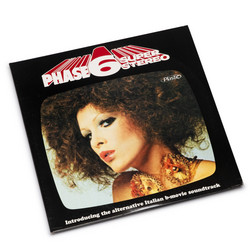
Sciascia also worked under the pseudonyms Peter Hamilton and Pantros (the latter for lyrics). In the 1970s, he launched the forward-thinking "Phase 6 Super Stereo" series, which featured soundtrack themes and easy listening pieces recorded using then-innovative technologies - a reminder that the man behind these sensuous '60s scores was always attuned to the possibilities of the new.
Armando Sciascia died in June 2017 in Trumbull, Connecticut, at the age of 97 - a long journey from the Abruzzese hills to the nightclubs of Rome to the American suburbs. Mondi Caldi Di Notte captures him at his most characteristic: sophisticated yet lurid, orchestrally accomplished yet entirely functional, suspended between high culture and exploitation cinema like the best Italian popular art of its era.
| A1 | Suspence | 1:11 | |
| A2 | Isocronismo In Fa | 1:59 | |
| A3 | Ostinazione | 2:11 | |
| A4 | Easy Macumba | 1:33 | |
| A5 | Sexy World | 2:51 | |
| A6 | Incubo Di Bongos | 3:18 | |
| B1 | Ombre Nascoste | 2:09 | |
| B2 | Interludio Cubano | 1:37 | |
| B3 | Afro Mood | 2:04 | |
| B4 | Ricordo Di Vanessa | 2:33 | |
| B5 | That Latin Feeling | 2:37 | |
| B6 | Stop Lion Stop | 2:40 | |
| C1 | Vertigine Blu | 2:15 | |
| C2 | Suoni Di Coreografia | 1:37 | |
| C3 | Passione Incas | 2:40 | |
| C4 | Paura Dell'Ignoto | 2:10 | |
| C5 | Luna D'Estate | 2:15 | |
| C6 | Città Al Neon | 1:49 | |
| D1 | Ballata Messicana | 2:22 | |
| D2 | Incontro Inatteso | 0:59 | |
| D3 | Con Quelle Gambe Che... | 2:34 | |
| D4 | Su, Su Nel Cielo | 3:01 | |
| D5 | Eclisse Indigo | 3:08 | |
| D6 | Estasi Tropicana | 2:26 |
- Sergio Valente
- Alto Saxophone
- Renzo Nardini
- Baritone Saxophone
- Armando Sciascia
- Composed By, Directed By
- Gil Cuppini
- Drums
- Roberto Zamori
- Liner Notes
- Genevieve Maull
- Liner Notes [Translation]
- Armando Sciascia Orchestra
- Orchestra
- Eraldo Volonté
- Tenor Saxophone
- Gianni Basso
- Tenor Saxophone
- Mario Pezzotta
- Trombone
- Al Korvin
- Trumpet
- Nini Impallomeni
- Trumpet
- Oscar Valdambrini
- Trumpet