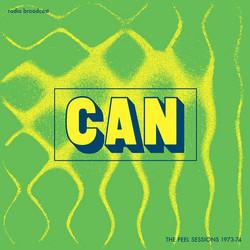
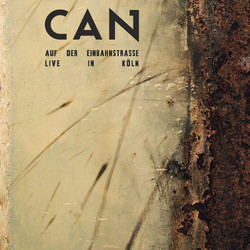
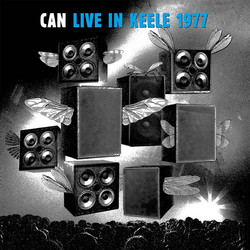
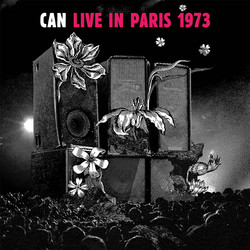
Can
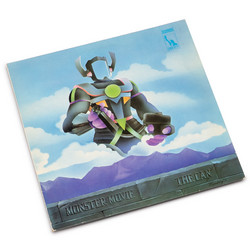
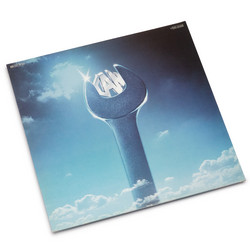
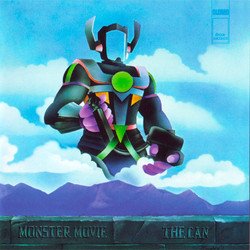
Monster Movie (Lp)
Tracked express shipping from Italy, no customs or import VAT in the EU. Shipping costs
Are we there yet? After 25 years of critical reappraisal and at least 15 years of indie and post-rock bands flaunting their influence, has Can finally gotten their just desserts? I don't think so. Not just yet. Can still seem just a little bit ahead of the curve. They really were "post-rock," as opposed to just futuristic. Can's music anticipated both the musical trend toward decontextualization via electronics, post-production, and editing, and the cultural trend toward collective experience and shared information. Other bands shone as brightly in this regard (The Beatles, for one), but Can arrived as a more finished product and more capable of translating their ideas onto record than any other. And they jammed: Any randomly picked moment from "Yoo Doo Right" or "Halleluwah" is as powerful now as when it was released. You can use them as make-out music, a drug soundtrack, or just stuff to listen to while driving. You can use them to blast off or come down.
Can formed in 1968, featuring two former students of avant-garde classical composer Karlheinz Stockhausen, a former free-jazz drummer interested in math, a rock'n'roll guitarist 10 years younger than the others, and an American sculptor living in Europe in order to evade the draft. Keyboardist Irmin Schmidt had visited America in 1966, hooking up with the Fluxus musicians (Terry Riley, La Monte Young, et al.) and becoming inspired to form a rock band. He and bassist Holger Czukay (who would issue 1969's Canaxis, which used primitive sampling technology) were keen to incorporate experimental composition and compositional theories into a rock setting, and when Czukay's student Michael Karoli turned them onto Jimi Hendrix and the Beatles, the band's fate was sealed.
However, Can would not become just another band. For one, they eschewed the idea of a frontman or long solos. Each member of the group served a specific function, but the band operated as a collective; no individual part was more important than the whole. They recorded music in a manner befitting a modern electronic artist, editing together tracks using source material culled from marathon improv sessions. This is also similar to what Miles Davis was doing at the time on In A Silent Way and Bitches Brew, though while the trumpeter was jumping into uncharted territory for a jazz musician, Can had already memorized their instruction manuals and covered more artistic and technical ground faster than any band had ever done. (excerpt form Pitchfork review)
Format
Remastered Edition appears on Spine
Release notes
On inner: Vinyl cut by Kevin Metcalfe, Soundmasters But the cut for this version is from Daniel Krieger at SST GmbH. On rear: ℗ & © 2013 Spoon Records Limited Printed in the EU XSPOON4 mute.com spoonrecords.com Spine: Can Remastered Edition Monster Movie XSPOON4
| A1 | Father Cannot Yell | ||
| A2 | Mary, Mary, So Contrary | ||
| A3 | Outside My Door | ||
| B | Yoo Doo Right |
- Holger Czukay
- Bass, Engineer, Edited By, Supervised By [Remastering Attended By]
- Wandrey's Studio
- Design, Illustration
- Jaki Liebezeit
- Drums
- Michael Karoli
- Guitar
- Irmin Schmidt
- Keyboards, Supervised By [Remastering Attended By]
- Kevin Metcalfe
- Lacquer Cut By [Vinyl cut (not for this version, text on inner)]
- Kr
- Lacquer Cut By [from runout]
- David Stubbs
- Liner Notes
- Andreas Torkler
- Remastered By
- Jono Podmore
- Supervised By [Remastering Attended By], Supervised By [Vinyl Mastering Supervisor]
- Malcolm Mooney
- Vocals
- Can
- Written-By, Producer