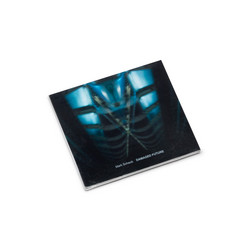
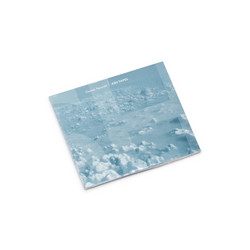
Tip! *Edition of 100* Quiet Panic presents composer and producer Mark Schaub working with a precise emotional paradox: music that appears calm on the surface yet carries a constant undertow of restlessness. Written and recorded in 2025, the album unfolds in a space where ambience is not a genre but a pressure field, where every sustained tone or hanging chord seems to vibrate with things unsaid. Schaub’s pieces often move slowly, but they never drift. Instead, they tighten almost imperceptibly, like a held breath, keeping the listener suspended between comfort and apprehension.
As a composer, Schaub favours clarity of gesture over excess. The pieces on Quiet Panic are built from a restrained palette - likely a weave of electronics, treated instruments and carefully shaped environmental sound - arranged so that each layer has room to resonate. Melodic fragments might appear only briefly, half‑formed, before dissolving back into texture; rhythmic elements, when they surface, tend to be more like pulses or distant machinery than explicit beats. The effect is to draw attention to timbre, space and dynamic contour: the way a sound enters, blooms, and slowly recedes into the background haze.
The title captures the album’s central tension. “Quiet” speaks to the hushed dynamics, the preference for soft edges and enveloping atmospheres. “Panic,” meanwhile, hints at the flicker of anxiety or urgency embedded in those same textures. Schaub plays these forces against one another with careful control. A track might open in near‑stillness, only to be infiltrated by a faint, high‑frequency whine, a low‑end throb, or a cluster of harmonics that subtly destabilises the mood. Nothing explodes; instead, the music leans into the kind of unease that arrives slowly, almost politely, and then refuses to leave.
Mastering by Andrea Marutti deepens this delicate balancing act. Known for his work across experimental and drone‑oriented music, Marutti brings a finely tuned ear for low‑level detail and spatial nuance. On Quiet Panic, that translates into a soundstage where even the most fragile elements remain audible without sacrificing weight. Quiet passages feel genuinely intimate rather than simply attenuated, while denser sections retain definition instead of collapsing into blur. The mastering emphasises the album’s sculptural qualities: you can sense the distance between elements, the way certain frequencies sit forward while others hover at the threshold of perception.