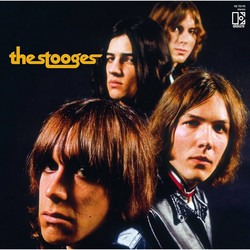
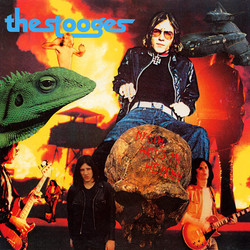
** 2026 Stock ** By the time Raw Power came out in 1973, Iggy And The Stooges were effectively detonating their own band in public. The result sounds less like a conventional third album and more like a controlled building collapse: eight tracks where every brick - riff, drum fill, vocal line, mix decision - seems to fall just slightly out of line, opening up dangerous gaps for noise, sex and bad intentions to spill through. Co‑produced by Iggy Pop with David Bowie overseeing the final mix, the record arrived too extreme for most of its era and too perfectly realised to die, becoming the petri dish from which whole strains of punk, metal and noise‑rock culture would later grow.
“Search and Destroy” doesn’t so much open the album as kick the door off its hinges. Williamson’s guitar lurches out of the speakers in jagged, metallic slabs, clawing at your ankles while Iggy introduces himself as a “street walkin’ cheetah with a heart full of napalm” - a line that would sound ridiculous if it didn’t feel so utterly believed. The mix is famously skewed: drums half‑buried, bass smeared into the midrange, guitar shrieking in the red. That imbalance is the point. The song feels like a bootleg of a riot, a document of something barely held together long enough to get on tape. “Gimme Danger” flips the energy without lowering the stakes, turning paranoia into a slow, acid‑slicked crawl. Acoustic flourishes, minor‑key drift and one of the great hooks in rock history rub shoulders with Iggy’s most seductive menace, crooning about “a pair of glassy eyes” as if he were whispering bad news directly into your ear.
The middle of the record is where Raw Power’s sheer perversity really asserts itself. “Your Pretty Face Is Going To Hell” sounds exactly like its title: drums stumbling forward in chaotic flurries, Williamson’s tone like rusted sheet metal being fed into a shredder, Iggy screaming with a hysteria that makes most later “extreme” vocals sound like good manners. On the title track, the band crashes through an intro that resembles someone retching into a microphone before locking into a lurching, mid‑tempo swagger that’s less groove than threat. When the chorus hits, you don’t hear a band celebrating its own power so much as warning you about the voltage they’re about to dump into the room.
Side two is where the album’s legend as “punk rock Bible” really writes itself. “I Need Somebody” drags a swamp‑blues skeleton through a junkyard, Iggy leaning into a drawl that hints at the damaged crooner he’d later become, while the backing threatens to come apart at every barline. “Shake Appeal” is pure adrenal overload, a mutated Little Richard stomp played at the edge of collapse, all snare cracks and yelps, the kind of track that makes sense of a straight line from The Stooges to the Sex Pistols to hardcore and beyond. Closer “Death Trip” is the logical endpoint: a shrill, hammering dirge where Williamson’s soloing sounds like someone trying to saw through the studio walls while the rest of the band pounds away as if the only solution is to burn the whole structure down.
Later editions - especially the “Legacy” reissue restoring Bowie’s original, “ugly” mix and adding the Georgia Peaches live set - have only reinforced how singular this record is. In concert documents from the era, the same songs stretch into nine‑minute jams where piano pokes through, Ron Asheton’s bass stalks ominously and Iggy prowls the stage like a hyena, baiting the crowd while bottles shatter. Yet it’s the studio Raw Power that remains the core scripture: a record whose flaws are not just part of its charm but the very mechanism of its impact. The clipping, the imbalance, the sense that everything is too loud and too close - those are the conditions under which its emotions can sweat through every pore. If you want to understand how rock mutated into punk - not as a fashion but as a structural refusal of good taste and sonic comfort - you could do worse than to drop the needle on Raw Power, turn it up until it feels slightly unsafe, and let it do to you exactly what it’s been doing to people for more than fifty years.