Lucio Battisti
La Sposa Occidentale (LP, White / Black)
LabelSonyGenreLibrary & Soundtracks
In stock (ships within 1-2 working days)
Tracked express shipping from Italy, no customs or import VAT in the EU. Shipping costs
Released in October 1990, La Sposa Occidentale signals a renewed creative energy in Lucio Battisti, whose ongoing partnership with Pasquale Panella pushes the Italian songbook into territory that is both conceptually and sonically ambitious. Building on the electronic foundations set by its predecessors, the album adopts prominent dance textures while maintaining Battisti’s signature melodic unpredictability and Panella’s cryptic, labyrinthine writing. The album’s structure circles around the figure of the “western bride,” a poetic cipher through which Panella explores themes of femininity, societal constraints, and romantic abstraction. Unlike previous works, La Sposa Occidentale completely relinquishes orchestral elements in favor of programmed beats, synthetic timbres, and rhythm sections driven by musicians such as Andy Duncan and Paul Stacey. The shift in style is matched by a sharper conceptual focus: each of the eight tracks, from Tu non ti pungi più through to Campati in aria, references the multifaceted nature of the central character, using metaphor, paradox, and flashes of surreal humor.
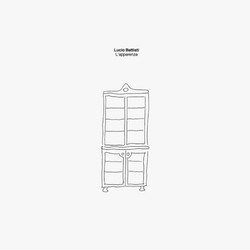
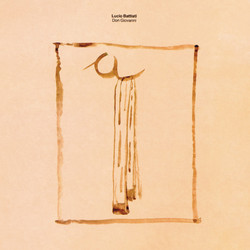
Battisti’s voice retains its searching intimacy, now set within more spacious, abstract musical frameworks. This minimalism is mirrored visually in the all-white album cover, adorned just by a stylized drawing—a signal of Battisti’s ongoing pursuit of understatement and restraint. Commercially, La Sposa Occidentale proved a success, selling 400,000 copies and securing the third spot on Italy’s national charts; it was also the country’s 34th best-selling album in 1990. Yet its lasting legacy lies in its ability to expand the vocabulary of Italian pop: through Panella’s skewed narratives and Battisti’s refusal of easy musical comfort, the record stands as a testament to artistic risk-taking and the potential for song to serve as both cryptic diary and communal puzzle. For listeners, La Sposa Occidentale invites repeated engagement—a work where surface and meaning are always in active negotiation, and where each detail, musical and poetic, carries the latent possibility of transformation.
Format
Repress Sony Music 2025
Release notes
Audio rimasterizzato a 24Bit/192kHz dai nastri originali. Vinile bianco mix nero 180 g. Archivio del suono.
| A1 | Tu Non Ti Pungi Più | 5:13 | |
| A2 | Potrebbe Essere Sera | 5:18 | |
| A3 | Timida Molto Audace | 5:10 | |
| A4 | La Sposa Occidentale | 5:38 | |
| B1 | Mi Riposa | 5:56 | |
| B2 | I Ritorni | 5:20 | |
| B3 | Alcune Noncuranze | 6:28 | |
| B4 | Campati In Aria | 4:54 |
- Joe Skeete
- Bass
- Chris Brandy
- Engineer
- Crispin Retey
- Engineer
- Paul Stacey
- Guitar
- John Young
- Keyboards
- Richard Cottle
- Keyboards
- Lucio Battisti
- Music By
- Andy Duncan
- Percussion
- Greg Walsh
- Producer
- Pasquale Panella
- Songwriter
- Derek Watkins
- Trumpet