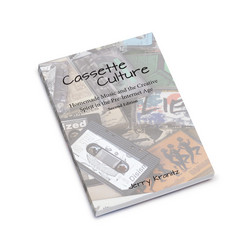
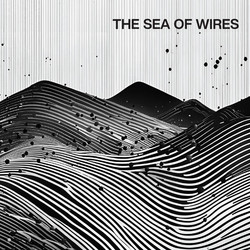
Recordings 1980–82 charts the formative arc of Sea of Wires, the project founded by Chris Jones and Tony “T” Murphy - two dedicated Hawkwind heads who fell hard for the German electronic vanguard of Tangerine Dream, Ash Ra Tempel, Popol Vuh, Harmonia and Cluster. The duo took the long, hypnotic lines and phased textures of kosmische music and fed them through the realities of early‑80s Britain: small rooms in Coventry, limited gear, cassette culture instead of big studios. Like contemporaries Ian Boddy, Carl Matthews, Paul Nagle, Ron Berry or Colin Potter, they treated “kraut” influence less as a style to copy than as a method: build from drones and sequences, trust slow development, and let improvisation ride over patiently layered beds of sound.
The original Sea of Wires line‑up held together for several years in the early ’80s, circulating their music via home‑dubbed cassettes and local live sets. Their debut tape, Individually Screened (1980), became their most widely distributed release after a rave review in the weekly music paper Sounds and a strong recommendation from Geoff Wall’s fanzine Stick It In Your Ear. That coverage arrived at a perfect moment, when DIY tapes were on the rise and hungry listeners were willing to send off for music sight unseen. Copies of Individually Screened travelled far beyond Coventry, helped along by a later licence to Ian Dobson and Gordon Hope’s Flowmotion label, one of the key nodes of the emerging UK cassette underground.
A year later, Chris Jones issued a solo tape, Diversions, on a small imprint that borrowed the Sea of Wires name. Although technically a solo outing, it shared the project’s core grammar: cyclical synth figures, slowly mutating timbres, and a preference for long arcs over short themes. Diversions also drew praise in Stick It In Your Ear and other cassette‑culture publications, confirming that something about this modest, home‑brewed kosmische was resonating with a scattered but devoted audience. Around the same time, Sea of Wires tracks began to appear on compilations that would become touchstones of the era: Snatch Tapes No. 2, Inkeys No. 3, and National Grid 2 on Conventional Tapes, one of the first and most influential UK DIY labels.
In 1982, Jones and Murphy released what would be their final cassette as a duo, Beyond the Edge of Tomorrow, again on their own label. The title neatly encapsulates their preoccupation: music as a way of leaning slightly past the present tense, without the resources or bombast of mainstream “space rock.” The foundation of their sound was live improvisation over pre‑recorded layers - sequences and pads laid down in advance, then played against in real time. It was this approach they hoped to expand into integrated audio‑visual performances, using projections and other elements to build immersive environments. That ambition, however, never quite materialised; for a tangle of practical reasons the duo parted ways in the mid‑’80s, leaving behind tapes, compilation cuts and a handful of collaborations (including Chris’s work with Carn Dum, who released a cassette on the Music For Midgets label).
This anthology concentrates on the early, most fertile phase: the three tapes released between 1980 and 1982. Heard together, they reveal how Sea of Wires translated big influences into small‑scale, idiosyncratic practice. The long‑form pieces are built from looping analog patterns, misty chords and slow, sometimes gritty filter sweeps; the edges are rough, but that roughness is part of the pull, reminding you that these “space” vistas are being generated on domestic gear, not in some sleek lab. Where German predecessors often had the luxury of dedicated studios and multi‑track rigs, Jones and Murphy work with the limitations of a Tandberg or Teac, bouncing layers, accepting tape noise as texture, and letting accidents steer the music’s course.