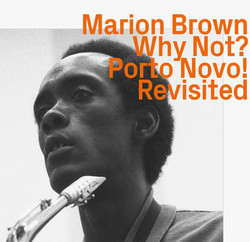
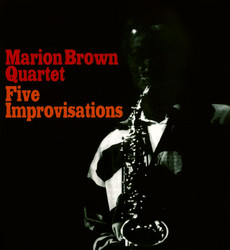
Marion Brown
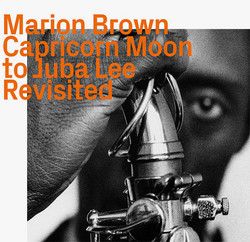
Reference: Marion Brown Capricorn Moon Why Not? & With Burton Greene Quartet (2CD)
LabelAlAyGenreJazz & Improvisation
Arriving from the supplier: restock due soon (ships as soon as it reaches us)
Tracked express shipping from Italy, no customs or import VAT in the EU. Shipping costs
The rhythm team by Rashied Ali and Reggie Johnson (with former Sun Ra member Ronnie Boykins adding texture on "Capricorn Moon") establishes a solid foundation, complemented by Alan Shorter's sharp trumpet, while Benny Maupin's close expressions in monophonic form also support it. The fact that pianist Burt Green recorded an almost unnoticed ESP album (just a month later) with Brown as a sideman illustrates how fluid and negotiable musical activities were within this nascent community.
Although Rashied Ali played drums intermittently in this quartet, he was working with John Coltrane at the time of the recording and could not participate in this session. The music, balanced by Green's delightful dissonant clusters and melodic developments within the piano, grants Brown a broad range of interpretative possibilities. This spans from the mournful symphonic poem "Ballad II" to the fierce rebellion of "Taking It Out of the Ground," in which Brown's alto saxophone interacts with Frank Smith's unstable tenor sax, creating a knife-edge intensity.
Brown's second ESP album, "Why Not," suggests a transitional phase in his conceptual evolution. This shift toward moods that evoke or reveal emotion and programmatic details eventually leads to the highly regarded Southern trilogy of the 1970s: "Afternoon of a Georgia Faun," "Geechee Recollections," and "Sweet Earth Flying." Each of the four tracks on "Why Not" is distinct, portraying composer Brown through a storytelling method that weaves in references and allusions from the past through its characters and plots.
For instance, while Stanley Cowell's lengthy piano rhapsody and Brown's punchy alto give the piece changes, the theme of "La Sorella" is entirely borrowed from the French composer Charles Borel-Clair's piece of the same name, composed in 1905, which was originally arranged from Brazilian folk dance. "Fortunato" is an eloquent and poignant ballad of traditional thought, and the title may reference the unfortunate victim from Edgar Allan Poe's story, "The Cask of Amontillado."
Release notes
Tracks 1-1 - 1-4 recorded New York City, November 1965 Track 1-5 and tracks 2-1 - 2-3 recorded New York City, January 1966 Tracks 2-4 - 2-7 recorded New York City, October 1966
| CD 2506-1 | |||
| Marion Brown | |||
| Capricorn Moon | |||
| 1-1 | Capricorn Moon | 22:31 | |
| 1-2 | 27 Cooper Square | 3:48 | |
| 1-3 | Exhibition | 18:01 | |
| 1-4 | Mephistopheles | 18:18 | |
| Burton Greene Quartet | |||
| 1-5 | Cluster Quartet | 12:09 | |
| CD 2506-2 | |||
| 2-1 | Ballade II | 10:36 | |
| 2-2 | Bloom In The Commune | 8:07 | |
| 2-3 | Taking It Out Of The Ground | 13:03 | |
| Marion Brown Quartet | |||
| Why Not? | |||
| 2-4 | La Sorella | 11:31 | |
| 2-5 | Fortunato | 8:36 | |
| 2-6 | Why Not? | 6:59 | |
| 2-7 | Homecoming | 10:16 | |
- Marion Brown
- Alto Saxophone, Composed By (1-1 to 1-3, 2-4 to 2-7)
- Burton Greene
- Composed By (1-5 to 2-3), Piano, Percussion (1-5 to 2-3)
- Werner X. Uehlinger
- Curated By
- fuhrer vienna
- Design Concept [Graphic Concept]
- Henry Grimes
- Double Bass (1-5, 2-1 to 2-3)
- Reggie Johnson
- Double Bass (1-1 to 1-4)
- Ronnie Boykins
- Double Bass (1-1)
- Norris "Sirone" Jones
- Double Bass (2-4 to 2-7)
- Dave Grant
- Drums (1-5, 2-2)
- Tom Price
- Drums (2-1, 2-3)
- Rashied Ali
- Drums, Percussion (1-1 to 1-4, 2-4 to 2-7)
- Art Lange
- Liner Notes
- Michael Brändli
- Mastered By
- Guy Kopelowicz
- Photography By [Cover Photo By]
- Stanley Cowell
- Piano (2-4 to 2-7)
- Bernhard «Benne» Vischer
- Producer [Honorary Producer]
- Bennie Maupin
- Tenor Saxophone (1-3)
- Frank Smith
- Tenor Saxophone (2-3)
- Alan Shorter
- Trumpet (1-1 to 1-4)