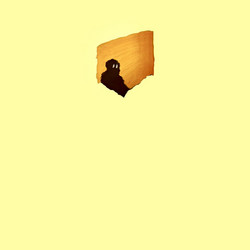
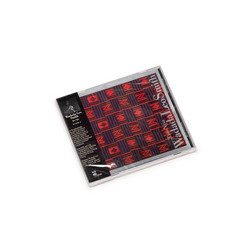
**2026 stock** First released in 1979 and now issued on CD for the first time, Spirit Catcher captures Wadada Leo Smith at a moment when his compositional imagination was pulling in multiple directions at once - toward spacious, rhythmically alive ensemble music and toward stark, almost otherworldly chamber works. Recorded by Rudy Van Gelder, the album presents two original quintet pieces, “Images” and the title track, alongside “The Burning of Stones,” an extraordinary work for muted trumpet and three harps that appears here in two separate realizations. Heard together, these three compositions outline a wide arc of Smith’s late‑’70s language: lyrical yet unsentimental, grounded in blues and song but constantly testing the edges of form, colour and texture.
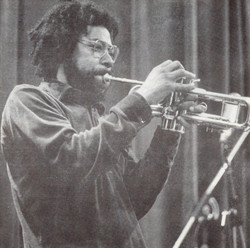
The quintet - Dwight Andrews on clarinet, wooden flute and tenor saxophone; Bobby Naughton on vibraharp; Wes Brown on bass and wooden flute; Pheeroan akLaff on drums; and Smith on trumpet and flugelhorn - operates with a floating, airy precision. In “Images” and “Spirit Catcher,” Smith’s themes are spare but memorable, often sketched as short melodic cells or fanfare‑like figures that open onto wide, open fields of improvisation. Naughton’s vibraharp provides a luminous harmonic halo, its metallic resonance wrapping around Smith’s lines; Andrews moves fluidly between reedy clarinet, breathy flute and darker‑toned tenor, thickening or thinning the ensemble sound as needed. Brown and akLaff keep the ground in constant motion: pulses appear and dissolve, grooves lean into West African and Afro‑American inflections without ever settling into fixed patterns, and silence is treated as a rhythmic event in itself. The music feels both ritual and exploratory, as if each piece were a ceremony whose outcome is discovered rather than predetermined.
“The Burning of Stones” takes Smith’s ideas into a radically different environment. Scored for muted trumpet and three harps (played by Irene, Carol and Ruth Emanuel), it strips away drums, bass and winds, leaving a fragile, prismatic web of plucked strings around the compressed glow of Smith’s sound. The harps create overlapping arpeggios, bell‑like chords and rippling textures that suggest water, wind, or distant bells, while the trumpet moves through them in slow, deliberate phrases, sometimes cutting against the grain, sometimes nestling inside their resonance. The choice of mute turns Smith’s tone into something both intimate and steely, a narrow beam of light threading a shifting lattice. Presented in two realizations, the piece reveals how precisely notated structure and performer choice coexist in his work: the basic materials remain recognisable, but the pacing, emphasis and internal balance between trumpet and harps shift, giving each version its own internal weather.
The CD edition expands the original LP program by adding an alternate version of “The Burning of Stones,” deepening the listener’s sense of the music’s possibilities. It’s not an outtake in the throwaway sense, but a parallel perspective that underlines how much of Smith’s compositional thinking is about setting conditions and then allowing sound to find its own path within them. Throughout the album, Van Gelder’s engineering captures the subtle dynamics of this approach: the decay of vibraphone notes, the grain of wooden flutes, the soft attack of harp strings and the nuanced attacks of Smith’s horn all sit in clear relief, preserving both intimacy and space.
Spirit Catcher stands as a key document in Wadada Leo Smith’s catalogue, bridging his work with small improvising ensembles and his more overtly compositional projects. It shows a band able to move from open, breathing forms to tightly focused interplay, and a composer unafraid to imagine a trumpet encircled by harps as a viable site for jazz‑rooted investigation. Decades on, the music still feels uncannily fresh: a reminder of how, in Smith’s hands, sound can be both message and environment, invocation and inquiry.