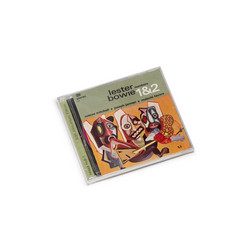
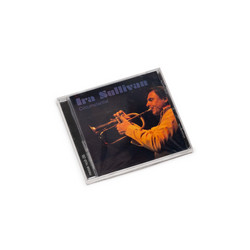
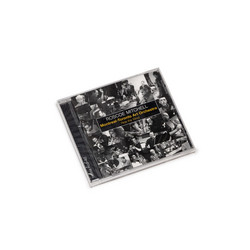
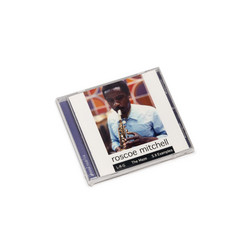
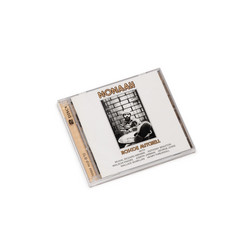
** 2026 stock ** All the Numbers goes back to the summer of 1967, when Lester Bowie stepped into the studio not as a sideman or co‑conspirator, but as a nominal leader for the first time. The musicians around him were his closest collaborators from the burgeoning Roscoe Mitchell Art Ensemble: Roscoe Mitchell himself on reeds and small instruments, Malachi Favors on bass and assorted sound‑makers, and, on the second session, Joseph Jarman on additional reeds. Originally, edited selections from these dates appeared on a single LP as Numbers 1 & 2, the first release on Nessa Records. This expanded 2‑CD set restores everything recorded over those two August days, revealing the material not as a neat program of pieces, but as a living laboratory for what would soon be recognised as the Art Ensemble of Chicago.
The structure is deceptively simple: two compositions, “Number 1” by Bowie and “Number 2” by Mitchell, each explored through multiple takes. The first session, on August 11, features a trio - Bowie, Mitchell and Favors - working “Number 1” and “Number 2” from the inside out, testing different tempos, densities and balances between written and improvised elements. A week later, on August 12, Joseph Jarman joins, turning the trio into the horn‑heavy quartet that would become the Art Ensemble’s core. With him in the room, the music shifts: harmonies thicken, counter‑lines become more intricate, and the ensemble sound gains a new, choral weight. What could have been a tedious parade of near‑identical alternates instead becomes a series of distinct events, each take a different answer to the same compositional question.
On “Number 1,” Bowie’s writing leans into sharply defined themes and fanfare‑like figures, the kind of angular yet catchy material that would later fuel the Art Ensemble’s most memorable heads. The trio versions show how much colour and contrast can be conjured from a stripped‑down instrumentation: Mitchell doubling on saxophone, clarinet and flute, Favors moving between walking lines, drones and zither‑like textures, Bowie’s trumpet alternately declamatory and slyly conversational. When Jarman enters on the quartet takes, those themes become seedbeds for denser polyphony; horn voices can splinter into simultaneous, diverging lines, giving the sense of a small brass and reed choir rather than a conventional front line.
“Number 2,” Mitchell’s piece, feels more open in contour, with structures that invite the band to hover between pulse and rubato, between melodic unison and dispersed sound fields. Here, repeated takes become especially revealing. One run‑through might emphasise collective density, the next a more spacious, chamber‑like exchange; one version settles into a grounded rhythmic feel, another floats free of meter for long stretches. Across both pieces, you can hear the group’s emerging logic: themes are not sacred objects but launchpads; silence is an active compositional element; small percussion sounds, vocalisations and “little instruments” are treated as equal citizens alongside trumpet, saxophone and bass.
Rather than smoothing out this variety, All the Numbers leans into it, presenting the full sequence as a kind of X‑ray of the Ensemble’s early working methods. You hear them rehearse, recalibrate, take risks, occasionally meander, then snap into focus. The presence of multiple takes turns the album into a study in process: how a band of improviser‑composers worry a piece until its possibilities reveal themselves, and how different those possibilities can be from one pass to the next. Crucially, nothing here feels redundant; each version refracts the material in a new way, whether through a shift in solo order, a change in dynamic shape, or a subtle re‑voicing of the theme.
As the first recordings under Lester Bowie’s name and the earliest documentation of the Mitchell‑Bowie‑Favors‑Jarman quartet, All the Numbers holds enormous historical weight. But it is not just a prequel for collectors. It stands on its own as a vivid, sometimes unruly, always curious portrait of a group just before it takes its final name - testing boundaries, defining a shared language, and discovering that even “numbers” can contain multitudes.