Roscoe Mitchell
Nonaah (2CD)
**2026 stock** Recorded between August 1976 and February 1977, Nonaah is Roscoe Mitchell’s most infamous statement outside the Art Ensemble of Chicago - a double album that treats form as a laboratory and the alto saxophone as both weapon and seismograph. At its centre is the title piece, first heard here in a 31‑minute solo concert performance that has since become the stuff of legend: Mitchell hammering a short, jagged motif into the air, worrying its intervals, re-spacing its silences, turning insistence into an almost physical environment. It is confrontational music, but not in the sense of volume or speed; the confrontation lies in how nakedly it exposes repetition, variation and breath, forcing player and listener alike to stay inside an idea long past comfort.
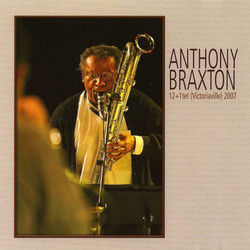
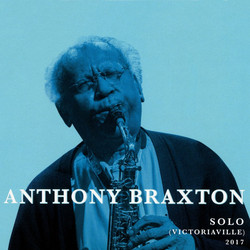
Around that core orbit a series of encounters that reframe the same materials in radically different ways. Two duets show Mitchell’s sound bending in response to sharply contrasting partners. With Anthony Braxton, the alto becomes part of a twinned nervous system: lines cross, collide and diverge, sometimes shadowing one another, sometimes pulling in oblique counterpoint, as if both saxophonists were testing the limits of shared language. The duet with Malachi Favors opens up a different axis, dropping the horn into the deep, woody resonance of the bass. Here the dialogue is as much about space as about notes, with Favors’ plucked and bowed gestures carving out pockets for Mitchell’s phrases to flare and decay.
A trio with Muhal Richard Abrams and George Lewis broadens the palette further. Piano, trombone and saxophone move through shifting densities, from spare, almost Webernian pointillism to knotty three‑way turbulence. No one instrument is cast as “soloist”; instead, lines appear and vanish across the ensemble, little eddies of sound that briefly cohere before being pulled back into the current. Elsewhere on the set, Mitchell’s solo alto is heard again in different contexts - one concert recording, one studio take - underlining how flexible his basic vocabulary is. The same tone, the same propensity for sharp contrasts between clipped figures and long, held notes, yields very different arcs depending on room, mood and moment.
The other major fulcrum of the album is a 17‑and‑a‑half‑minute version of “Nonaah” for four alto saxophones, with Mitchell joined by Henry Threadgill, Joseph Jarman and Wallace McMillan. Where the opening solo performance presents the piece as a solitary ordeal, this quartet reading turns it into a kind of ritual. The core motif is passed around, stacked, fractured; unisons bloom into clusters and fall back into single lines; individual voices step forward before being reabsorbed into the collective. The music feels at once fiercely organised and wildly alive, a demonstration of how one stubborn musical cell can generate an entire ecosystem when filtered through multiple imaginations.
This expanded two‑CD reissue restores Nonaah to its full, unruly breadth and adds previously unissued material that deepens the portrait. New solo alto pieces from the same period show Mitchell continuing to interrogate the horn’s limits, from near‑whispers and overblown cries to fragile multiphonics and grainy long tones. The remastering from the original four‑track tapes sharpens every contour: key‑clicks and air noise, the scrape of bow on bass, the attack of Abrams’ piano and the metallic bloom of Lewis’ trombone all sit vividly in space, making the music’s physicality impossible to ignore.
Awarded “Record of the Year” in the 1978 Down Beat critics poll, Nonaah remains a bracing experience - not just a historical milestone, but a living challenge. It is a study in how far a composer‑improviser can push a small set of materials without exhausting them; in how solo, duo, trio and quartet formats can refract the same ideas; and in how rigor and rawness, discipline and risk, can be held in the same frame. Decades on, it still feels like a gauntlet thrown down, inviting listeners into a sound world where nothing is smoothed over and every decision is audible.

![Solo [3]](https://cdn.soundohm.com/data/products/013/hyperrealism-electroacous.jpg.250.jpg)