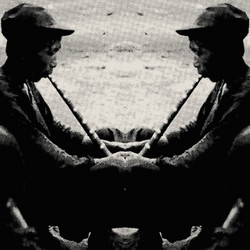
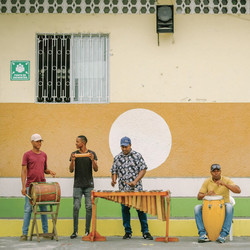
Every Thursday night, the ocean promenade in St Denis becomes an open stage for everyone who wants to sing, play, dance and enjoy maloya in one of its most festive and community oriented forms. Sets that last for long hours are charged with energetic songs, and are open to anyone who can sing or play. These songs belong to the creole culture and most of them are well-known to all participants. You do not come here to give a concert but to be a part of it. You sing, keep the rhythm for a few minutes on the rouler, then bash the drumsticks on the sati or the piquer, and then end up dancing with a kayamb in your hands. Musicians are sharing and swapping instruments all of the time, and although the musicians’ skills are being carefully observed, as well as being appreciated, nobody is shy and everyone simply gets on with it. This is Ron Maloya at its best.
As explained by Zan Amémoutou – a maloya activist and initiator behind Ron Maloya in St Denis – this street gathering is open to everyone without any restrictions. In fact, whoever comes to join, notices it straight away. I have seen tourists from Paris joining in as soon as the music melted their initial discomposure - maloya is in fact a bittersweet fruit of colonial struggle. I have heard of a migrant worker from Mozambique yelling that this street party has more african spirit to it than parties back home. I have also seen macho-like men with a beer in hand as they dance and sing right beside a drag queen. Once in, you are a part of it and all borders blur into one big festive, transgressive experience, at its very finest. That temporary freedom-like space of the “here-and-now” will no doubt drag people from all walks of life into it. At times, that openness causes trouble, and Zan knows this all too well. These parties often run until dawn, and it requires passion and dedication to keep them running weekly.
But what lies behind this phenomena is much larger and more complex than a simple, ecstatic moment of joyful jamming. Maloya is a vehicle carrying the history of reunionese culture. It is a blend of influences forming a unique creole mixture that emerged as a rich and colourful consequence of the colonial era of exploitation and trauma. In the west’s popular discourse, it is hardly acknowledged that one of the main driving forces behind the industrial revolution, the foundation of empires, and the current high GDP, was only made possible thanks to the forced labour of hundreds of thousands of people worldwide. Cost optimization knew no boundaries. Islands were completely transformed into plantations, whereupon thousands upon thousands of people were brought over by ship - an unprecedented demographic experiment. Historically and culturally, the Indian Ocean’s Mascarene archipelago is a mirror image of the Caribbean....
People arriving in a paradise that was previously untouched by humans, ended up recreating their homeland traditions by adding, mixing and creating new elements. That is the beauty and strength of creole cultures worldwide – its thriving creativity. Maloya being one of the main ways to connect people – a platform for new cultures, a voice of the suppressed, a dignity shelter, a temple frequented by ancestral spirits as well as African, Indian and Catholic deities and saints. Maloya thrives from Reunion Island’s rich culture. This heritage is carried forward by families, and is often a well-kept secret shared only with the inititiated. Each family and each region of the island carries different heritage and different maloya styles. Ron Maloya is one of the places you can meet artists representing these families from around the island.
When these artists arrive, they begin by igniting the energy of the crowd. Everyone instantly recognizes their presence and the cultural richness they bring. They have come to share their heritage. They are a living representation of their ancestors. They have come to celebrate and experience maloya with others, and not to merely give a concert. In this sense, Ron is a new phenomenon in maloya history. It is breaking away from the history of the last few decades in which the music culture has evolved into a milieu of professional artists that are stage and album oriented. Ron is now bringing maloya in its festive form back to the community experience. Crowds naturally gravitate toward singing popular songs and themes recorded by famous maloyers—former tradition bearers who became composers. It is Maloya congealed in the form of album releases and concert performances that is now returning to its source.
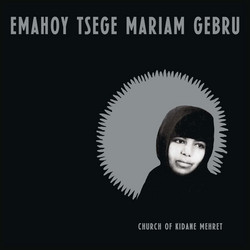
Reunion Island hosted Juju Sounds for three years, between 2018 and 2021, and it felt as if the island really cared for us. This album is yet another unique fruit of the friendship and trust that we gradually built over this period of time. We worked together with many significant families from in and around Reunion to share with you the real meaning and sounds of this unique music culture. By recording live, one-take, outdoor performances —staying true to our ethos—and by diving deep into the culture and sharing its context, we sought to document it, and give Ron Maloya a spotlight, rather than just turning it into a product.